In 2012, T-Mobile was losing hundreds of thousands of customers a quarter. AT&T’s attempted acquisition of the Bellevue, Wash.-based wireless company had just collapsed. T-Mobile was the fourth-place carrier in a four-carrier market, with a network that was a punchline and no obvious plan for fixing any of it.
Mike Katz was one of the leaders responsible for figuring it out.
The result of their work was the “Un-carrier,” a series of moves starting in 2013 that upended one industry tradition after another, launched under CEO John Legere and continued by his successor, Mike Sievert.
T-Mobile today is worth nearly $195 billion and claims the country’s best network. The company is now led by Srini Gopalan, who became CEO in November 2025.

Katz, whose wireless career began selling VoiceStream phones at a Circuit City in Fort Collins, Colo., is leaving after 28 years. The company announced July 7 that Katz, then chief business and product officer, would pursue “new professional interests,” staying on as an advisor through December.
During his tenure at T-Mobile, Katz worked in sales and corporate strategy, ran the company’s prepaid business, led consumer marketing through the first Un-carrier moves, built the company’s business division, and served as chief marketing officer, before becoming chief business and product officer in December 2025.
In an interview with GeekWire, Katz reflected on his experience inside one of the most improbable and irreverent comebacks in American business.
Continue reading for the lessons we took from his story.
Use speed to your advantage against bigger competitors.
When the AT&T deal died, Katz was put on a small team assigned to assess the company’s position and come up with a plan. Their advantage, he said, was that T-Mobile was too small to compete on everyone else’s terms.
“We were so subscale relative to AT&T and Verizon at the start, and what we developed because of being subscale was agility,” Katz said. “We would do things, and AT&T and Verizon would take forever to respond, and by the time they responded, all their customers were gone.”
It started with Un-carrier 1.0. Under the standard model then, a customer could get a phone for well below cost if they signed up for a two-year plan. But the carrier recovered it through the monthly service rate, which never came down once the phone was paid off. Customers paid a penalty for leaving early.
T-Mobile separated the device from the service plan in March 2013, pricing service on its own and putting the phone on monthly installments that ended when the device was paid for.
Verizon didn’t stop signing new customers to two-year contracts until August 2015. AT&T held out until January 2016.
Getting copied was the point. Katz said one measure of success for every Un-carrier move was whether AT&T and Verizon would eventually imitate it, because by the time they did, T-Mobile had already gotten all the credit and attention.
Legere reveled in calling AT&T and Verizon “Dumb and Dumber” (it was never clear which was which in his eyes). He crashed AT&T’s party at CES in 2014 and was escorted out by security, generating multiple rounds of positive publicity for T-Mobile. He asked the public to vote on how to taunt his rivals next, with skywriting over their headquarters among the options.
They were clearly having fun. Asked whether T-Mobile ever worried it had gone too far in baiting its rivals, Katz said, “Not really.” The mission then, he said, was to change wireless for everyone and not just for T-Mobile’s own customers.
The mockery extended to the events themselves. Katz recalled preparing for an early Un-carrier launch in New York when Legere, around 10 p.m. the night before, decided he wanted to open by parodying AT&T’s “It’s Not Complicated” campaign, in which a man interviewed small children at a tiny table. That meant finding dolls. Katz said the team spent the night working out how to get into the American Girl store in Manhattan.
“It was wild,” Katz said. “There were so many things in those early events.”
The next morning the lights came up on Legere at a small table, talking to the dolls.
“Maybe we were the only ones that got it,” Katz said. “But it was funny to us.”
Look for the unexpected and find out why it’s happening.
Back in 2010, then-CEO Robert Dotson put Katz in charge of the company’s prepaid business. It was not a marquee assignment.
Prepaid customers of that era “didn’t really pick prepaid. Prepaid picked them,” Katz said. “They had no other choices. They had tough credit, or they socioeconomically were in a really tough place.”
T-Mobile was also losing ground. A price war broke out in January 2009, when Sprint’s Boost Mobile introduced a $50 unlimited plan and MetroPCS answered at $40. The recession was pushing customers toward prepaid, and the flat-rate carriers were taking market share.
Katz ran prepaid as a business of its own, operations and marketing together, and looked for a way to compete without matching the price. Those cheaper plans limited customers to 3G, so T-Mobile charged a bit more, gave them 4G, and called it Monthly 4G. (A deliberately clear and functional name, as he pointed out.)
It worked. Through 2010, 2011 and 2012, while the postpaid business was shedding customers, prepaid was the only part of T-Mobile that was growing.
The surprise: a lot of the new growth was coming from previously postpaid customers, people who had other options and were choosing prepaid anyway. Katz’s team asked them why.
“There’s no contract. I sign up for a $50 plan, and it actually costs $50 a month. It’s just simple and predictable,” Katz said, quoting customers. It might seem obvious now, he said, “but at the time it’s like, wow, that’s a pretty interesting insight.”
Expand what’s working to other parts of the company.
They found inspiration in that when they turned to what T-Mobile should do next. The idea was to give postpaid customers the same simplicity that was drawing them to prepaid.
They called it pain-free wireless. They mapped out six moves in advance, including the end of upgrade restrictions and international roaming fees. These were the origins of the Un-carrier.
They pitched it to Legere, and to Sievert, the chief marketing officer at the time. Both signed on. The launch was originally set for the end of 2013. Legere moved it to the beginning of the year.
“There is something about desperation that really helps create crisp decision-making,” Katz said. “You can keep trying to make a gameplan that’s been failing for years work, or take some swings and take on some risk. … Because what’s the downside? It can’t get much worse than it was.”
Make sure people know the ad was yours.
Storytelling is the thing companies and brands get wrong most often, Katz said, and he called it the biggest thing he learned from Sievert, whom he worked with for more than a decade. It’s especially important in the wireless industry, where customers are effectively buying a promise.
“At the end of the day, we sell invisible air. You don’t really see the product we sell,” Katz said. “There’s phones, but we don’t make the phones. Apple makes the phones. There’s towers that you can see, but the tower companies, those are their towers. We sell the invisible air in between.”
Katz divides the profession into two camps: the “award show CMOs,” motivated by collecting trophies at Cannes, and the ones who measure themselves by business impact. He puts himself in the second group.

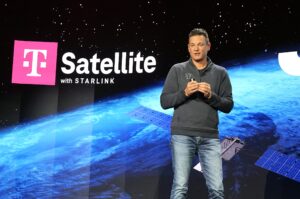
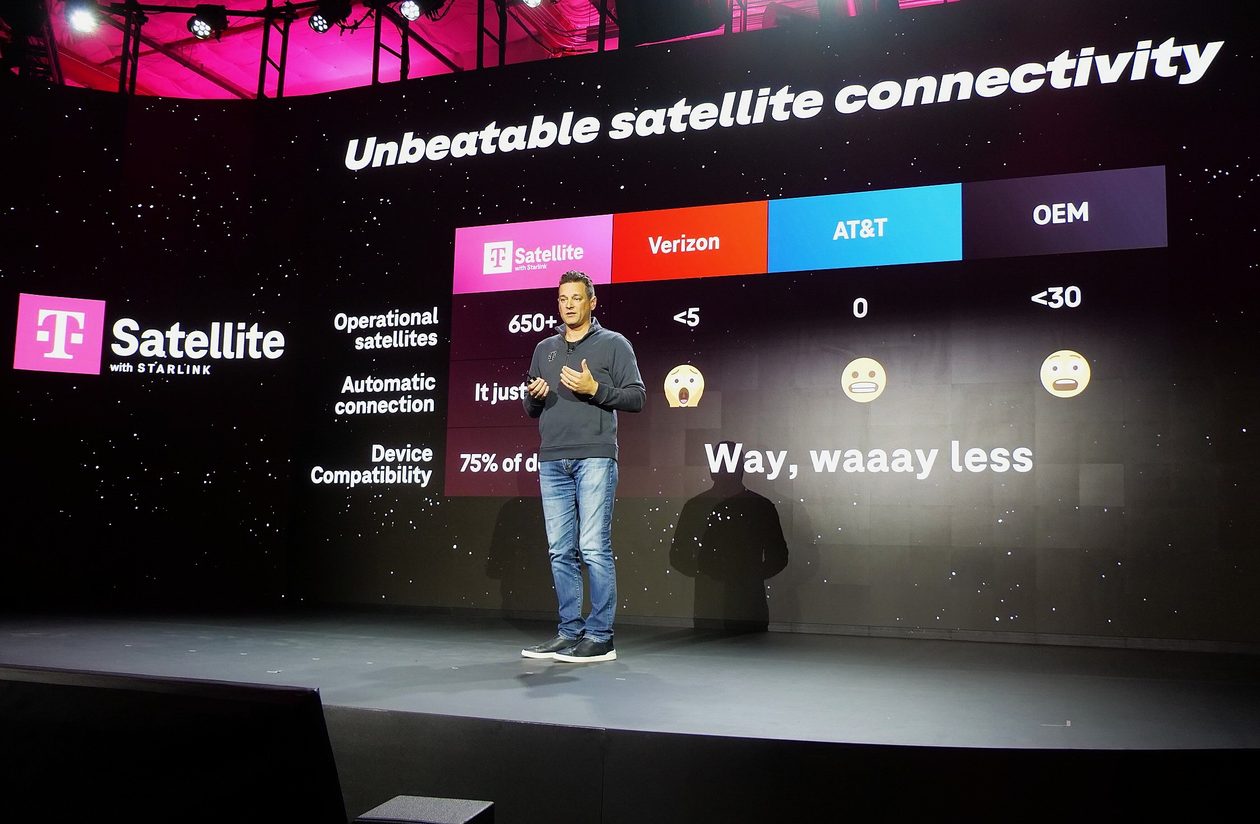
One example: T-Mobile’s February 2025 Super Bowl spot, which launched the public beta of its Starlink partnership, offering satellite-to-cell texting in the parts of the country terrestrial networks don’t reach.
It was tempting to fill it with celebrities and gimmicks, he said. Instead the spot was built around a voiceover and a direct call to action: try it out for free during the beta, open to AT&T and Verizon customers too.
“If we wanted to build a Super Bowl commercial to win the best Super Bowl spot in Ad Age, we would have done something very different,” Katz said. “We would have done the celebrity-palooza.”
“Within 30 minutes of that Super Bowl spot running, we achieved all the goals that we had for the rest of the month in signups,” Katz said.
He contrasted that with Verizon’s 2024 Super Bowl ad starring Beyonce, which he said people recalled without necessarily remembering the advertiser.
Bad results don’t mean bad people.
One of the lessons Katz learned from Legere, in addition to taking risks and failing fast, came from how the incoming T-Mobile CEO treated the people who were already there when he arrived. Legere took over a company that was losing badly and kept the team in place.
“It would have been really easy for him to come in and assume, hey, company’s not doing well, we must have a bunch of bad people here, and change everybody out, and he didn’t do that,” Katz said. “Don’t assume simply because the results of the company are bad that the people are bad.”
Katz said that was in his head during the Sprint merger, where the same thing applied: a business in rough shape, staffed by people who weren’t the reason. T-Mobile’s leadership today is a mix of the two companies.
Perception can sometimes lag reality.
Katz said T-Mobile passed Verizon on network quality years before customers believed it. Verizon “had so much built up brand equity around being the best network,” he said, that four or five years later, people still named Verizon when asked who had the best network.

T-Mobile declared victory at an event in Bellevue in June 2025, citing an Ookla study built on half a billion crowdsourced data points. Verizon disputed the methodology, saying crowdsourcing can’t control for variables, and pointed instead to RootMetrics drive tests that it said still showed Verizon the most reliable.
T-Mobile then began running ads with Billy Bob Thornton declaring it the best network in the country. Earlier claims had carried qualifiers, like fastest 5G or most available 5G. This one didn’t. Katz said the gap in how customers rate the two networks is now down to a couple of points.
Staying on top is harder than the turnaround.
For all the attention the comeback gets, Katz said the more remarkable part has been what came after it.
“If you look at companies that have done big turnarounds, you don’t really see a lot that have had the kind of sustained success and continued growth for a decade and a half like T-Mobile has,” he said.
He gives much of the credit to the network. The Sprint merger gave T-Mobile a spectrum position it didn’t have before, and the company bet that 5G would play out in mid-band spectrum, which was seen as risky at the time. Protecting that advantage through later spectrum deals was one of the things he worked on.
Building the network was not.
“There’s a couple jobs that they never let me do, probably for very good reason,” Katz joked. “You actually need to know what you’re doing.”
A mature company also needs different things from its leadership than a struggling one does. Gopalan spent years on T-Mobile’s board before joining as COO and then taking over as CEO. Katz describes him as an operator who brings discipline to the details of a business that by now has years of success behind it.
Asked for his biggest mistake, Katz said he moved too slowly at times.
“There are big decisions, risky decisions, that I could have made a lot faster,” he said. “I wish I’d pushed harder to make some of those decisions.” Some of what became the early Un-carrier moves were ideas that had been floated years earlier, in corporate strategy.
Katz says he still believes the company’s best days are ahead.
As for what’s next for him? Stay tuned, he says.