Subscribe to Positive Charge: Apple Podcasts, Spotify, Amazon Music, All Episodes
More than 40 years ago, the first commercial veggie burger made its debut in London markets as packets of dehydrated ingredients that were mixed with water and shaped into patties. Today’s alternative proteins are unrecognizable in comparison, featuring cell-cultivated meats grown in brewery-style stainless steel tanks, fake sushi and faux burgers that “bleed.”
The sector saw a surge in the early 2020s to become a $1 billion market, but enthusiasm has wilted of late. Beyond Meat, for example, has seen its stock plummet following its 2019 IPO, and only 11% of U.S. households purchased faux meat last year.
Yet repeat purchases remain strong, global demand is rising, and academic research as well as entrepreneurial R&D are advancing the field.
“Any new emerging technology always goes through challenges in scaling, economics, [and] consumer acceptance,” said Rohan Shirwaiker, director of the Bezos Center for Sustainable Protein at North Carolina State University. “The trajectory, I think, is in the right direction.”
Alternative proteins fall into three categories, and they can be combined in some products:
Plant-based: Made from ingredients including soy, beans, peas, lentils and wheat.
Fermentation-produced: Uses organisms such as fungi, bacteria, yeast and algae to act as ingredients themselves or as tiny factories producing compounds including proteins found in milk or eggs, or specific fats.
Cell-cultivated meats: Derived from animal cells and grown in nutrient-rich broth, then coaxed into fat or muscle tissue.
Consumers buy alternative proteins because of environmental concerns around climate impacts and the land and water footprint of livestock; health worries about cholesterol and saturated fats; and ethical objections to factory farming. And experts say that as the global population grows, there won’t be enough beef, chicken and fish to meet protein needs.
But there are significant hurdles to adoption. The faux meats are generally more expensive. People are unsure about the technologies used to make the foods. Consumers need to adapt to different flavors and textures and have worries that the alternatives are “ultra-processed” foods.
Nuggets for schools
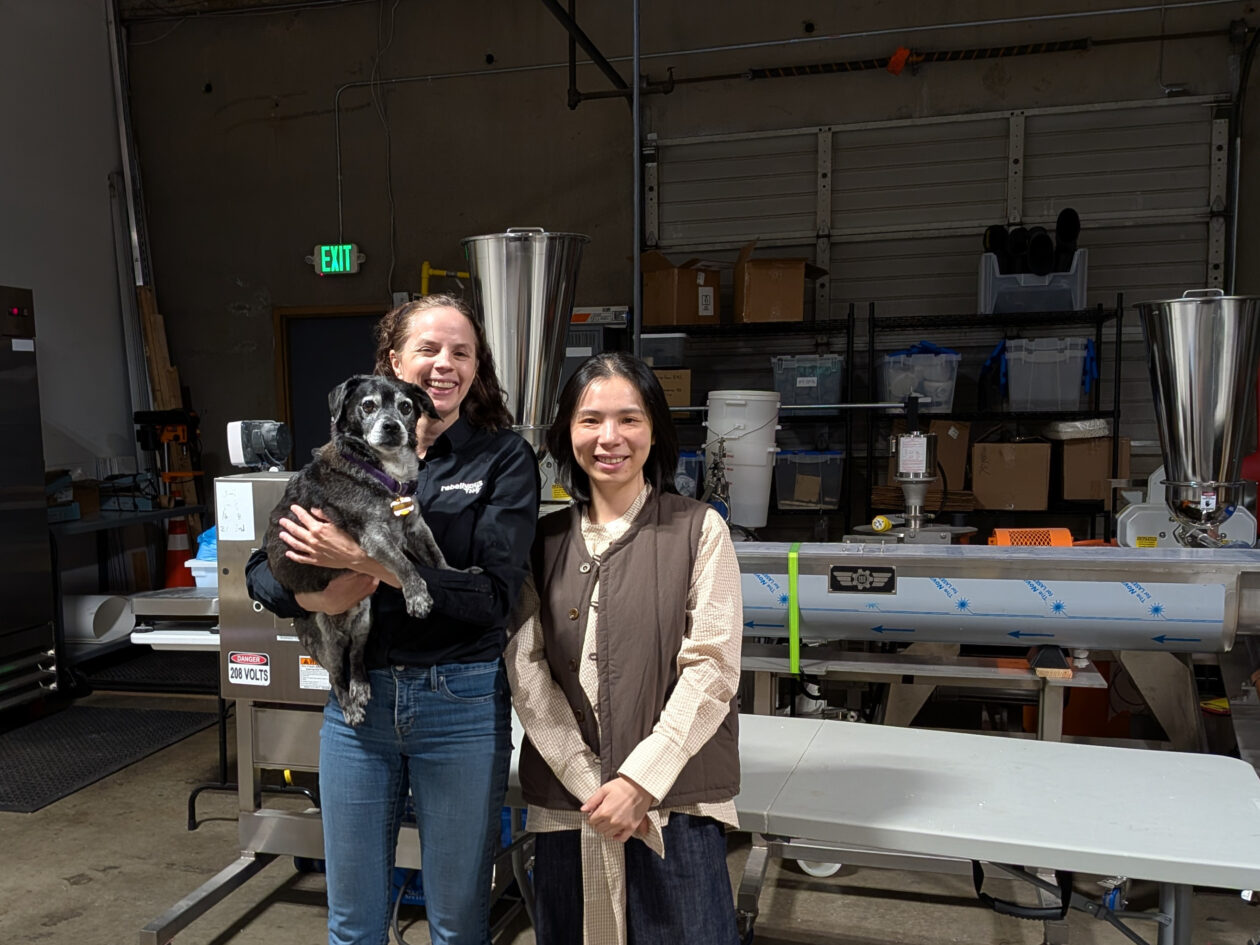
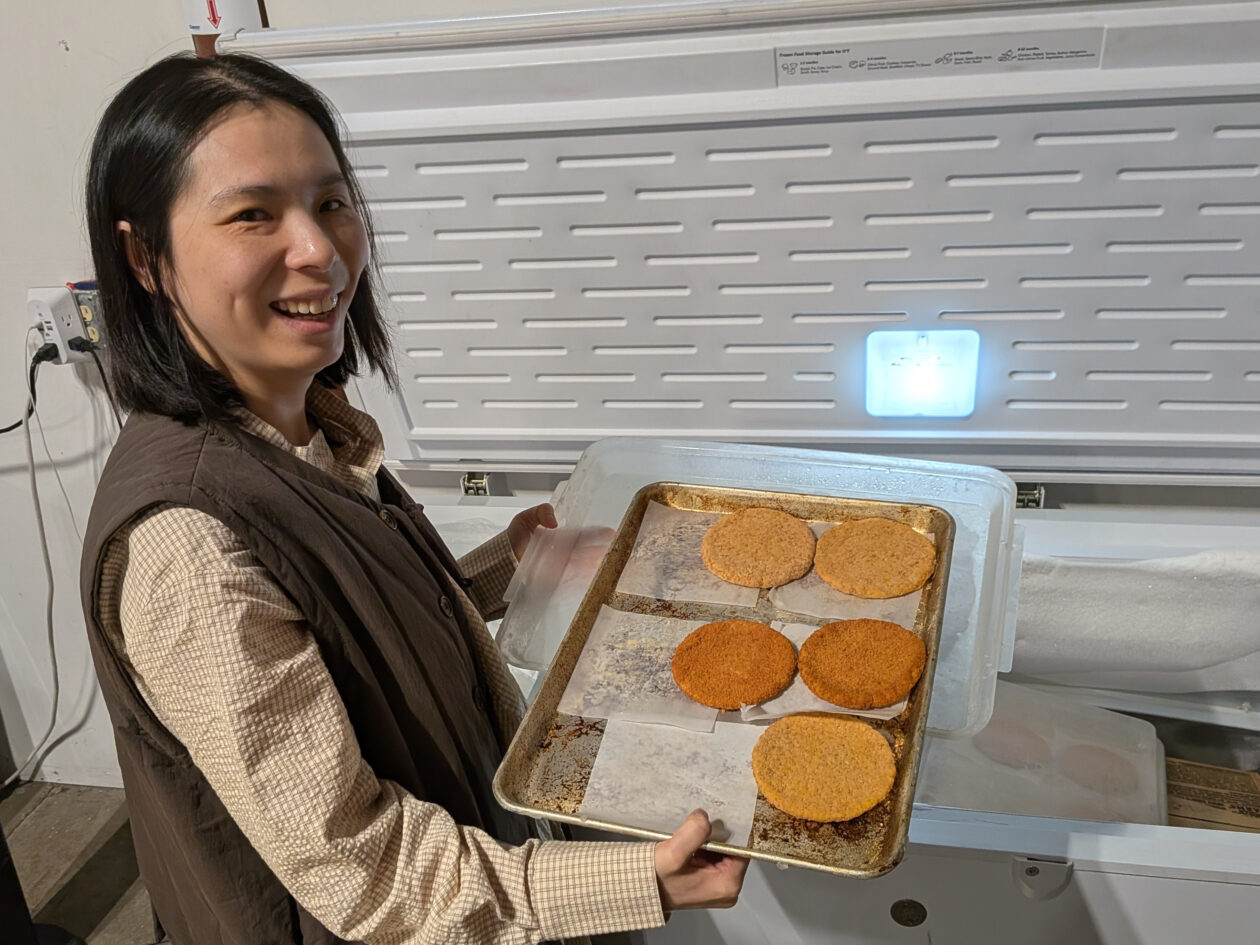
Rebellyous Foods, a startup churning out faux chicken nuggets for 6 million U.S. school kids, runs its R&D operations out of an office park south of Seattle.
“We want people to feel good about what they eat, and so our products have a relatively short ingredient list,” said Christie Lagally Bradburn, founder and CEO of Rebellyous. That includes soy protein, yeast-based flavoring and salt, oil and water, and a binder called methyl cellulose found in products such as bread and salad dressing.
Despite being derived from plants, the Rebellyous kickin’ nuggets have a meat-like texture absent the gristle and mystery bits. The flavor, Lagally Bradburn said, is often compared to Campbell’s chicken noodle soup. The brand also has spicier options targeting food service at hospitals and correctional facilities.
Lagally Bradburn’s background is in designing manufacturing equipment, including roles at Boeing creating tools to build airplanes faster, better and cheaper. An ethical vegan, she wanted to apply that skill set to replacing meat, and in 2017 she launched Rebellyous to do it. Her goal: an automated, continuously operating system for producing affordable and tasty fake chicken products.
The company developed its Mock 3 system, capable of producing more than 5,000 pounds of faux chicken per hour. The device was installed in a facility north of Seattle, but the operators recently shuttered the site on short notice. So Rebellyous is working with its long-term partner in New Mexico which uses a conventional manufacturing system.
The hope is to find a new home for the Mock 3 while also developing its Mock 4, a smaller, cheaper, simpler device.
“Our goal is to run a financially sound company, to be there for the schools,” Lagally Bradburn said, as well as play a role in addressing climate change, human health and animal welfare issues.
Cricket kibble
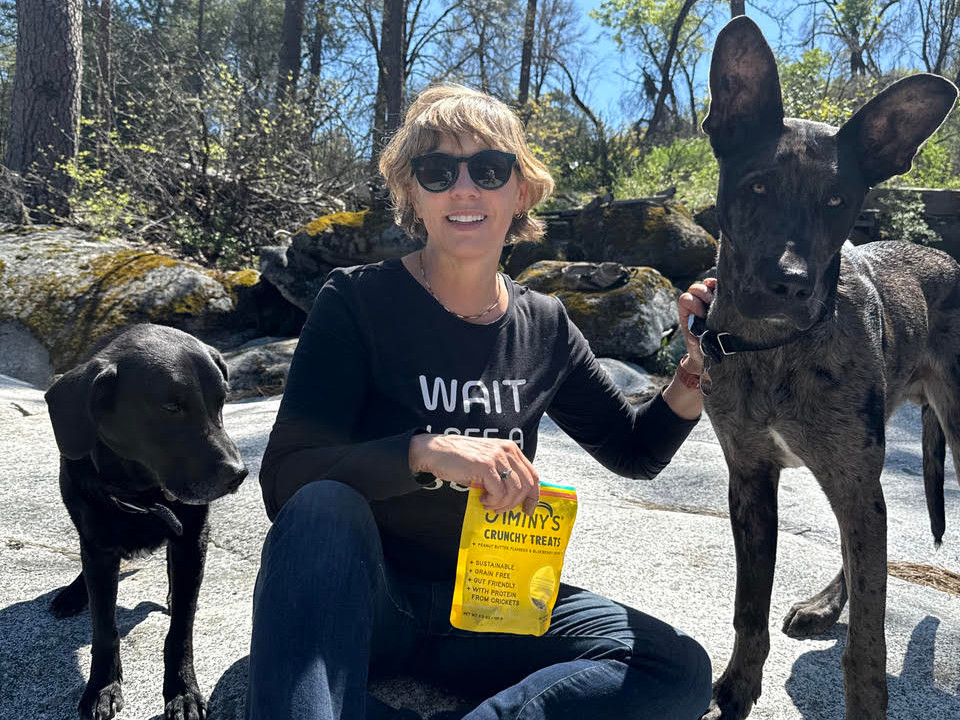
While Rebellyous targets human food service, other startups are focused on four-legged consumers. About a decade ago, Anne Carlson was planning a career change when her daughter shared that she didn’t want children due to climate worries.
“I realized that I couldn’t just do a normal job after that,” she said. “Building a better future for her was everything.”
Carlson, a pet-industry veteran, noted UCLA research showing U.S. pets account for 25% to 30% of the environmental impact of domestic meat consumption. That led her to pursue insects as alternative proteins for pets, starting with crickets, then adding black soldier fly larvae.
In 2020, her company, called Jiminy’s, became the first in the country to be approved by the FDA and an association that regulates animal food standards to sell cricket-based dog foods.
“It’s less land, less water and almost no greenhouse gases,” Carlson said of the bug proteins. One acre of land used to raise 265 pounds of chicken protein will provide 60,000 pounds of cricket protein.
Jiminy’s sells kibble, treats and dental chews that provide essential amino acids and show benefits for dogs with allergies and digestion issues. The products typically cost more than animal-based foods, but are cheaper than prescription diets.
The San Francisco Bay Area startup still has to win over owners who are squeamish about insects — but they needn’t be, Carlson said.
“People think that when they open the bag, it’s going to be a bag full of bugs. It is absolutely not that,” she said. The product looks and smells like typical dog food, so “it’s not scary at all.”
Path to profitability

One area of growing concern centers on ultra-processed foods and whether alternative proteins fall under that category.
Shirwaiker, director of the Bezos Center, notes that while some products contain high sodium or fat, processing itself can be beneficial by removing harmful elements, improving texture and preserving nutrition.
“If we are using processing to get the right texture, something that consumers will like without sacrificing the nutrition, I don’t think that’s a bad thing at all,” he said. “So it’s really a matter of perspective and trying to separate process from nutrition in some way.”
Rebellyous and Jiminy’s leaders said they clearly disclose ingredients and keep them simple to put those fears to rest. The biggest hurdle, both said, was bringing down costs while supply-chain prices keep rising.
Even so, the startups are on the verge of profitability, their CEOs said. Carlson said Jiminy’s operates in the black some months and is growing faster than the pet industry overall. Because Rebellyous primarily serves schools, it’s profitable during much of the year, but business slows in the summer, Lagally Bradburn said.
Both founders remain optimistic about the long-term horizon.
“Sometimes when you’re in it, it can be hard to see the forest for the trees,” Lagally Bradburn said. “But the truth is that overall, the world is becoming more sustainable.”
Sources and references
Interviews:
- Rohan Shirwaiker, distinguished professor and director of the Bezos Center for Sustainable Protein at North Carolina State University
- Christie Lagally Bradburn, founder and CEO of Rebellyous Foods
- Anne Carlson, founder and CEO of Jiminy’s
Additional sources:
- “The History of the Veggie Burger,” Smithsonian Magazine, March 19, 2014
- Analyzing plant-based meat & seafood sales, Good Food Institute, 2025 data
- “An Extension Guide to Alternative Proteins,” Bezos Center for Sustainable Protein at NC State
- “Environmental Impacts of Food Production,” Our World in Data
- “This plant-based chicken startup is bucking alt-protein trends with a new production milestone,” GeekWire, Jan. 5, 2026
- “The truth about cats’ and dogs’ environmental impact,” UCLA, Aug. 2, 2017
Lisa’s favorite protein nut balls:
- 1 C old-fashioned oats
- 1 C peanut butter, other nut butter, or combo
- ⅓ C honey
- ⅓ C chopped, roasted nuts (peanuts, almonds, pecans, etc.)
- ⅓ C semi-sweet or bittersweet chocolate (chips or chopped)
- 2 Tbs protein powder
- 1 tsp vanilla extract
- ¼ tsp cinnamon
- ½ tsp salt
- ⅓ C shredded coconut (optional)
- 2 Tbs chia seeds (optional)
- Combine all ingredients in a large bowl and mix well.
- Form into balls measuring about 2 Tbs, arrange on a pie tin or plate, chill.