Researchers at UW Medicine’s Institute for Protein Design (IPD) have created new proteins that act like molecular scissors, chopping up targets associated with Alzheimer’s disease and amyotrophic lateral sclerosis, also known as ALS or Lou Gehrig’s disease.
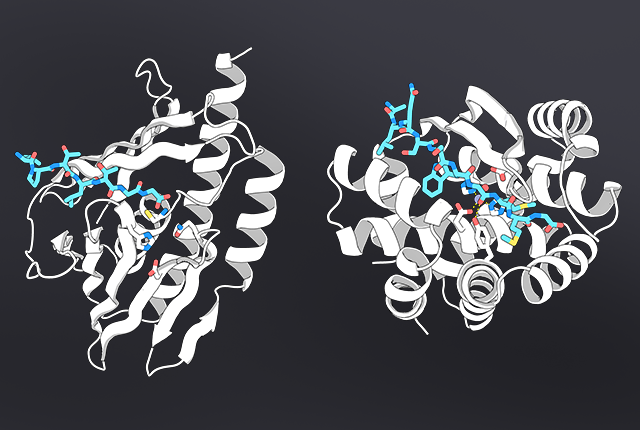
The scientists are using sophisticated AI models developed at IPD to design proteins called proteases — a class of enzymes that cut specific proteins at specific locations in their structure. The proteases can make those cuts over and over again.
“You have this catalytic capability to destroy one target, and then immediately your molecule can hop over to the second, third and thousands of different targets,” said Anqi Chen, a postdoctoral fellow at the institute.
Many pharmaceuticals bind to a single target, inactivate it and stay there. That approach requires high doses of medicine to have an effect on disease. These enzymatic proteins, by contrast, have an amplified impact.
“There’s this potential to use your drug at very, very low concentrations,” Chen said.
The researchers have made proteases that attack proteins associated with neurodegenerative disease and are now working on targets for malaria, chronic diseases and cancer. They also could make proteins to defang viruses or bacterial toxins.
“There’s super exciting applications,” said David Baker, director of IPD and a 2024 Nobel laureate in chemistry.
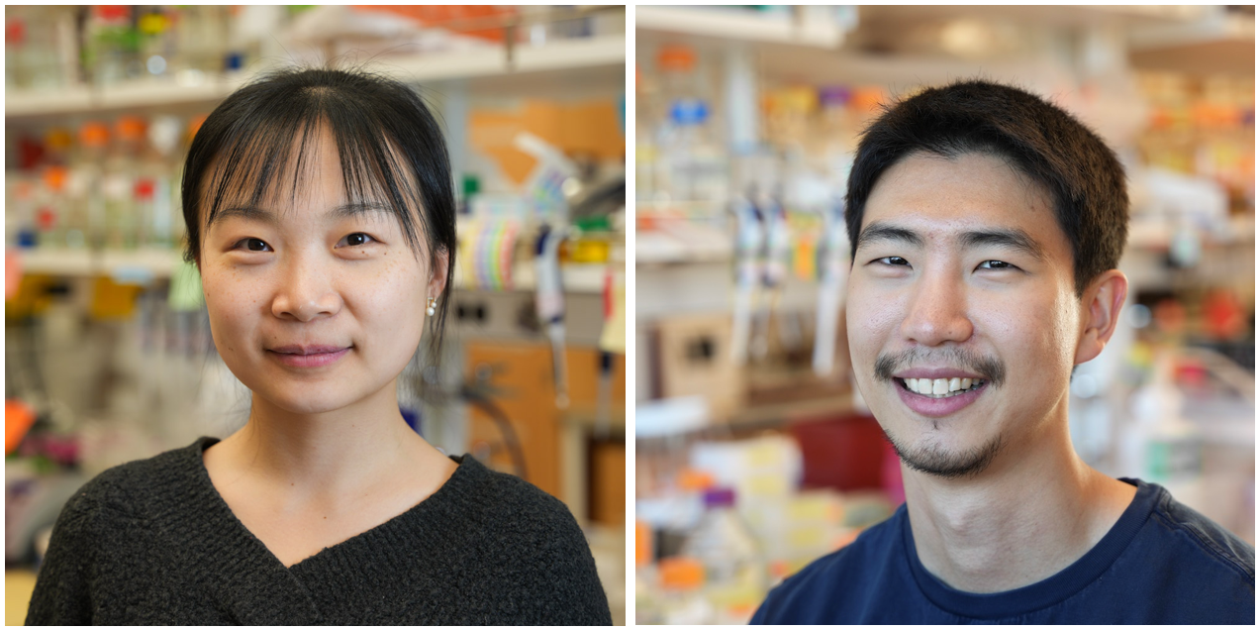
Baker is the senior author of two papers describing this work that were published today in the journal Nature. Chen and Kejia Wu are the first authors of one paper, and Hojae Choi, an IPD graduate student, is the first author of the other.
Baker said the research is significant because of how well the enzymes work and the range of potential applications, which beyond medicine include breaking down hazardous pollutants and plastic waste.
Chen and her colleagues designed proteases that use a metal ion, rather than an amino acid, as the cutting blade. More than one-third of the new proteases precisely cut their target, a protein implicated in Alzheimer’s disease, and did so 100 million times faster than cuts made without the enzymes.
The work by Choi and his colleagues used an activated amino acid called cysteine as the blade. The proteins designed by the scientists had a 19% success rate in cutting their targets and were up to 30 million times faster than uncatalyzed reactions.
Much work remains before these newly designed proteins can become drugs for humans. One challenge is ensuring that the proteases don’t trigger a response in which a patient’s immune system attacks the therapeutic before it has a beneficial effect. Another potential hurdle is turning the enzymes off and on to modulate their impact as needed.
Choi is studying that immune system issue, called immunogenicity. He’s working to combine the catalytic, cutting component of the enzyme with a benign-appearing antibody — sort of a protease wolf in antibody clothing.
“It is a newly launched project, so we don’t have any official data to show to public,” Choi said. “But we’re really working on it.”