Yoodli, the Seattle startup that offers AI to help people practice speeches, sales pitches and job interviews, is expanding to pursue a larger vision: AI that can teach people almost any skill they need on the job, and track whether they’re improving.
The company is recasting itself as the “AI platform for human skills” with the launch of new tools that create courses, teach people to use AI and software, answer employees’ questions, coach them during calls and meetings, and show managers whether the training is paying off.
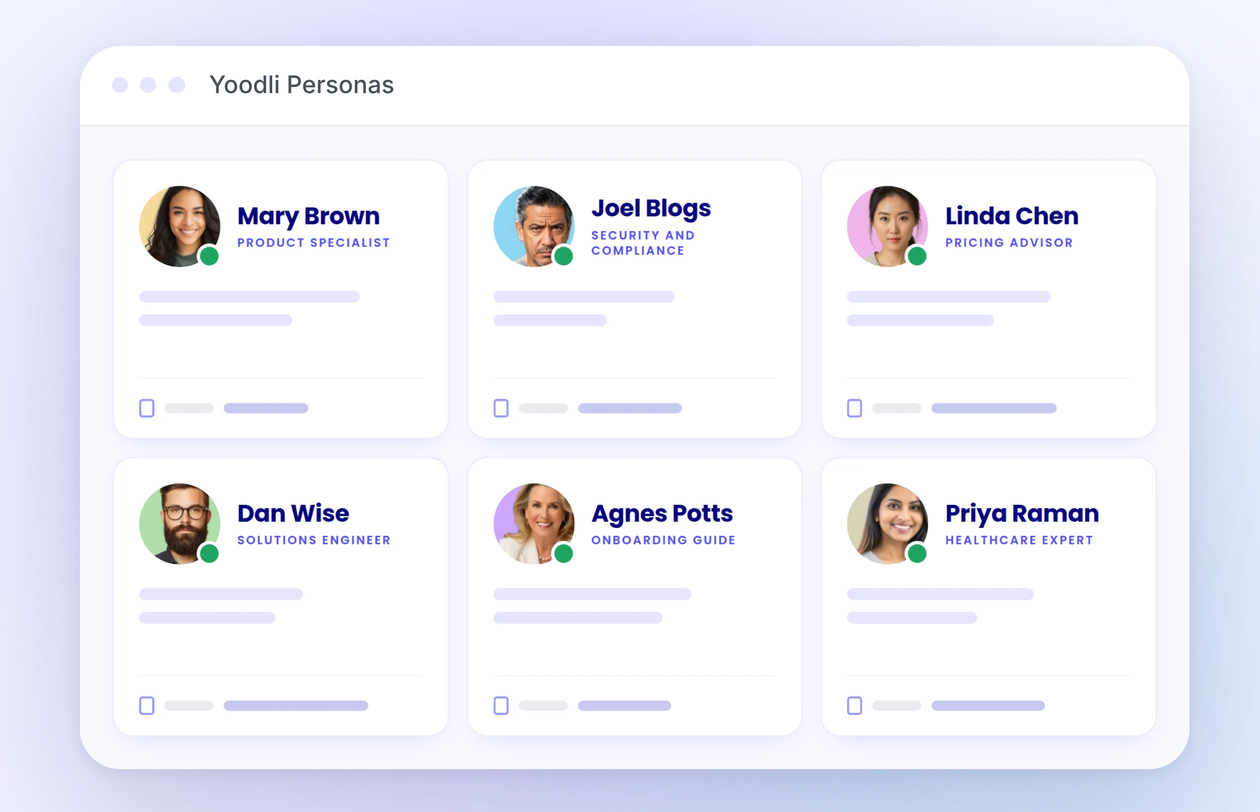
One of the new tools takes the AI personas that companies build for practice sessions and puts them to work elsewhere. Loaded with a company’s own material, they can answer questions on an intranet, a partner site or a live call, handing off to humans when needed.
The move pushes Yoodli beyond practice sessions and into the much larger business of corporate training, where Workday and Microsoft’s LinkedIn are among the larger companies offering AI tools for training and coaching employees.
It also expands the potential market for the company, which counts Google, Snowflake and Databricks among its customers and has raised nearly $60 million from investors including WestBridge Capital, Neotribe, Madrona and AI House.

Varun Puri, Yoodli’s co-founder and CEO, said the goal is to use AI to help people get better at their jobs, at a time when the technology is more often raising concerns and questions about the future of work.
“This is all about upskilling humans and believing in the human potential,” Puri said in an interview this week at the company’s new headquarters on Seattle’s Pier 70. “How do we help humans be the best versions of themselves and get measurably better?”
Esha Joshi, Yoodli’s co-founder and chief customer officer, said the company is taking its cues from what businesses were already starting to do: using Yoodli to teach employees new skills, beyond the situational AI “roleplays” that have fueled the company’s growth.
Many of Yoodli’s first business customers were tech companies, but the list has since expanded to include the likes of governments, pharmaceutical companies and banks.
“There’s a whole world of people that need to develop their skills,” Joshi said.
How Yoodli got here: GeekWire has followed the company almost from the start. Our first story ran five years ago today, when the startup had just spun out of what was then known as the AI2 Incubator, with an AI tool to help people improve their public speaking.
Puri had run special projects for Google co-founder Sergey Brin and worked at X, the research arm of Google parent Alphabet. Joshi spent more than four years at Apple as a software engineer and product manager, and was Yoodli’s original chief technology officer.
With its transition to AI roleplays about two years ago, Yoodli shifted to selling primarily to companies and other organizations. Google, Snowflake and Databricks use it to train sales teams, Puri said. The government of El Salvador uses it to train doctors on talking with patients, and the University of Washington uses it to prepare students for job interviews, he said.
The company raised $13.7 million in May 2025 and another $40 million in December, in a round led by WestBridge Capital that valued it at more than $300 million.
Yoodli reported 900% revenue growth when it announced the December round. Puri declined to disclose current revenue or say whether the company is profitable, but said it isn’t actively raising money. “It’s been a very strong year,” he said.
The startup will face plenty of competition as it expands into the broader market. Tech giants Salesforce and Microsoft, for example, both offer AI roleplay coaching as part of their larger platforms.
Workday last year acquired Sana, an AI startup with a corporate learning platform. Highspot, the Seattle company that merged with rival Seismic in August, offers an AI roleplay tool, and startups including Hyperbound and Second Nature focus on sales roleplay.
Yoodli also integrates with some of them, including Workday and Highspot.
Asked what keeps Yoodli from becoming a feature in a larger company’s product, Puri cited the depth of its software, and pointed out that Google, for example, uses Yoodli to train its own teams on Gemini.
The company today: Yoodli has grown to about 100 employees, up from 25 in May 2025. Recent executive hires include:
- Andy Larson, chief financial officer, previously CFO of Remitly in the fintech company’s early years.
- Kartik Murthy, vice president of product, previously head of product at cybersecurity company Coalition, and a key figure in the creation of the new tools.
- Rachel Cougan, vice president of people, previously an HR leader at Hiya, Logixboard and Textio.
Other executives include Josh Vitello, the chief revenue officer, who joined in April 2025 after more than 15 years at Tableau and Salesforce; and Derek Sessions, the chief technology officer since February 2023, previously an engineering manager at video software company Panopto.
Yoodli’s new offices are on the eastern side of Pier 70, sharing a building with AI House, the incubator and venture capital fund formerly known as the AI2 Incubator. Yoodli began at the incubator when it was across town near the northern shore of Lake Union.
The conference room names reflect the company’s culture. “Speakeasy” was Yoodli’s code name before launch. “PlankoClock” honors a daily ritual: at 3:45, the whole company stops to do planks. “Agnes Potts” is named for one of Yoodli’s earliest AI personas — a “customer” so tough that users wanted T-shirts saying they’d booked a call with her, Puri said.
The new tools: Yoodli describes the expanded platform as five products.
- Roleplays: The practice sessions the company is known for, in which an employee rehearses a sales call or other conversation with AI personas. They now teach as well, with an AI tutor that can explain a topic, pull up slides and take questions.
- Personas: AI experts that companies build for practice sessions can now also answer questions on an intranet, a partner site or a live call. Yoodli has an AI version of Puri that job candidates can talk with before they interview with the real CEO.
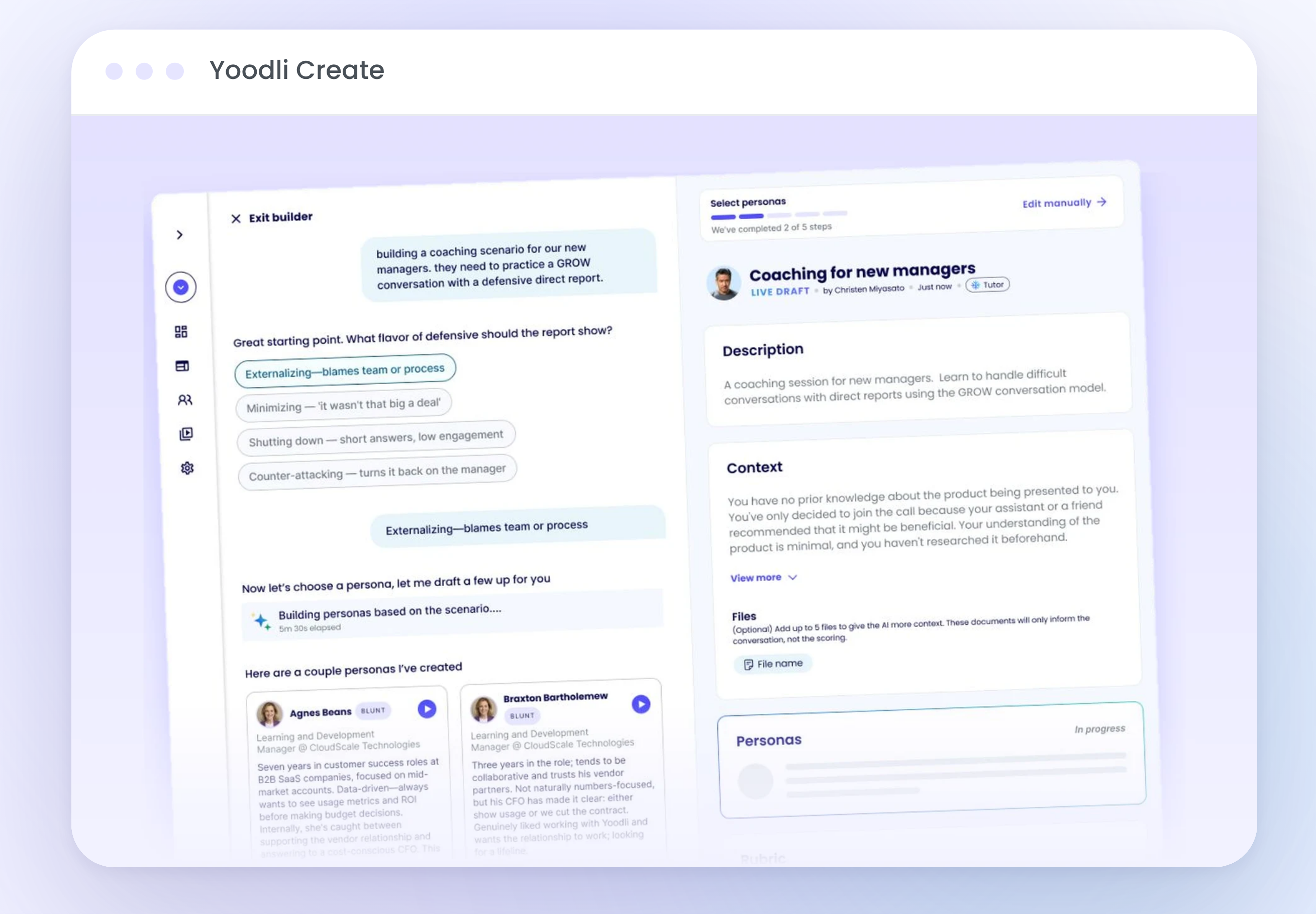
- Create: Builds a full training program from a single written request, in minutes instead of weeks, Yoodli says. In a demo, Puri typed a request for a course on Google’s Gemini and got back a multi-step training program.
- Coach: A personal coach that works inside apps such as Zoom, Slack and Teams, and learns each employee’s strengths and weak spots. Puri compared it to a friend “kicking you under the table” in a meeting.
- Measure: Reports for employees and managers on whether skills are improving, not just whether the training was completed. For sales teams, Puri said, that can mean tying training to deals closed.
Yoodli’s website lists individual plans at $8 and $20 a month, billed annually, with custom pricing for businesses depending on team size and use case.
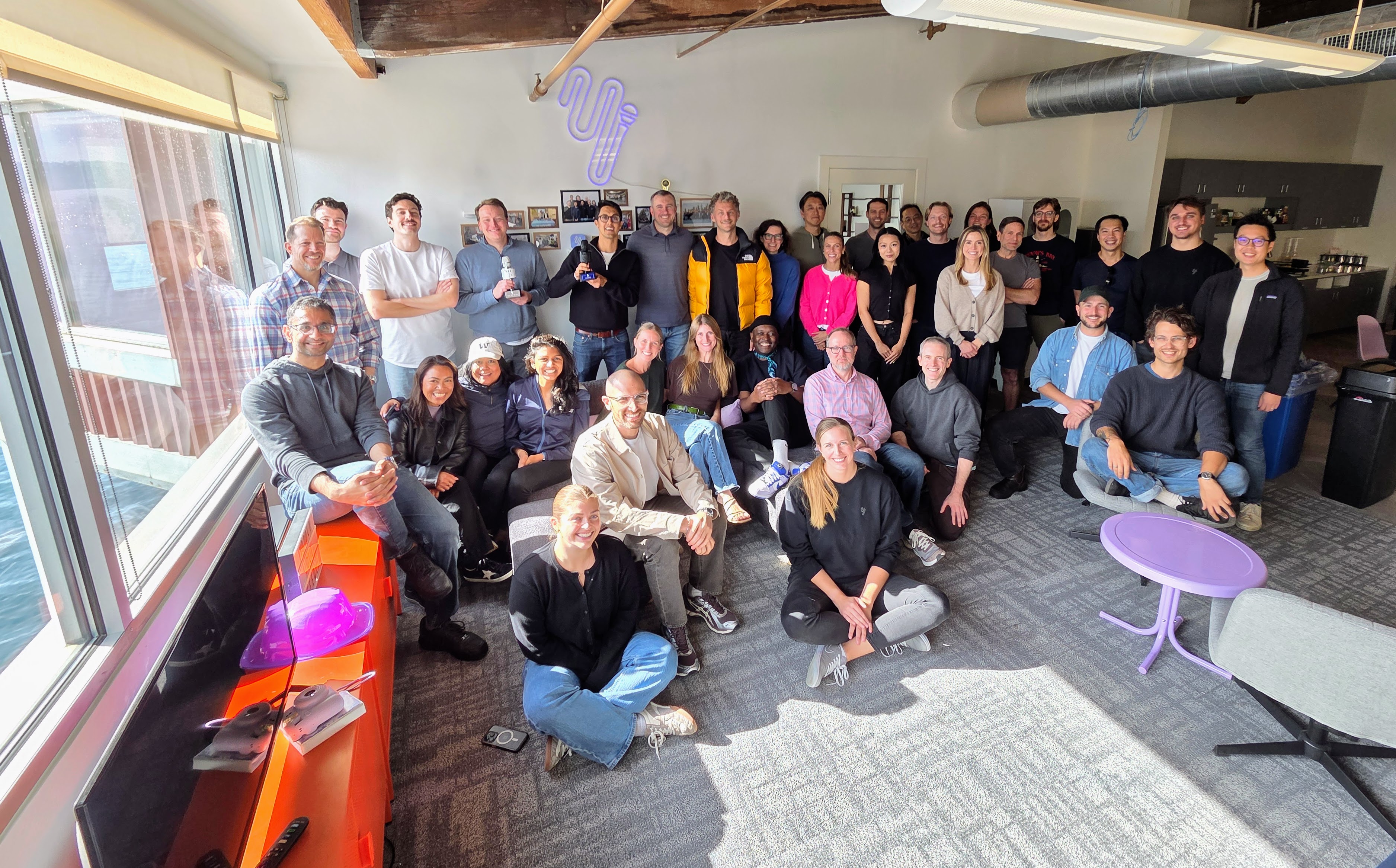
When GeekWire visited this week, employees took a quick break from preparing for the new platform launch to gather for an impromptu team photo. They goofed around under a Yoodli sign with the type of energy you’d see at a much smaller startup.
As they headed back to their desks, I mentioned that we’d all remember this moment when the company has its IPO in 10 years. They laughed and groaned at the suggestion that it would take that long.
Editor’s note: Yoodli is a client of GeekWire’s GeekWork recruiting business.