Editor’s note: This series profiles five Seattle-area “Uncommon Thinkers,” who will be recognized Dec. 10 at the GeekWire Gala in partnership with Greater Seattle Partners.
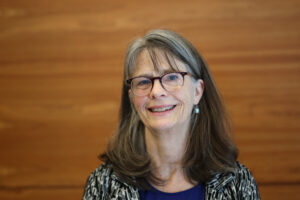
Mary Brunkow had considered becoming a veterinarian or doctor — she knew she wanted to do good in the world and help people. Then, as an undergraduate at the University of Washington, she stepped into a research lab for the first time.
Inside, a professor she admired and his team were using fruit flies to study genetics.
“You walked in this door and it was like entering this new world,” Brunkow said, recalling the collaborative, passionate environment. “I just loved it. There was the smell of ether in the air. There was this real love of the science.”
After graduating and going on to earn a doctorate, Brunkow built a career in research. She joined Seattle-area startup Darwin Molecular and oversaw a team studying mutant mice afflicted by severe autoimmune disease. The scientists painstakingly identified the responsible gene, which led to valuable insights into the immune system’s T cells.
Brunkow worked on other projects at Darwin, too. But after an acquisition and a merger, the company’s local R&D operation shut down. Brunkow moved on. She ultimately landed at the Institute for Systems Biology (ISB), her immune-system research well in the past.

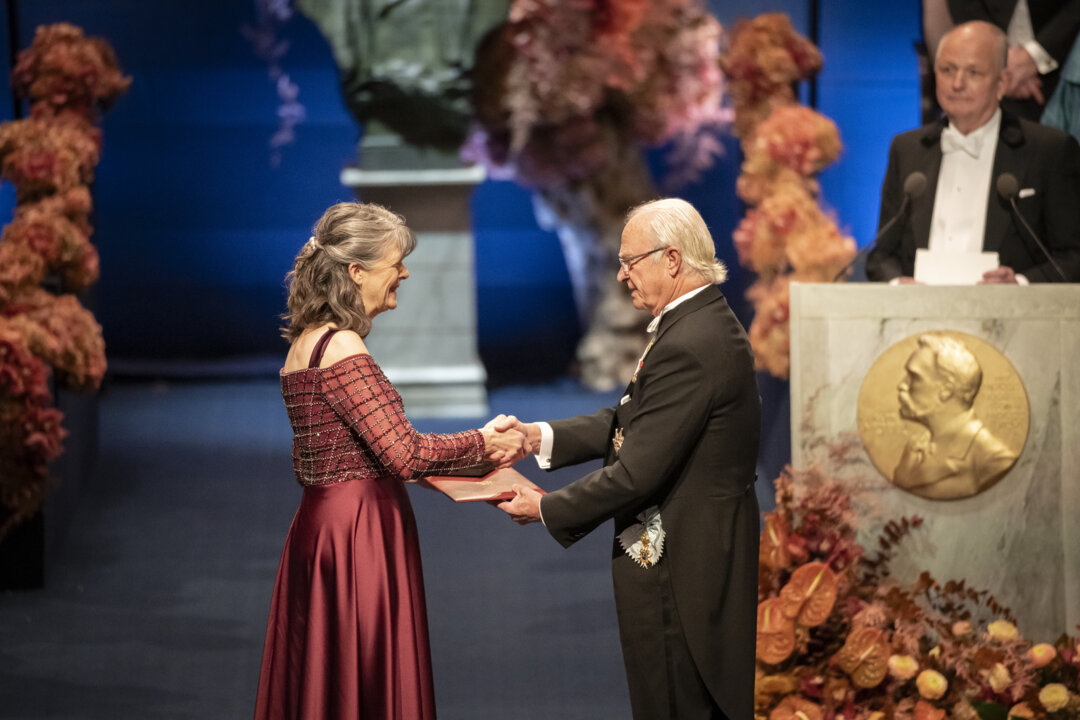
Then, in October 2025, came an unexpected call: She would share the Nobel Prize in Medicine with former Darwin colleague Fred Ramsdell and Osaka University’s Shimon Sakaguchi for discoveries explaining how the immune system avoids attacking the body’s own tissues.
Now a distinguished investigator at ISB, Brunkow was stunned by the honor. But Jim Heath, president of the institute, sees it as well deserved.
“Mary brings an exceptional combination of scientific rigor, intellectual curiosity, and humility to her work,” he said. “She’s driven by fundamental questions about biology and isn’t afraid to challenge conventional thinking in pursuit of answers.”
Beyond her scientific prowess, Heath also praised Brunkow’s efforts to create a workplace as welcoming and vibrant as the one that captivated her as a college undergrad.
“She’s a generous colleague who values collaboration and helps create an environment where other scientists can do their best work. She’s deeply committed to creating opportunities for students who will become tomorrow’s scientists,” Heath said. “Those qualities are every bit as important as the discoveries themselves.”

A gene hunt in a janitor’s closet
When Brunkow joined Darwin in 1994, the biotech — whose backers included Microsoft co-founders Bill Gates and Paul Allen — was riding a wave of advances from the Human Genome Project, an effort to sequence humanity’s DNA playbook. Darwin scientists sought genes linked to disease that might point the way toward new treatments.
“It wasn’t a one-drug company. It wasn’t hyper-focused on something very specific. It was trying to figure out how we can affect change in patients,” Ramsdell said at Life Science Washington’s annual conference in April.
One project focused on “scurfy” mice, which carried an inherited mutation that caused devastating autoimmune disease. Researchers suspected the mutation disrupted a crucial regulator of the immune system. Darwin wasn’t set up for mouse research, so Brunkow commandeered a janitor’s closet and began carefully breeding the mice to narrow down the area containing the mutant gene.
The work was far more laborious and slow compared to today’s technology, but it was groundbreaking for that period. It delighted Brunkow.
“It was a really exciting time,” Brunkow said. “It took a lot of problem solving and troubleshooting to get to the answer.”
The scientists narrowed their search to 20 genes on the X chromosome and began painstakingly sequencing them. In the final gene, they found a tiny error — two extra DNA letters inserted into the sequence that rendered the protein useless.
Working with Ramsdell and other collaborators, the researchers identified the mouse gene and showed that mutations in its human counterpart, FOXP3, cause a rare autoimmune disorder called IPEX.
“It was nice to pull the story together. So we published a couple of nice papers. We filed patent inventions. We went to conferences and talked about it,” Brunkow said. “And then in 2004, the company closed down.”
Moving on, making an impact
Brunkow stayed friends with Ramsdell and followed developments in the field, but her own interests took her elsewhere. She was drawn less to one particular disease than to the challenge of finding a tiny genetic change that could have an enormous biological effect — and potentially point toward a treatment.
Meanwhile, other researchers were building on the discoveries.
Later research established the gene’s essential role in regulatory T cells, or Tregs — cells that restrain immune responses and protect the body from attacking itself.
“I didn’t actually understand the extent to which our publications kind of blew open a whole new area in immunology,” Brunkow said.
That work is now reaching patients. In June, the FDA approved Tregzi, a treatment incorporating regulatory T cells that helps prevent a serious complication of donor stem cell transplants in adults with blood cancers.
At ISB, Brunkow has embraced a broader view of biology. The organization takes a holistic approach to medical research, bringing together scientists in areas including cancer, infectious diseases and chronic illnesses.
For her, it is a natural progression from studying individual genes to investigating the complex networks in which they operate. The ultimate goal is personalized medicine: understanding what pushes someone from health toward disease, detecting those changes early and finding ways to intervene.
The Nobel recognition has given Brunkow a chance to broaden her impact beyond research — a platform to advocate for issues she cares about. That includes sustained research funding, support for women and other underrepresented groups in science, and stronger STEM education. She also wants to encourage scientists to support one another and work well together — the qualities she encountered in that UW fruit fly lab.
“You’ve got to figure out how to play well with others,” Brunkow said. “It makes science more fun. It makes science move faster.”
Editor’s note: Mary Brunkow is speaking Nov. 13 from 11:30 a.m. to 1 p.m. at EY in Seattle as part of Technology Alliance’s Discovery Series. Register here.