When a pilot wants to find a flight instructor, a mechanic, an examiner for a flight test, or a fair price on an airplane, the solution is usually the same: ask around at the airport.
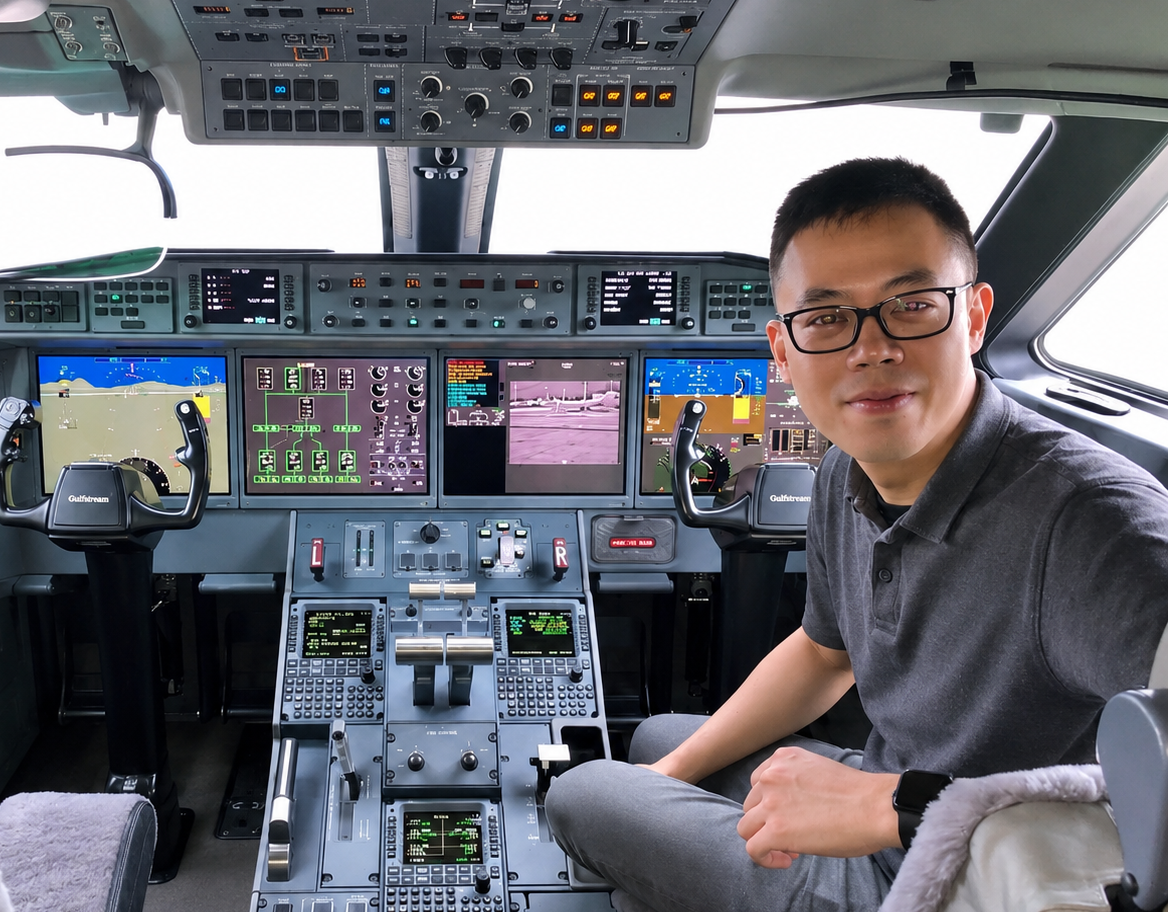
Nick Tsang, founder and CEO of Skyfarer, wants to help fix this problem. He sees general aviation as a multibillion-dollar market that’s fragmented at every stage, without the unified online tools other industries take for granted.
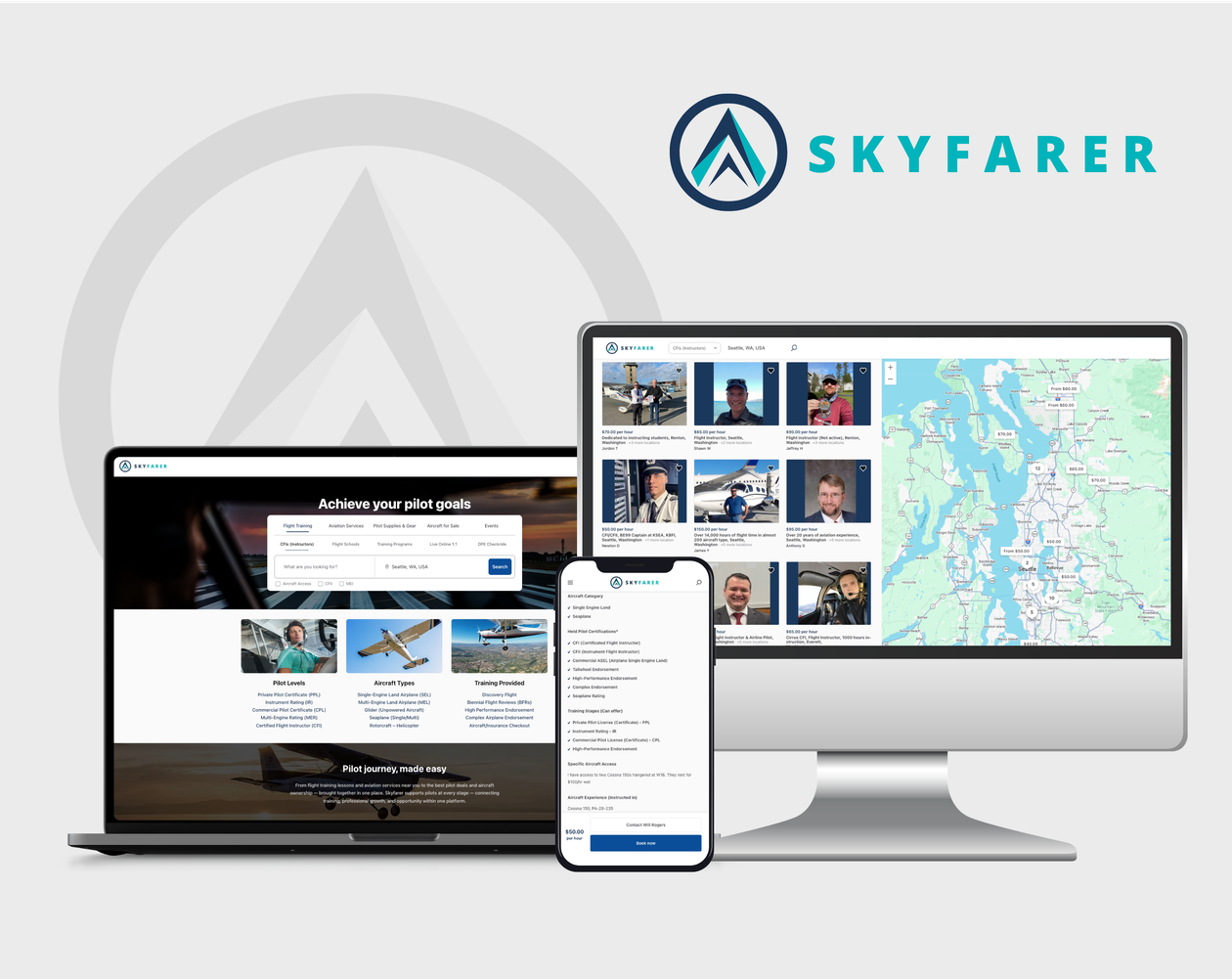
Skyfarer is a marketplace where pilots (and those who aspire to be one) can find instructors, flight schools, examiners, mechanics, gear and aircraft. Tsang calls it Airbnb for aviation.
Tsang grew up in Hong Kong, where his aviation roots trace to 2012, when he started flight training in New Zealand, and where he spent eight years in the Hong Kong Air Cadet Corps. He holds a master’s degree in educational management and turned down an MPhil at Cambridge in 2018 to help lead a $28 million initiative that brought computational thinking to more than 90,000 students.
He founded the company in July 2024 in Camas, Wash., just outside of Portland, Ore., and recently joined the board of the National Flight Training Alliance.
The company started with live online instruction and later added in-person training, buying a competing marketplace, InstructAir, in 2025 to sign up more instructors.
Skyfarer is self-funded apart from some early angel funding. The company says it has close to 14,000 registered users and 8,500 listings in all 50 states, plus an iOS app. July was its biggest month, with 9,900 monthly active users, up 70% from June, and inquiries and transactions up 60%.
Continue reading for Tsang’s answers to our Startup Spotlight questionnaire.
In 50 words or less, give us your startup’s elevator pitch?
Skyfarer is a marketplace for general aviation, SaaS-enabled, consumer-facing up front with enterprise infrastructure behind it. Pilots, training and service providers, examiners, and aircraft owners connect in one place. Think Airbnb for aviation: thousands of listings, all 50 states, still running on word of mouth.
What problems are you obsessed with solving?
Nearly half a million certificated pilots fly in the US today, and tens of thousands more start training every year. It’s a multi-billion dollar market fragmented at every stage, and the dropout rate in flight training is brutal. Much of it traces back to bad matching: wrong school, wrong instructor, wrong expectations, and even wrong aircraft.
People walk away from a life-changing dream because the market gives them no way to compare options before committing tens of thousands of dollars, and no community to lean on when training gets hard. Our own nationwide survey confirmed the setup: the internet is already the top channel for discovering, yet what people find there is fragments with no guidance.
And the problem doesn’t end at the first certificate. Countless milestones follow, from advanced ratings and checkrides to finding work as a pilot, buying an aircraft, and knowing who to trust for maintenance, and every step runs on the same word-of-mouth guesswork.
Meanwhile, the modern tools every other industry takes for granted have barely reached general aviation. I’m obsessed with fixing that across the entire pilot journey, because when a real ecosystem works, more people start flying, more keep flying, and the whole aviation community thrives.
What surprised you after talking to customers?
The first surprise was how much of the industry’s dysfunction traces back to one thing: customers don’t know what they don’t know.
A student pilot isn’t like a customer buying software. Nobody hands you a syllabus for the decision itself. Medical requirements, real costs, timelines, financing, how to evaluate a school, how to tell whether flying is even right for you. Most people start training without answers to any of it.
Then the gaps catch up with them: cost surprises nobody warned them about, plateaus with no mentor, an instructor who leaves for an airline seat mid-training. Most student pilots quit before their certificate. I spoke with people who’d spent years and six figures without reaching their goal. People don’t quit flying; they quit the process.
And the knowledge gap doesn’t stop at students. Aircraft buyers don’t know what a fair price looks like. Schools don’t know how to reach students beyond the airport fence. Instructors don’t know how to market themselves. The information exists but never reaches the person who needs it at the moment they need it.
But what surprised me most is how alive the ecosystem is. In most marketplaces, buyers and sellers are separate populations. In aviation, they’re the same people at different altitudes on the same journey.
Today’s student becomes next year’s instructor, then an airline pilot who comes back as a mentor, an aircraft owner, sometimes an examiner. The same flight instructor might also be an aircraft broker, a ferry pilot, or a director at a national aviation organization. Schools that compete refer students to each other. Half the industry volunteers at each other’s fly-ins.
Once I saw that, the product question changed: you don’t build a platform for one transaction. You build the place that holds people through every role they’ll ever play in aviation.
How has AI changed the way you build your company?
Fundamentally. A year ago I could only make non-code updates to our infrastructure. I’m not a software engineer, so ideas would come and then sit in a queue waiting on the tech team. Meanwhile I was absorbing everything I could from other marketplace models and from successful marketplace founders, but insight without shipping speed is just a reading list.
That’s inverted now. July was our highest-velocity building month since Skyfarer started. We’ve opened over 400 pull requests in company history, and nearly 200 of them came in July alone, most of which I shipped myself with AI-assisted development.
With frontier models available to everyone, moats are shifting toward speed, domain depth, and distribution. The clearest sign of the shift: we no longer keep a product roadmap, not even for the next year. Roadmaps exist because building used to be expensive, so we had to guess far in advance and commit. Now we notice something users need, assess it, and ship it the same week. The strategy stays fixed; everything else is discovered, not planned.
AI amplifies what Matt McIlwain at Madrona recently described as the traits of successful founders: curiosity to keep asking questions, humility to actually listen, and the willingness to act even when you might be wrong. What’s changed is where those traits can take you.
What’s one thing people misunderstand about your startup?
That our users are all twenty-two-year-olds chasing pilot careers. The truth: the person learning to fly right now could be your niece in university, your uncle who just retired, or your colleague who finally decided to stop postponing the dream. Flying is one of the few pursuits people take up at twenty and at sixty with equal seriousness, and we see that full range on Skyfarer every day.
The other half of the misunderstanding is thinking the journey ends at a certificate. It doesn’t end at all. An active pilot always has a next step: a flight review, an advanced rating, a checkride, an aircraft to buy or share or sell. Our job isn’t to graduate people out of the platform. It’s to help pilots stay active for decades, because a pilot who keeps flying is a customer for life and, more importantly, one more person keeping this community alive.
What’s the toughest decision you’ve made in the past year?
Killing our original thesis. Skyfarer started as live online instruction: connect students with seasoned flight instructors remotely, build stronger foundations before anyone burns money in an aircraft.
The logic was sound. The signups weren’t. People came to the platform, but the demand for online instruction never showed up at the rate the thesis needed, and the customer conversations explained why. The moments that make someone a pilot happen in person: sitting in the cockpit, meeting your instructor on the ramp, the airport itself as a place you belong. Online instruction supports the journey; it isn’t the journey.
So we expanded into in-person flight training, and we did it carefully. We talked with existing users, advisors, and people across the industry, planned the transition, then committed fully, to the point of acquiring a competitor to accelerate the in-person supply side. That decision changed everything about where we are today, but letting go of the original idea was hard.
First ideas feel like identity. Uri Levine says to fall in love with the problem, not the solution, and I had to learn it the way most founders do: the hard way. Customers are the ones who validate an idea. Our job was to listen when they did, and to listen harder when they didn’t.
One piece of advice for other entrepreneurs?
Most startups fail. Founders exist to defy those odds, and you don’t defy them with a single brilliant move. You do it by staying curious, learning relentlessly, and applying what you learn to the company the same week you learn it. That loop is also, honestly, the fun part. The rollercoaster may not get less steep, but the ride gets rewarding when you can feel yourself getting better at it. And keep moving forward, because motion changes what uncertainty feels like. Stand still and the unknown is a threat.
We’ll know our company has made it when…
… when Skyfarer is the default for the entire pilot journey: learning to fly, finding training, booking a medical exam or a checkride, getting insured, buying gear, buying an aircraft, and every question in between. The way you check Zillow before you even know if you’re really moving, people will check Skyfarer before they even know if they’re really going to fly.
Today, aviation’s defining problem is how many student pilots give up. We’ll know we’ve made it when nobody talks about dropout rates anymore because the industry’s problem has become the opposite one: we need more aircraft, more instructors, more runways to hold everyone who’s flying.
When the bottleneck moves from people quitting to the sky getting crowded, we did our job.