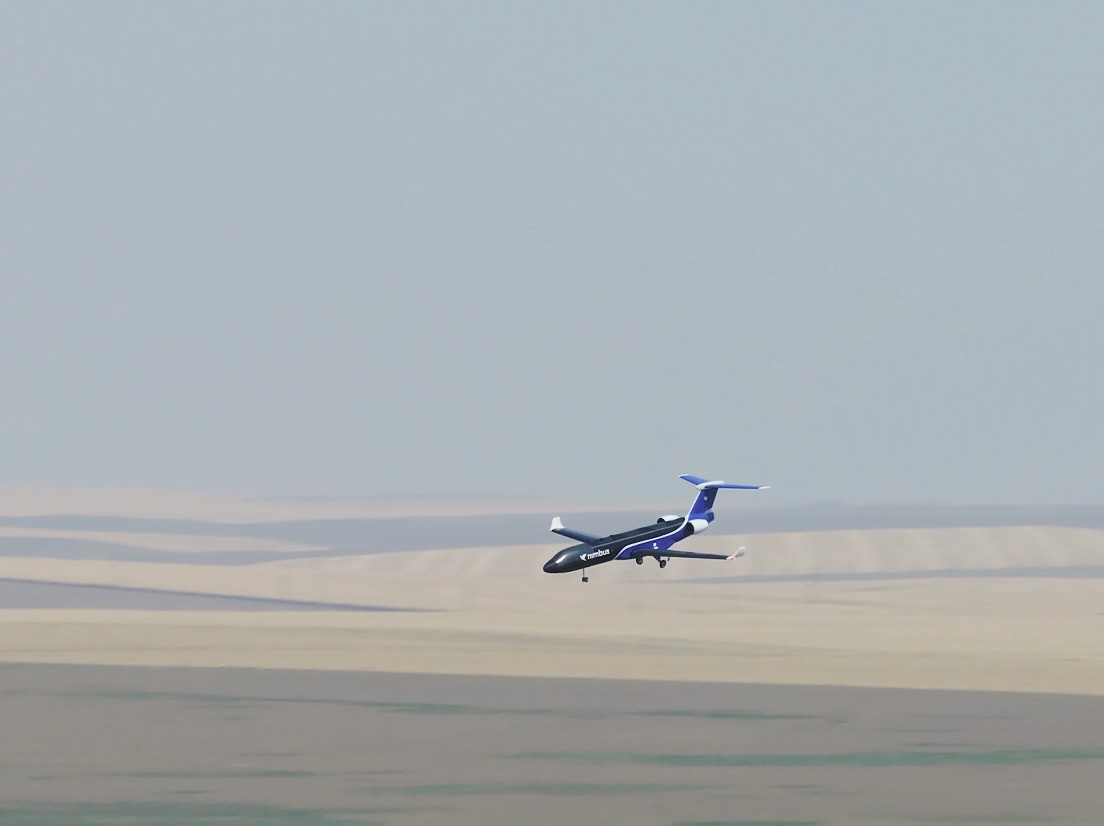
The team at Seattle-based Nimbus Aerospace had planned to finish testing its quarter-scale prototype earlier in the summer, but struggled to schedule one of the few pilots skilled in remote-controlled flight.
“Not many people wanted to fly this thing,” said Adrian Groos, co-founder and CEO of Nimbus. “It was a $1 million-plus model that was significantly bigger than anything else most people have flown, as well as heavier.”
The startup is developing a hybrid-electric aircraft with high-lift wings designed to improve fuel efficiency. Nimbus plans to build a six- to eight-passenger aircraft with a 1,500-mile range that uses half as much fuel as a comparable conventional plane.
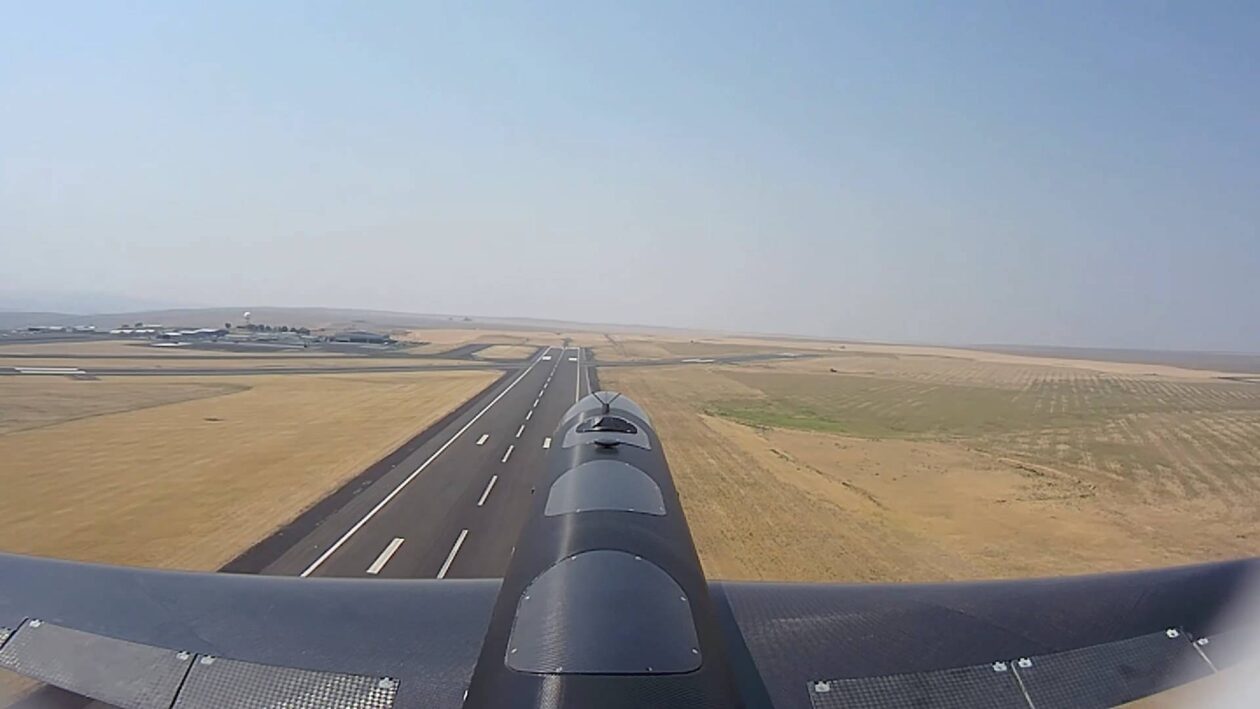
In June and August, the startup conducted two test flights of its NX1 prototype at the Pendleton Airport UAS Range in Oregon. The aircraft, which has a 15-foot wingspan and weighs 200 pounds, flew for 3 minutes 42 seconds in the first flight and 6 minutes in the second.
The tests achieved their goals of demonstrating the company’s manufacturing capabilities and the aircraft’s aerodynamics and stability, Groos said.
Nimbus has started engineering a full-scale prototype, with test flights targeted for 2028. The team is still deciding where to build the aircraft, considering Seattle against other locations around the country.
The ultimate goal is to begin delivering aircraft to customers in late 2030.
To get there, the team is working to navigate the Federal Aviation Administration’s certification process as smoothly as possible. The company has built a system called the ACT (AI Certification Tool) Platform to streamline and expedite FAA certification, and a former FAA deputy director of aircraft certification sits on the startup’s advisory board.
While the Nimbus product has a unique hybrid powertrain, components such as landing gear and lights use already-approved, pre-certified parts that will also be cheaper and easier to fix.
“We’re not trying to build a super novel design. That’s just a certification nightmare,” Groos said. “We’re trying to bring an aircraft to market that solves the needs that the people are asking for.”
And what customers want is a plane that burns less fuel and requires less maintenance, he added.
Aviation is one of the most difficult industries to decarbonize. It contributes 2.5% of the greenhouse gases emitted annually, but that percentage is expected to increase as other sectors go low-carbon and air travel increases. In addition to battery- and hydrogen-powered aircraft, sustainable aviation fuel, or SAF, is seen as the most promising solution for larger planes.
Washington state is also home to sustainable aircraft startup magniX, though others have shut down. Electric-aviation startup Zunum Aero and Outbound Aerospace folded, and ZeroAvia largely ceased operations in the state earlier this year, though it remains active in the United Kingdom. California-based Universal Hydrogen, which test-flew a hydrogen-fueled plane in Moses Lake, Wash., closed in 2024.
“People created products that weren’t really ready for prime time,” Groos said. That’s particularly the case for hydrogen-powered aircraft — the fuel is in limited supply and the path to certification is uncharted, he added.
Other companies in the hybrid-electric space include Heart Aerospace, Electra.aero and Ampaire.
Groos and Nimbus co-founder and Chief Technology Officer Akim Niyonzima met on LinkedIn and began working on a sustainable aircraft in 2023. The five-person team also includes Chief Marketing Officer Eno Oduok. The startup, a past Techstars participant, has raised about $4 million from an unnamed family office. The company hopes to add six engineers over the next year.