Longtime Seattle food photographer Scott Pitts spent 25 years capturing commercial imagery for major brands, and now he’s using that quarter-century archive to train Pallat. The new AI-powered production system is designed to eliminate costly reshoots while keeping real studio craft at the center of generative creative tech.
The platform combines fine-tuned open-weight models with Pitts’ extensive archive, allowing art directors to modify existing campaign assets — like swapping a topping, adjusting lighting, or changing a backdrop — in minutes through software rather than starting from scratch back on set.
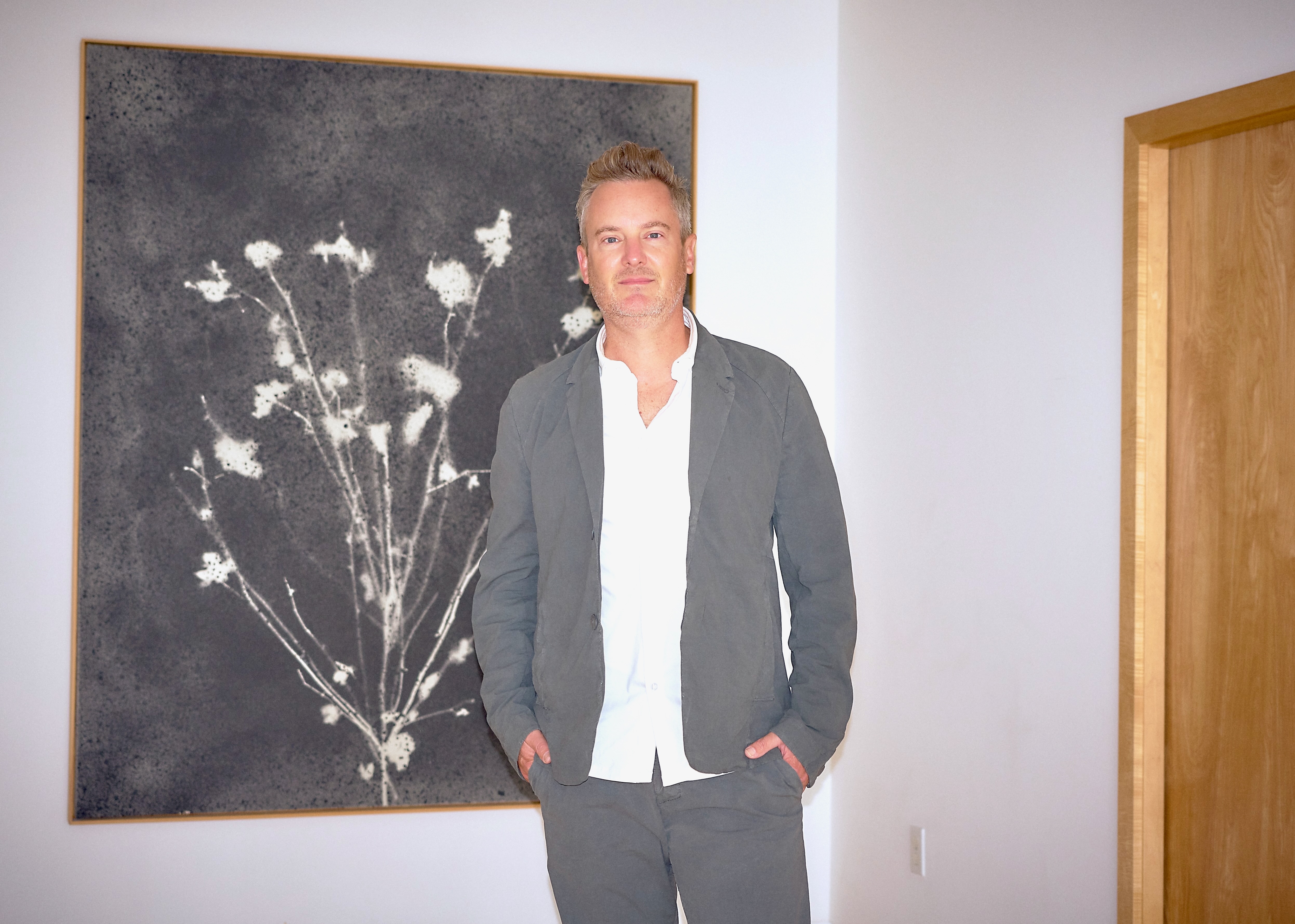
Pitts, a non-technical founder operating Pallat out of his Seattle photo studio, SP Studio, leads a nimble five-person team and believes domain experience is key to competing with generic AI platforms.
“We are close to the problem, and we’re looking at it from a photographic eye,” he said. “We’re making sure those outputs look photoreal, that they’re not going to get labeled as AI slop.”
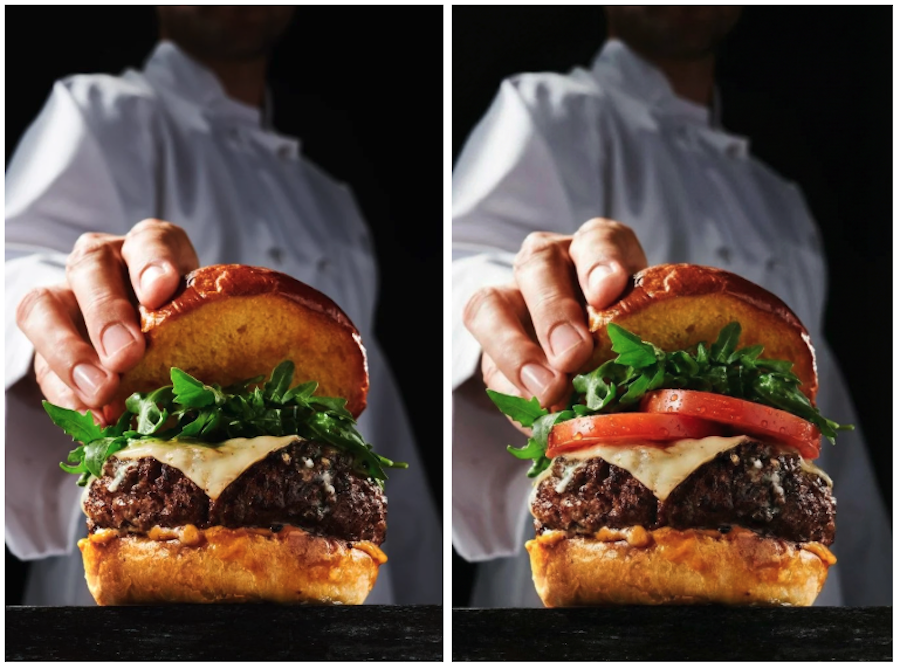
To show how the tech works in practice, Pitts points to a recent shoot for a national steakhouse client. After completing a complex setup for a burger — carefully layering the bun, patty, sauce, and greens — the brand asked if they had shot a version with tomatoes. Rather than calling back the food stylist and rebuilding the set, Pitts dropped the final image into Pallat, prompting it to add two tomato slices with subtle condensation, natural translucency, and accurate drop shadows cast onto the cheese below.
In another instance, a commercial seafood brand prepared packaging imagery for a buyer presentation, only for the client to ask to see the fish presented on a white plate instead. Pallat to the rescue.
Commercial photographers have long tweaked images using tools like Photoshop, but Pitts sees AI as the natural next step for advertising workflows — distinct from news photography, where image manipulation remains out of bounds. Where Photoshop requires painstaking manual editing to adjust a scene, Pallat handles complex lighting, translucency, and material physics in minutes based on a simple prompt.
The startup recently signed its first enterprise customer and is currently working directly with brands as a hands-on production partner while building toward full software access.
Pitts sees the technology not as a threat to his craft, but as a natural progression. He started his career shooting four-by-five film, then transitioned to digital and video. AI is another progression.
“My hope is that me building Pallat is sort of this bridge between tech and creative,” Pitts said. “Craft is still important. Judgment and taste are still probably some of the most important things.”
Continue reading for Pitts’ answers to our Startup Spotlight questionnaire.
In 50 words or less, give us your startup’s elevator pitch.
Pallat is a photographer-led AI production system built for food and beverage brands, born from a working photo studio. It combines licensed photography with generative workflows to help brands scale photo-centric content while maintaining the creative control expected from commercial photography.
What problem are you obsessed with solving?
I’ve spent 25 years watching brands solve the same problem: invest in a shoot, then ultimately need more usable imagery than the initial shoot was designed to deliver. Generic generative tools can create images, but weren’t built around the quality, control and production standards food and beverage brands require.
I’m obsessed with using AI to close the gap. Pallat gives brands a way to extend photography they’ve already invested in and create new production-ready imagery grounded in a licensed dataset and the standards of a traditional photoshoot.
What surprised you after talking to customers?
Because we’re so close to the problem we’re solving, their need for a solution and high bar for quality didn’t surprise me.
What did was how much generated imagery disrupted their existing workflows. There is no obvious owner, no review path and no shared vocabulary for feedback and approvals. Brands are asking us to help establish new workflows, and that has turned out to be almost as important as building the tech itself.
How has AI changed the way you build your company?
AI is a big part of why a five-person team can build something like this. Our tech stack is built on open-weight models that we fine-tune using proprietary training data, while foundation models support planning and a handful of day-to-day operations.
Not to oversimplify it, but in many ways my role at Pallat parallels production. I built a team of experts, defined the problem we’re solving and established the criteria for the output. A growing part of my work is getting those standards out of my head and structuring evals so they hold when I’m not in the room.
What’s one thing people misunderstand about your startup?
That Pallat is trying to replace photography. It’s far from it.
Practical photos are important inputs, and our studio continues to create net-new ones to expand the system. Visual trends are always evolving, so datasets powering creative tech cannot be static. The future of production is hybrid: practical photography and generative imaging working together, with each deployed where it creates the most value.
What’s the toughest decision you’ve made in the past year?
Resisting the urge to broaden Pallat before we establish product-market fit. The goal isn’t to automate every step as quickly as possible. It’s to understand which problems in the workflow are best solved through software.
What’s the one piece of advice you give to other entrepreneurs?
I truly believe some of the most interesting AI companies will come out of service businesses where the founder knows the industry exceptionally well — where the friction lives, which shortcuts a client will notice, and what excellence looks like in their vertical.
I spent a long time assuming my 25 years in photography was the past and AI was the future, and I had that backwards. The years on set that sharpened my taste and judgment, our dataset and the client relationships are the true compounding assets.
We’ll know our company has made it when…
When an art director at a food or beverage brand drafts a shot list dividing it into two columns: “Capture as Practical Photography” and “Generate in Pallat.”
When that becomes a normal way of planning, Pallat will have done what we set out to do.