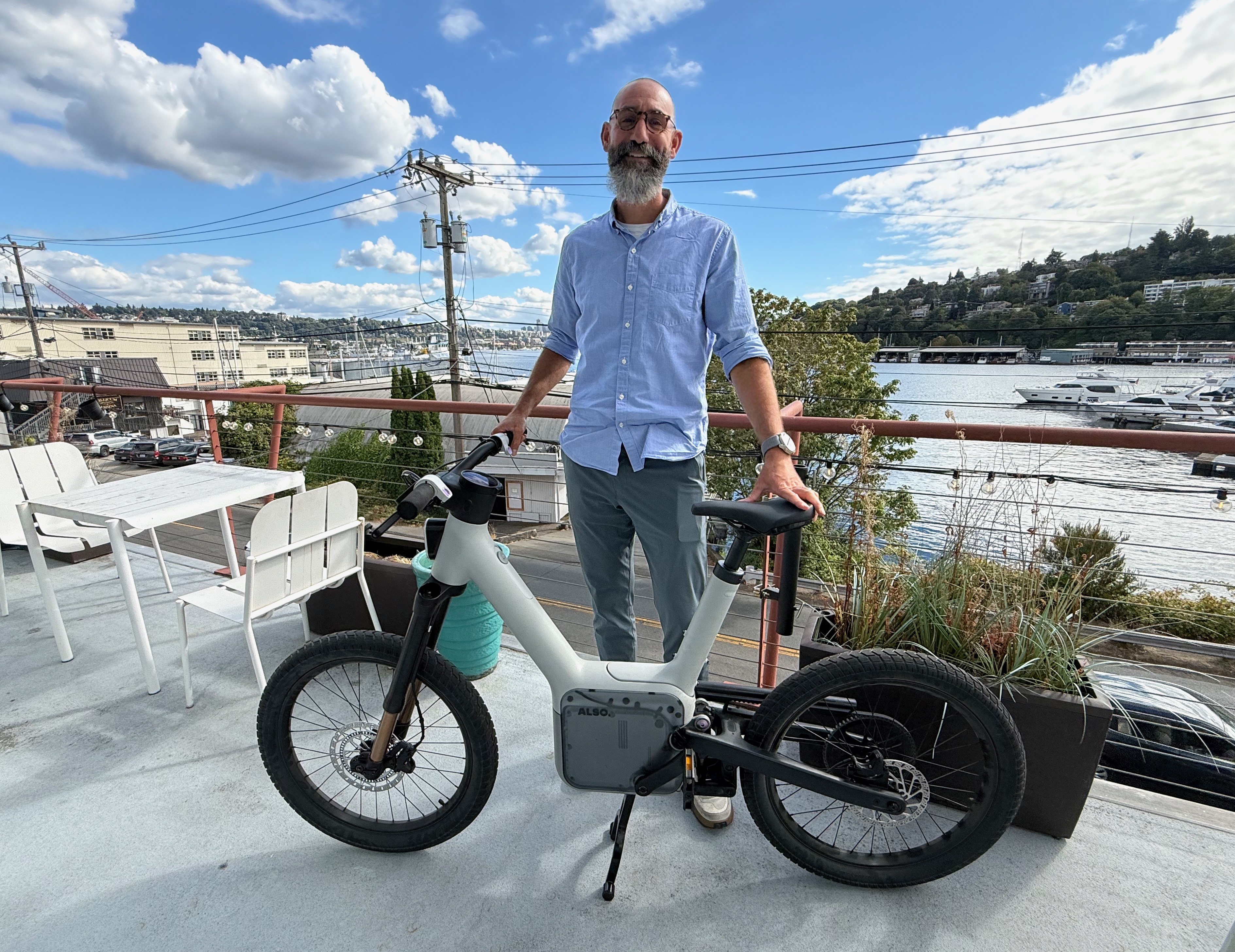
Also, a fast-growing electric micromobility startup born out of Rivian in Silicon Valley, has quietly pulled into Seattle and planted a flag at the epicenter of the city’s bike culture with an office on the north end of Lake Union.
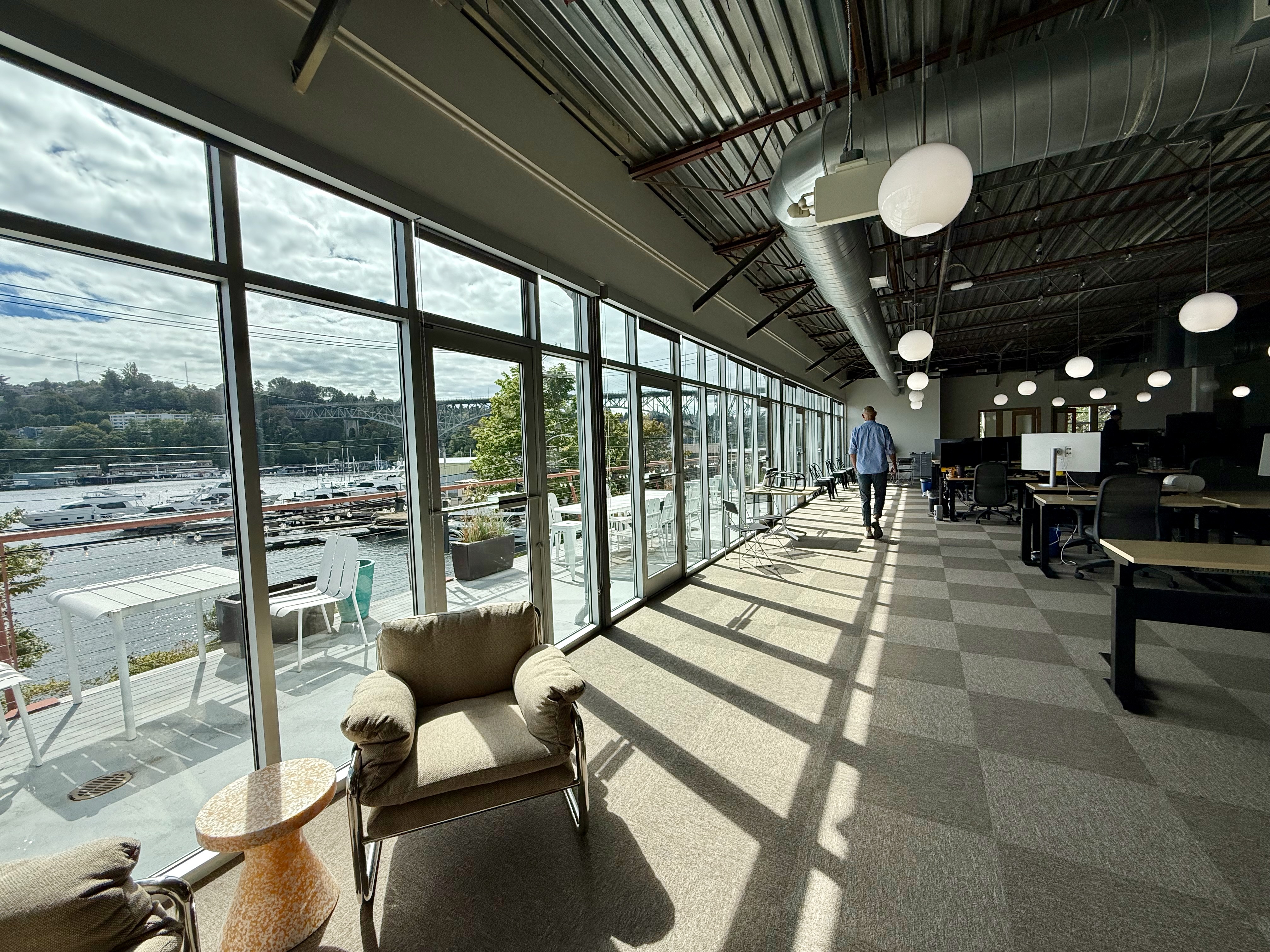
The 17,459-square-foot space at 1300 N. Northlake Way — which previously housed military-grade autonomous vehicle startup Overland AI — is situated directly along the Burke-Gilman Trail at the busy intersection of the Fremont and Wallingford neighborhoods. The headquarters for Brooks Running and the flagship store for outdoor retailer Evo are right across the street.
Ben Steele, Also’s chief commercial officer, is heading up the office. A nine-year veteran of REI, he was attracted to Also’s mission-based vision for the future of micromobility. He’s been tasked with building out the startup’s business operations, marketing, and customer functions from scratch.
First he had to find a dynamic office space. He called the location the hottest spot in the No. 1 bike commuting city in America.
“If you do the heat map in Strava for bike commuting, that is the white-hot spot,” Steele told GeekWire during a tour of the office. “When we said where do we want to be, we want to be where our customers are, where they’re working, where they’re living, where they’re shopping. And we want to be where bike commuters are. And this is that hot spot.”
Founded inside electric vehicle maker Rivian more than three years ago as a special projects group, Palo Alto, Calif.-based Also officially spun out as an independent company in March 2025. The startup is focused on developing software-defined micromobility solutions designed to replace car trips and last-mile commercial delivery, backed by partnerships with Amazon and DoorDash.
Also was co-founded by Rivian founder and CEO RJ Scaringe alongside Chris Yu, Rivian’s former vice president of future programs, who serves as Also’s president. The startup has already commanded major investor backing, achieving a $1 billion unicorn valuation following its spinout to fund vehicle development and scale its commercial operations.
The Seattle space officially opened in April and is currently home to 38 employees, with capacity to grow to around 60 on a second floor featuring sweeping views of Lake Union and the downtown skyline.
Also employs roughly 350 people globally across Palo Alto, Seattle, and a new commercial team in Ghent, Belgium. The hybrid Seattle office requires employees in three days a week — though Steele notes cross-functional visits regularly push daily headcount past 50. The company has drawn talent from Seattle-area giants like REI, Brooks, Rad Power Bikes, Sonos, and Amazon.
Steele pointed to the city’s unique intersection of cycling culture, software technology, and deep consumer retail roots as the primary draw for building a major presence outside Silicon Valley.
“If you think about retail and commercial talent, innovative companies like Nordstrom and Amazon and Starbucks and yes, REI, the talent pool that we have to draw from for this part of the business, this is really the sweet spot to do it,” Steele said.
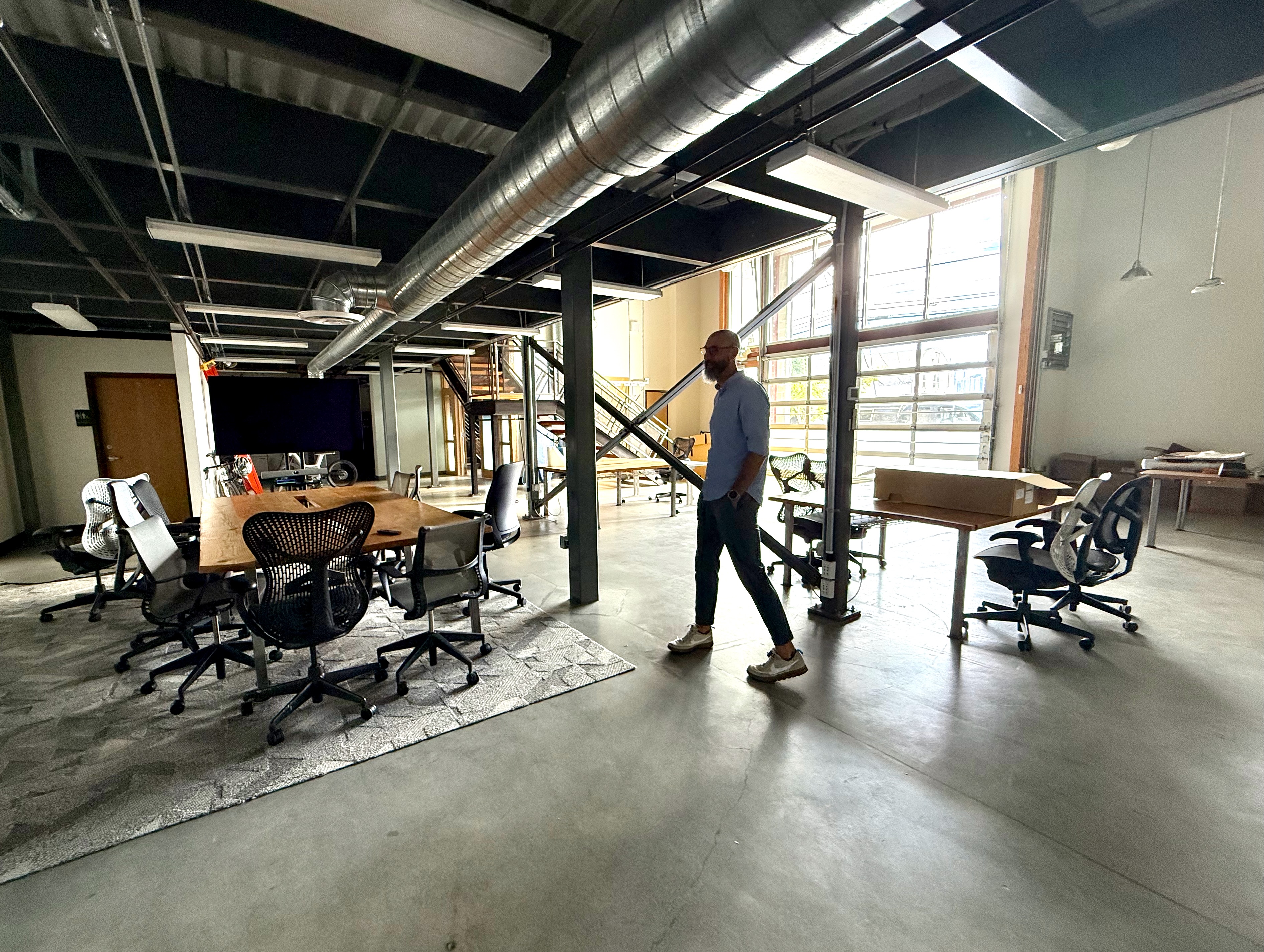
On the ground floor of the building, Also plans to build out its very first dedicated retail store and customer service bay, complete with space for a co-working or food and beverage partner. Steele called the layout a deliberate move to keep the commercial team grounded in real-world rider interactions.
“The theory is, we want our team really living that experience with our customers,” Steele said. “To have our retail and our office together really means we’re not theorizing about what does that experience look like with our customers. We’re living it every day.”
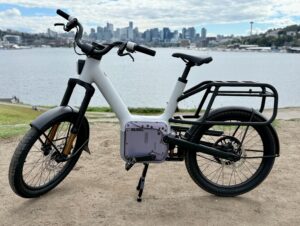
In the meantime, local riders can try Also’s flagship e-bike, the TM-B, across the street through a pop-up at Evo. Seattle is one of 10 initial U.S. markets where mobile sales teams are conducting test spins out of dedicated vans, coffee shops, and partner locations like Evo and Rivian spaces. Nationwide, the company has already surpassed 10,000 test rides for the high-tech bike, which starts at $3,500.
Beyond personal e-bikes, Also is setting its sights on transforming commercial delivery — a push anchored by a high-profile multi-year collaboration with Amazon, headquartered just across the lake in South Lake Union.
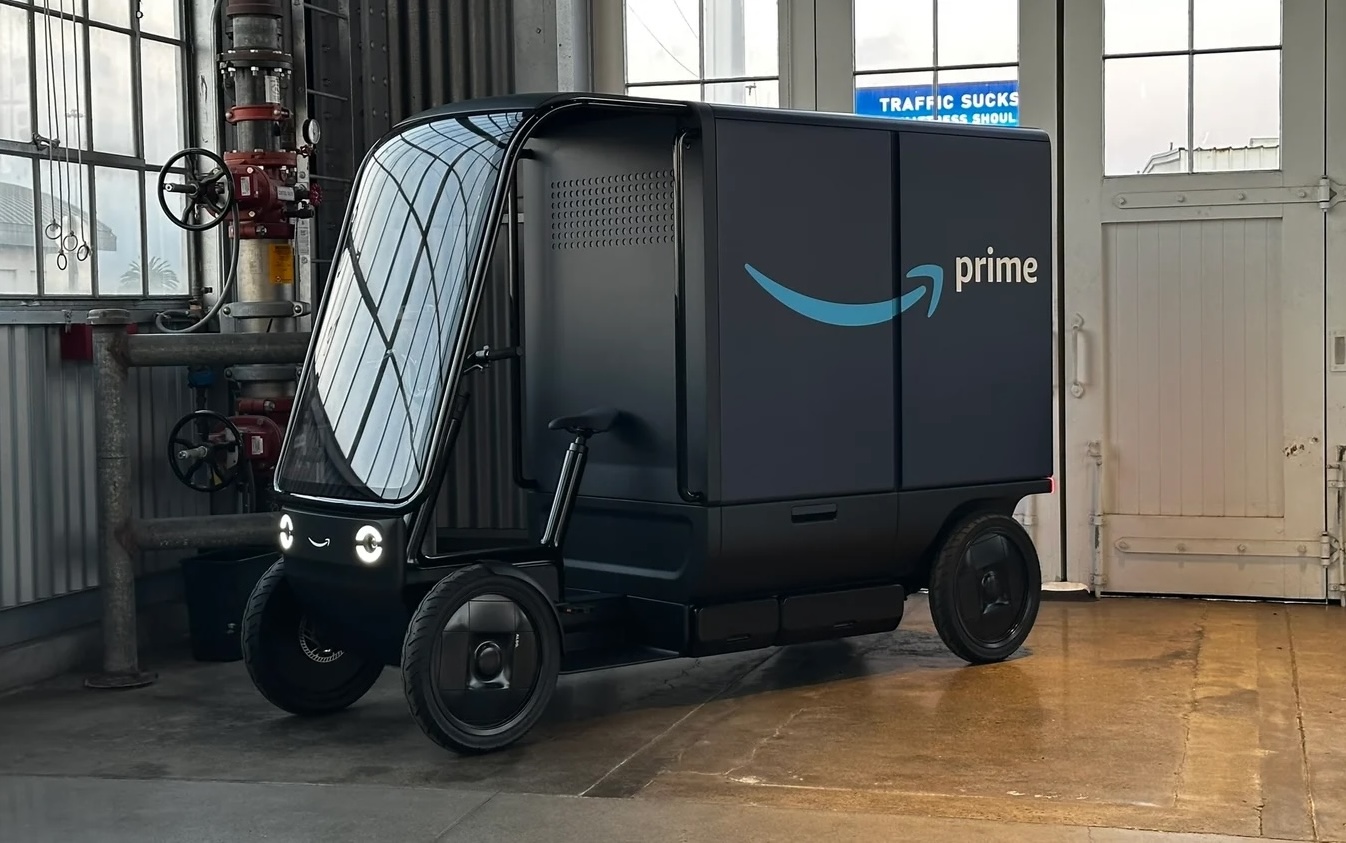
The partnership, announced last fall, centers on a customized pedal-assist e-cargo quad (the TM-Q) designed to navigate dense city centers and operate within dedicated bike lanes. Also plans to roll out prototype units with Amazon in two cities later this year before broader expansion in 2027.
“If you think about a city like Paris, where they’ve closed a lot of Paris down to cars, you can use a vehicle like that to get into the city,” Steele said, pointing out that the quad leverages automotive-grade technology to carry heavy delivery loads up steep hills without the high maintenance of traditional bike chains and derailleurs.
The company is also collaborating with DoorDash to test autonomous last-mile delivery using smaller form-factor vehicles capable of traveling up to 30 mph on streets, hopping curbs, and navigating sidewalks directly to a customer’s front door.
Also enters the market as Seattle’s e-bike landscape undergoes a major shift. The city was once ground zero for breakout success Rad Power Bikes, which helped pioneer consumer e-bikes before suffering a steep post-pandemic downturn that culminated in a Chapter 11 bankruptcy filing and an asset sale early this year.
Steele, who watched Rad’s trajectory from his time leading retail operations at REI, noted that Also is taking explicit notes from the broader e-bike industry’s past missteps. Rather than treating their machines like standard bicycles with added batteries, Also is focusing heavily on custom, automotive-grade hardware and software-defined integration — while staying intentionally lean on retail overhead.
“Building the best e-bike is not our mission,” Steele said. “Building the future of micromobility is our mission. And the first thing we’re building is the best e-bike.”
That philosophy directly shapes how Also plans to roll out its physical footprint. With customer orders now converting and initial Launch Edition bikes shipping over the coming weeks, Steele says the startup is taking an adaptable approach rather than rushing to sign leases on traditional retail store networks.
In addition to fixed hubs like the North Lake Union location, Also is launching a national “test spin tour” using mobile vans to bring 10 bikes and dedicated staff to 20 cities across six weeks.
“I don’t want to be beholden to a single model,” Steele said of the expansion plans. “The thing I wanted to not do is say let’s go build 10 stores and then see if that’s right. Long-term vision is to be really adaptable and really agile with how we do it, and to have what’s the right solution in each market versus a single model that we try to drop in everywhere.”
For Steele, bringing Also to Seattle isn’t just about opening an outpost or testing hardware — it’s about actively shaping the daily routine of local commuters along the lake.
“We want this to be a part of that vibrancy of the neighborhood, not just a place you go by,” Steele said.
That civic integration hits close to home for Steele, who lives near the University of Washington and instead of sitting in his car on Montlake, commutes down the Burke-Gilman Trail on an Also e-bike every morning.
“I arrive at work less stressed out on the Burke-Gilman Trail,” Steele said. “I’m living the product benefit every day. It’s pretty awesome.”