
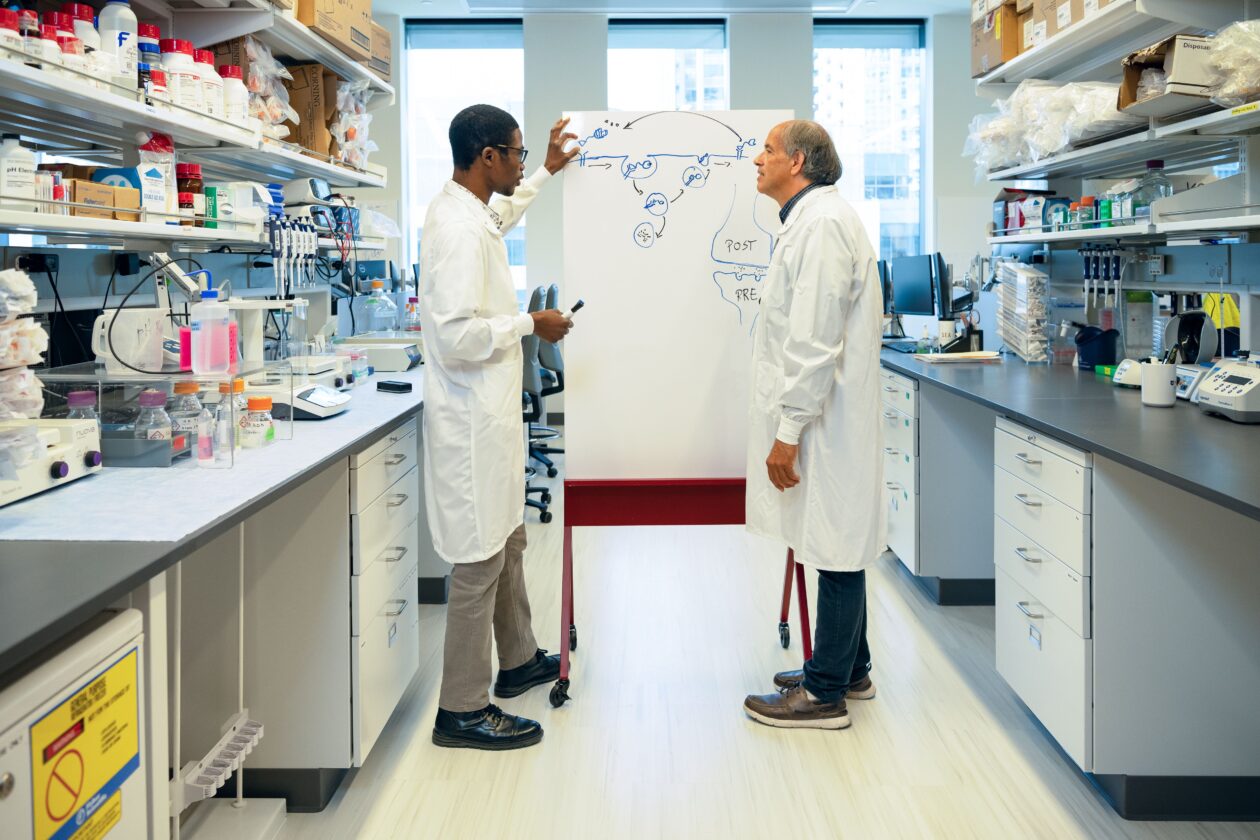
Seattle Children’s is announcing today the launch of its Institute for Pediatric Innovation, a $10 million initiative with eight focus areas and a chief innovation officer yet to be named. The hospital is positioning the institute as the “core engine” driving its strategic plan.
CEO Dr. Christopher Longhurst has specific health challenges in mind where he hopes today’s technology could quickly improve care for pediatric patients.
“The question is, with this new generation of tools — not just AI and large language models, but precision health tools, whole genome sequencing, etc. — how can we leverage these tools to solve problems in ways that we have not before?” Longhurst said in an interview with GeekWire.
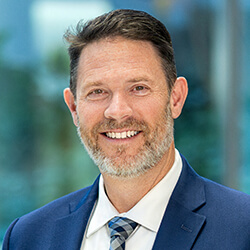
The institute “is not a new AI center. This isn’t about the shiny objects or the tools. This is about the outcomes that we can achieve and the impact that we can have,” Longhurst said. “So really, the focus here is impact at scale.”
Seattle Children’s has approximately 600,000 patient visits last year and reported approximately $2.6 billion in expenses.
Longhurst became CEO in January after a decade at UC San Diego Health, where he founded and directed the Joan & Irwin Jacobs Center for Health Innovation. The institute is Seattle Children’s most prominent new organization-wide initiative since he took the job.
The institute will concentrate on eight areas:
AI tools. Seattle Children’s plans to develop, test and use new technology tools. Longhurst said there is a need for a digital care platform specific to pediatric patients where families and providers can manage appointments, medications, results and communications. The hospital is already helping build one with industry partners and Longhurst is eager to include an AI chatbot for caregivers. Other AI work includes a pilot of an automated tool that rapidly generates anonymous copies of medical images for research and a listening tool that drafts clinical notes during appointments.
Industry partnerships. Longhurst said these cut across the other focus areas. The hospital is working with industry on the care platform, for example, and plans to partner on seeking FDA approval for pediatric uses of existing devices.
Innovation unit. The hospital is establishing a facility that offers advanced care and can test new pediatric devices. Longhurst pointed to Ochsner Health’s innovation lab as a model and said he wasn’t aware of a comparable facility focused on children.
Medical device innovation. This focus overlaps with the innovation care unit and aims to serve unmet pediatric needs. Longhurst noted that numerous medical devices designed for adults are being used off-label for children. One piece of the solution is taking data related to these applications and seeking FDA approval for use in kids.
Precision medicine. Seattle Children’s already offers targeted therapies and aims to expand them. A recently published study from the hospital found that genome analysis, usually performed only for critically ill patients, could lead to faster diagnoses for non-ICU patients, particularly children with failure to thrive. “The question for us now is … how do we make a research project into something that we do every day at scale?” Longhurst said.
Biomedical data. Patient monitoring produces vast amounts of electronic data that can be combined with genetic and protein-expression information. The hospital is pursuing technology that recognizes patterns across these sources in real time to guide treatment for critically ill and other patients.
Therapeutics. Research into next-generation cell, gene and protein therapies will expand.
Training for young scientists and clinicians. The hospital’s Invent@SC program provides mentorship and education for early-career researchers and clinicians. The initiative focuses on treatments discovered at Seattle Children’s that can be widely adopted.

Projects from the institute must be approved by a Seattle Children’s AI Review Board, which will assess whether proposed uses of AI are ethical, equitable and responsible. Those involving research will also go to the Institutional Review Board for regulatory compliance.
Seattle Children’s has recruited three external launch advisors to help recruit the CIO and develop the institute’s organizational structure. They are Dr. Matthew Lungren, a Stanford University adjunct professor and former chief scientific officer for health and life sciences at Microsoft; Dr. Kevin Koo, a radiologist whose experience includes leadership at Seattle Children’s and roles at UW Medicine and McKinsey & Company; and Dr. Jessica Mega, a cardiologist and co-founder of Verily, an Alphabet company.
Longhurst said the work will require a cultural shift at the institution, from risk aversion to openness to change.
The institute’s initial funding comes from a $5 million anonymous gift and $5 million in existing resources. Longhurst acknowledged the amount is limited relative to the scope of the work.
“That’s really just the beginning,” he said. “And what that should signify is a commitment from me as the leader to allocate actual investments in this space.”