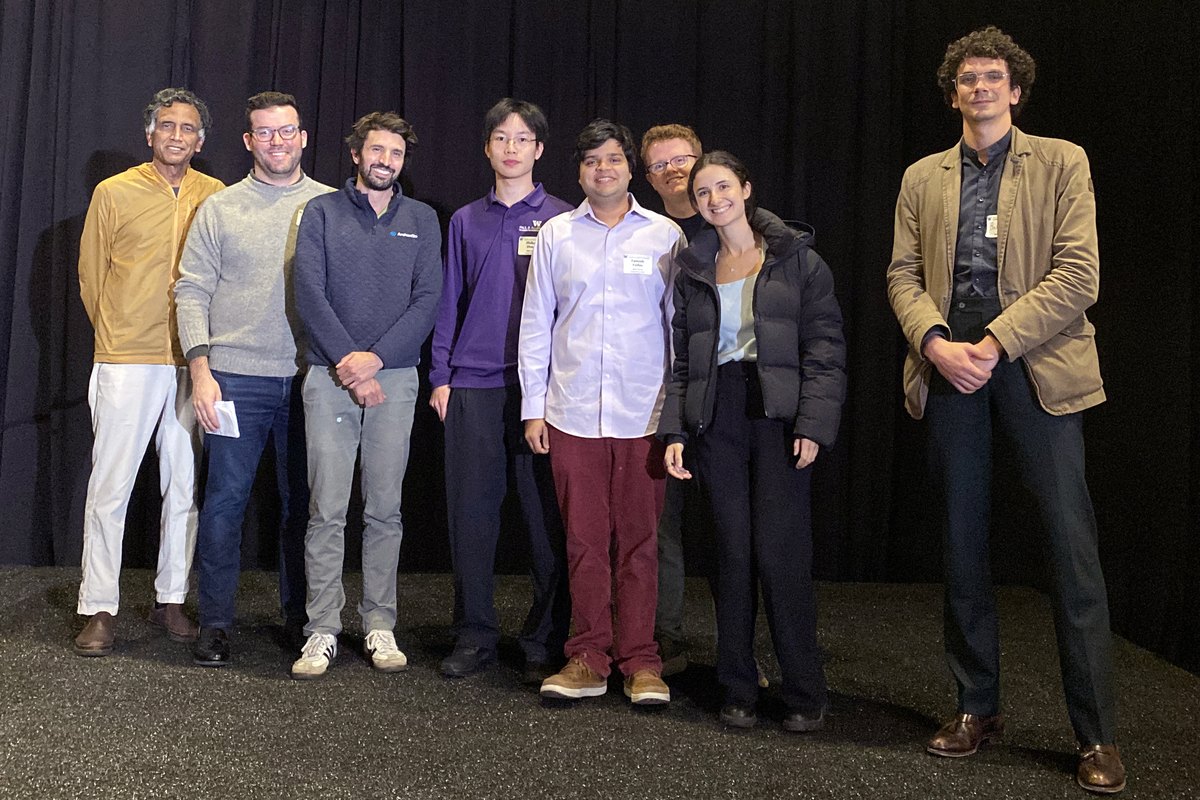
A University of Washington project that uses AI agents to squeeze AI models onto tiny devices — such as a solar-powered camera that spots elk in the wild — won the Madrona Prize at the Allen School’s annual Research Showcase on Thursday.
Seattle venture capital firm Madrona has awarded the prize since 2006 to Allen School student projects that combine strong research with commercial potential. The winners were chosen from among the student posters presented at the evening event on the UW campus.
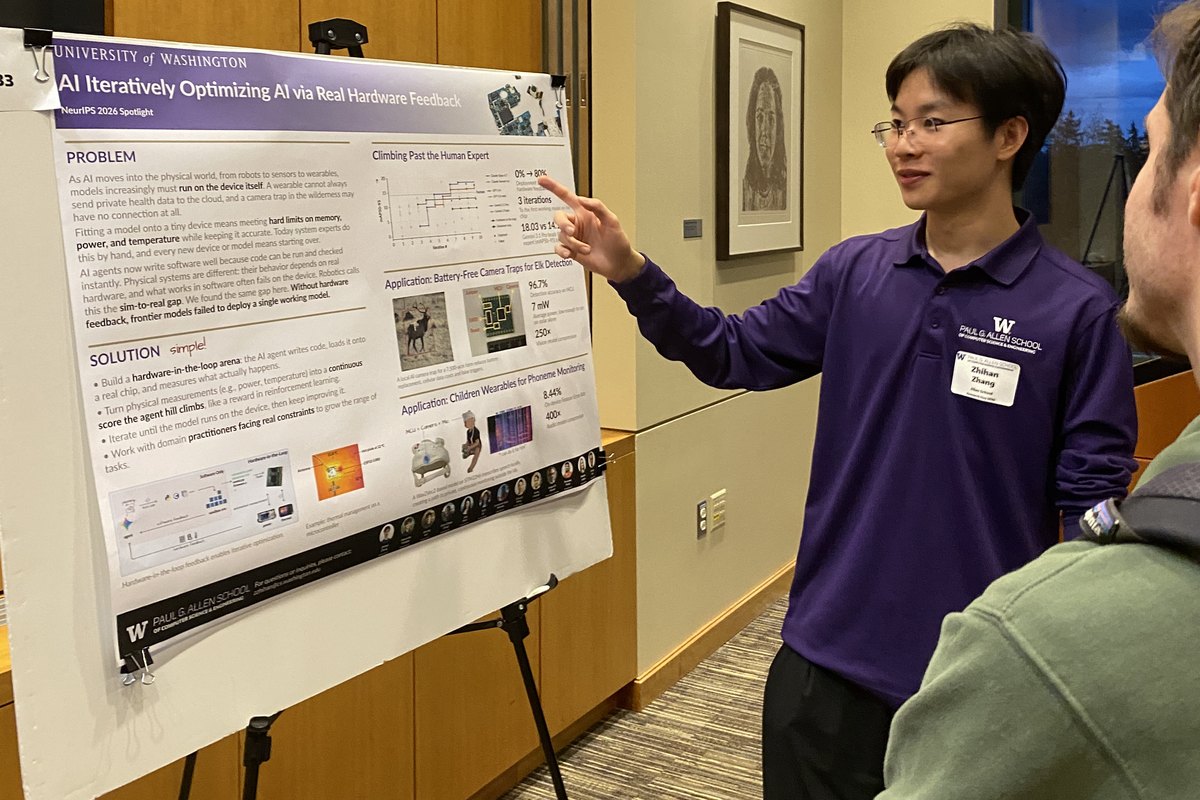
Zhihan Zhang, a PhD student in the Allen School of Computer Science & Engineering, presented the winning project. It tests whether AI agents can do a job that experts now do by hand: shrinking AI models and tuning device software to run on small, low-power chips with tight limits on memory, power and heat.
In the team’s tests, leading AI models failed at the task without feedback from real hardware. The team built a system that let the agent load its work onto real hardware, measure the results and try again. With that feedback, the agent beat human experts within seven rounds.
The researchers used the approach on two real-world projects: an elk-detection camera trap, which needed its vision model shrunk by 250 times, and a wearable device that records children’s speech for child development research.
The team released its benchmark, called Embedded Arena, as open-source code. Allen School faculty members Shwetak Patel, Vikram Iyer, Natasha Jaques and Kurtis Heimerl also worked on the project.
Other collaborators: Alexander Metzger, Jiuyang Lyu, Chun-Cheng Chang, Jiayi Shao, Yujia Liu, Emmanuel Azuh Mensah, Edward Wang and Gregory D. Abowd.
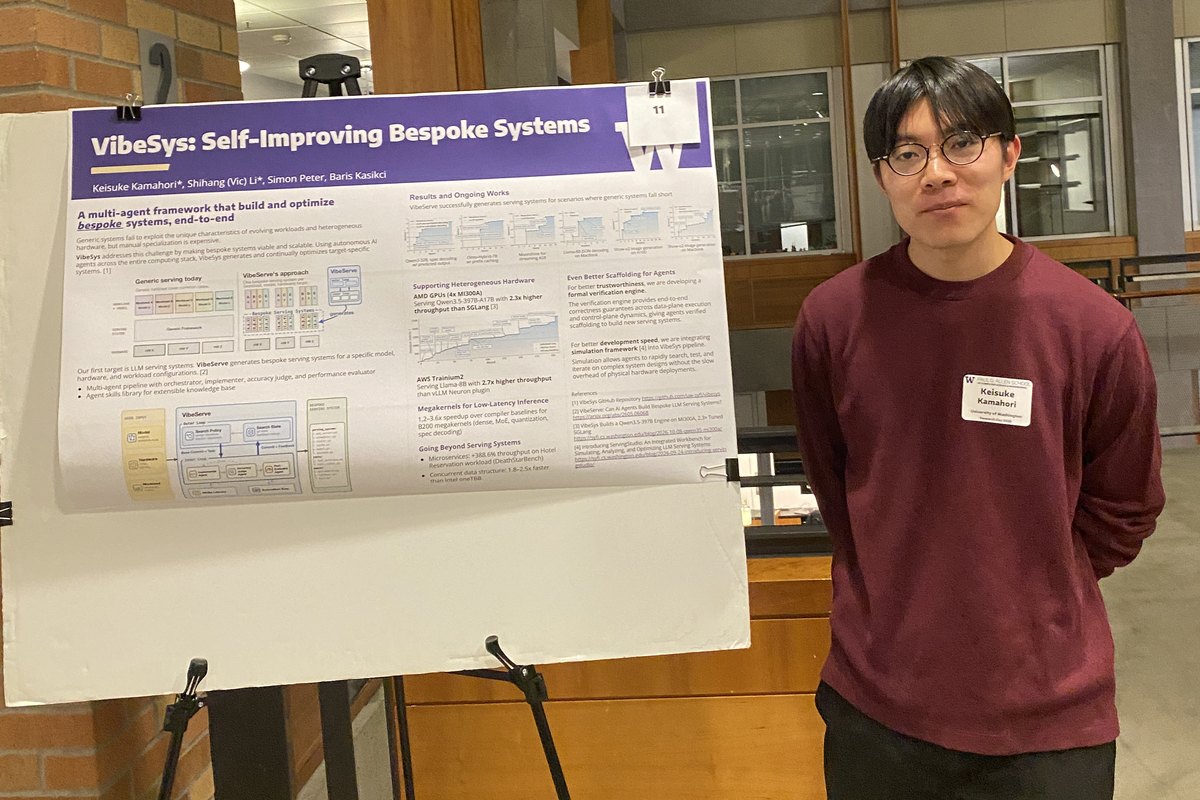
The People’s Choice award went to Keisuke Kamahori for VibeSys, a project that uses AI agents to write custom software for a specific chip and task, then keep improving it, instead of relying on general-purpose tools built for common setups.
Its first application, VibeServe, writes the behind-the-scenes software that takes requests from users and runs them through an AI model. On Amazon’s Trainium2 chips, the software it built handled up to 2.7 times as much work as an existing system. Shihang (Vic) Li and Allen School faculty members Simon Peter and Baris Kasikci also worked on the project.
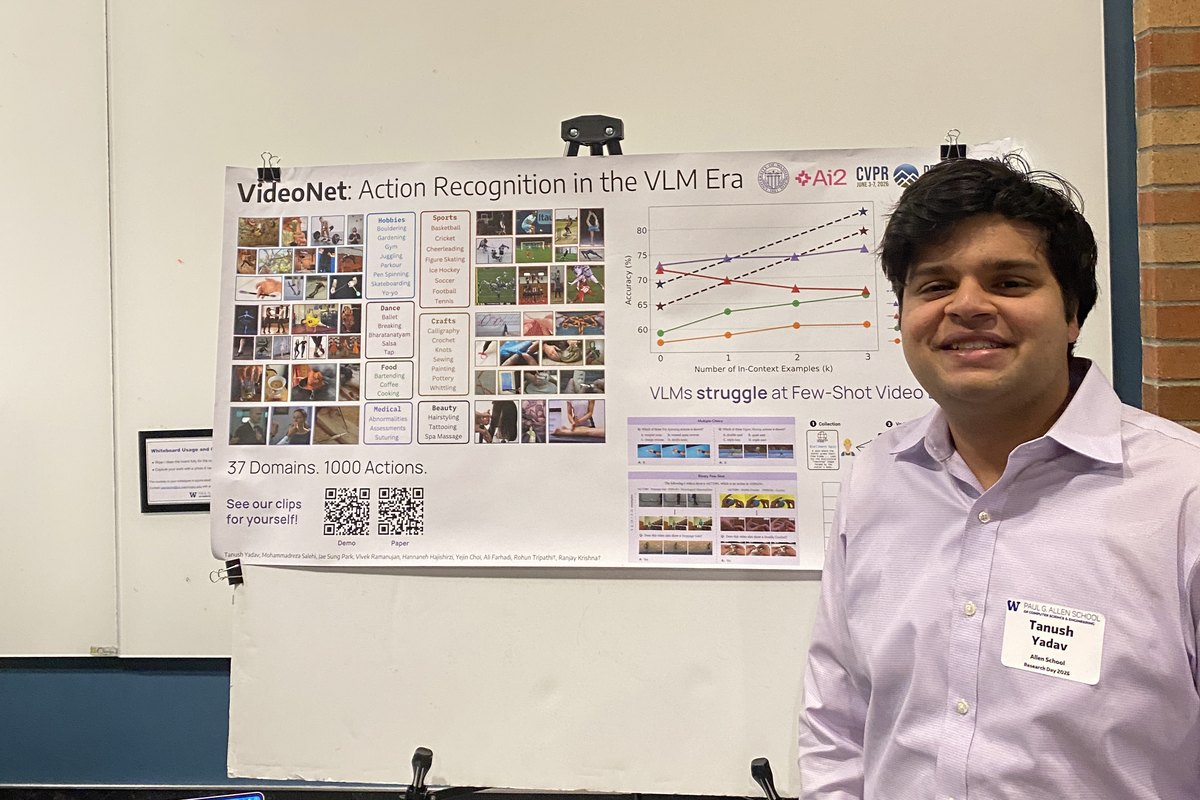
The first runner-up for the Madrona Prize, Tanush Yadav, presented VideoNet, a test of how well AI models recognize specific actions in video, such as a particular bouldering move or a type of surgical stitch. It covers more than 1,000 actions across 38 fields.
Leading AI models struggle with it compared to ordinary people. Shown three examples, people improved their accuracy by about 14 percentage points, while AI models improved by about 3 percentage points.
Allen School faculty members Ali Farhadi, Hanna Hajishirzi and Ranjay Krishna, and former Allen School faculty member Yejin Choi, now at Stanford University, also worked on the project.
Other collaborators: Mohammadreza Salehi, Jae Sung Park, Vivek Ramanujan and Rohun Tripathi.
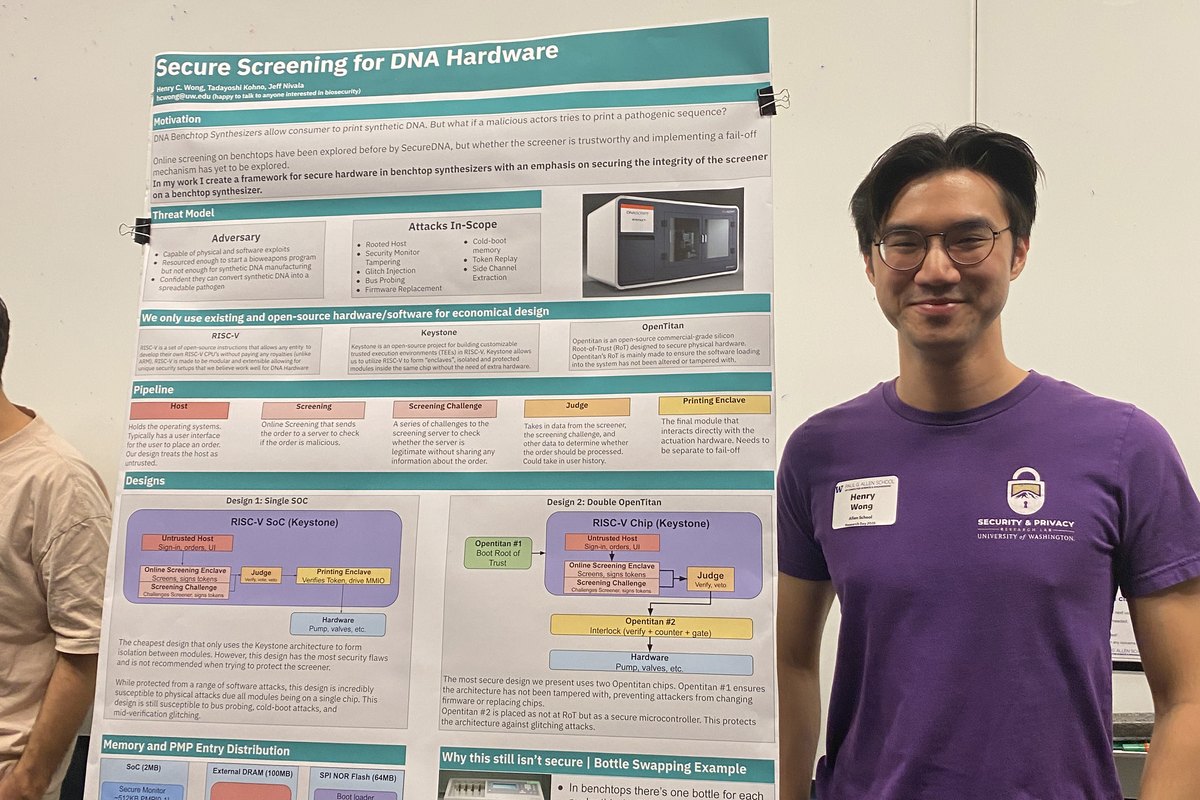
The second runner-up, Henry Wong, presented work on securing benchtop DNA synthesizers, machines that let users print synthetic DNA.
His project focuses on protecting the screening software meant to stop someone from printing a dangerous pathogen, and concludes that even perfectly secure hardware wouldn’t fully solve the problem.
Allen School faculty member Jeff Nivala and former Allen School faculty member Tadayoshi Kohno, now at Georgetown University, also worked on the project.
All of the presenters are PhD students in the Allen School.