BELLEVUE, Wash. — There is no prominent signage outside Anduril’s downtown Bellevue office. The name isn’t listed in the building directory, on the suite door, or in the lobby. That may be by design: Inside, Anduril engineers are quietly building AI-driven, autonomous technologies intended to keep the U.S. and its allies ahead in a rapidly changing military landscape.
Step through the front doors and it becomes clear that this is no ordinary tech company.
Scattered across desks, production tables, conference rooms and showroom labs are autonomous drones ranging in size from a microwave to a ping-pong table, alongside next-generation digital night-vision goggles and military-grade edge computers designed to keep soldiers connected in an increasingly data-rich battlefield.
The Costa Mesa, Calif.-based defense giant — which closed a $5 billion funding round at a $61 billion valuation earlier this year and is reportedly targeting a $100 billion valuation — is rapidly building a massive engineering footprint in the greater Seattle region. It includes modern offices in downtown Bellevue and Seattle, and a multi-acre military testing facility near Carnation, Wash.
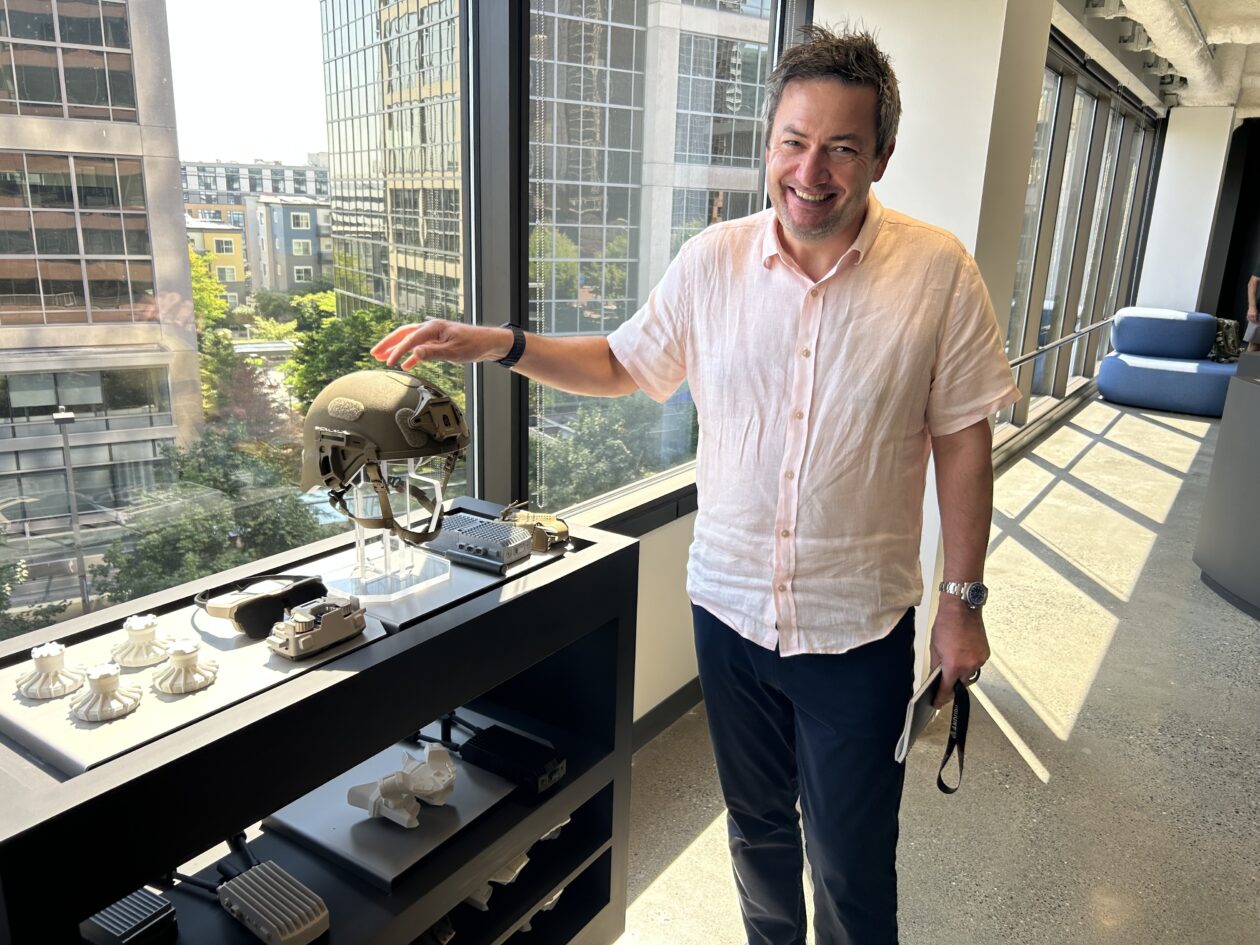
GeekWire got a peek inside the iconoclastic company’s Seattle-area operations this week. We toured the Bellevue offices, demoed products, and sat down with senior vice president Tom Keane. The former Microsoft cloud executive leads Anduril’s local presence and oversees its connected warfare division, including mixed reality, AI and edge computing technologies.
Keane was clear about the company’s growth ambitions in the Seattle region: “I could absolutely see a world where we get to 1,000 people here in terms of engineers,” he said.
Asked when that milestone could be reached, Keane said, “It’s sort of almost as fast as you can hire people.” Realistically, that will likely occur over the next two years.
Anduril currently employs 560 people in its Bellevue and downtown Seattle offices, up from about 30 four years ago. That’s when Keane, who had interviewed with 62 companies looking for a new challenge in edge computing, joined Anduril because of what he called “world-class teams in every discipline.”
With more than 110 open positions in Washington state and a newly leased third floor in downtown Seattle coming online, Keane said the regional expansion is only accelerating.
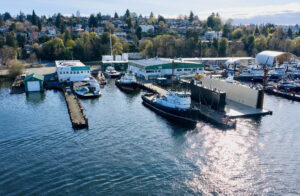
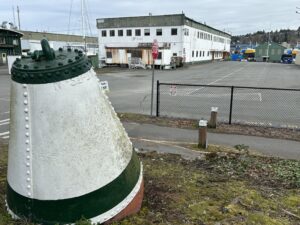
The regional workforce was until recently slated to include a maritime manufacturing hub along the Lake Washington Ship Canal in Seattle. However, as GeekWire reported this morning, Anduril has since vacated the former Foss Maritime shipyard space after the U.S. Navy canceled the autonomous warship program the company was pursuing.
But Anduril’s maritime ambitions haven’t gone away. Alongside its autonomous aircraft, low-cost cruise missiles and counter-drone interceptors, the company continues to develop a large subsea fleet, from modular survey vehicles to the extra-large, school-bus-sized Dive-XL.
The Big Tech pipeline meets ‘grit’
The company’s Seattle-area ramp-up is a play for the region’s engineering talent — a mix of disciplines well-suited to a next-generation defense hardware company, and one Keane says is hard to find in one place. That includes distributed systems engineers, AI and machine learning specialists, and advanced optics experts.
Another advantage: proximity to major military installations including Joint Base Lewis-McChord and Naval Base Kitsap.
Tech giants such as Microsoft, Amazon, Google and Meta have long dominated local engineering hiring. But Anduril is recruiting aggressively from those companies, pitching engineers who want to move fast and see their work in the field.
Deep pockets and close ties to the U.S. defense establishment don’t hurt, either.
Anduril got a large infusion of that talent 18 months ago, when it took over Microsoft’s IVAS (Integrated Visual Augmentation System) program along with about 100 local engineers who had spent years developing augmented reality hardware for the U.S. Army.
“If you take machine learning and AI… you can look out any of these windows and see places that we can recruit from,” Keane said from a conference room overlooking downtown Bellevue. “For a lot of software engineers, this is incredibly applied.”
Keane acknowledges the company’s culture isn’t for everyone. In fact, Anduril got plenty of buzz last year with its edgy recruiting campaign, “Don’t Work at Anduril.“
Rather than plush tech perks and work-from-home flexibility, Anduril pitches what Keane calls “grit” — a willingness to take ownership of hard engineering problems and test them in the field. It’s very much an in-office culture, in part because the company builds hardware.
Anduril also moves fast, an approach Hawaiian-shirt-wearing founder Palmer Luckey wields against slower traditional military contractors.
The company’s “grit” translates directly into how Anduril tests its gear.
In rural Carnation, Wash., about 20 miles east of Bellevue, Anduril operates a testing range with a built-out “shoot house” for low-light tactical work. It gives engineers a place to iterate on code and hardware in the mud and rain alongside active-duty warfighters.
Among them: members of the Army’s 75th Ranger Regiment from nearby Joint Base Lewis-McChord, who recently put Anduril’s EagleEye mixed-reality system through its paces on the firing range and obstacle course.
Hands-On with ‘EagleEye’ and Lattice
During a walkthrough of the Bellevue facility, Anduril’s team showed us a wide range of hardware being designed, tested, and calibrated on site.
The centerpiece was EagleEye, the company’s heads-up hardware and software suite built for warfighters. Historically, soldiers have had to lug 3 to 5 pounds of glass and electronics on their helmets, paired with fragmented radios, specialized batteries and thick cables.
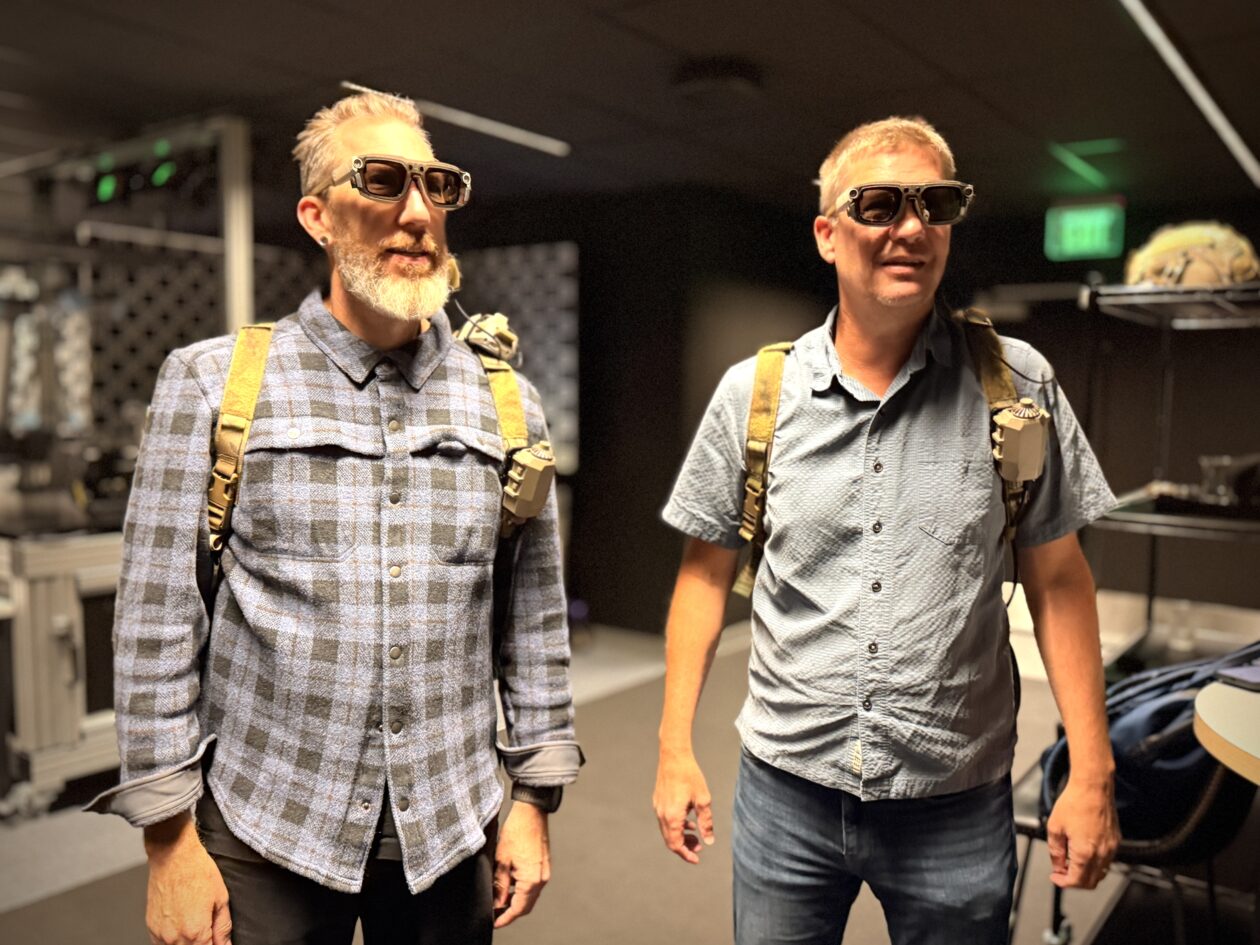
Anduril’s system strips that down to a 115-gram pair of augmented reality glasses — about four ounces — built in collaboration with Meta (for waveguides), Canon (for sensors), Qualcomm (for custom silicon) and Oakley (for ballistic protection).
I tried on the lightweight camouflage backpack and glasses — no helmet in this case — in a demo in the Bellevue testing lab. It ran through three operational “vignettes” driven by Anduril’s core Lattice software:
- Tactical HUD: A heads-up display projecting friendly force markers, compass headings, and mini-maps into the user’s field of view so troops don’t have to look down at a handheld screen while moving.
- Threat Detection: Real-time alerts from external AI sensors — such as a tower camera or an overhead drone — highlighting incoming aerial threats directly in the display.
- Command & Control (C2): The ability to assign tasks to autonomous technology. Using a small handheld controller, an operator can send a virtual Ghost drone to a location, pull up a live video feed and execute a simulated strike.
In each case, the user controls the system — navigating between maps and text — with a click of a button on a small device connected to the front of the backpack.
The team also previewed its upcoming digital night vision system. Instead of the narrow “toilet paper roll” view of traditional analog goggles, Anduril’s VR-style digital displays offer an 84-degree field of view. That’s more than double the 40 degrees warfighters get in devices today.
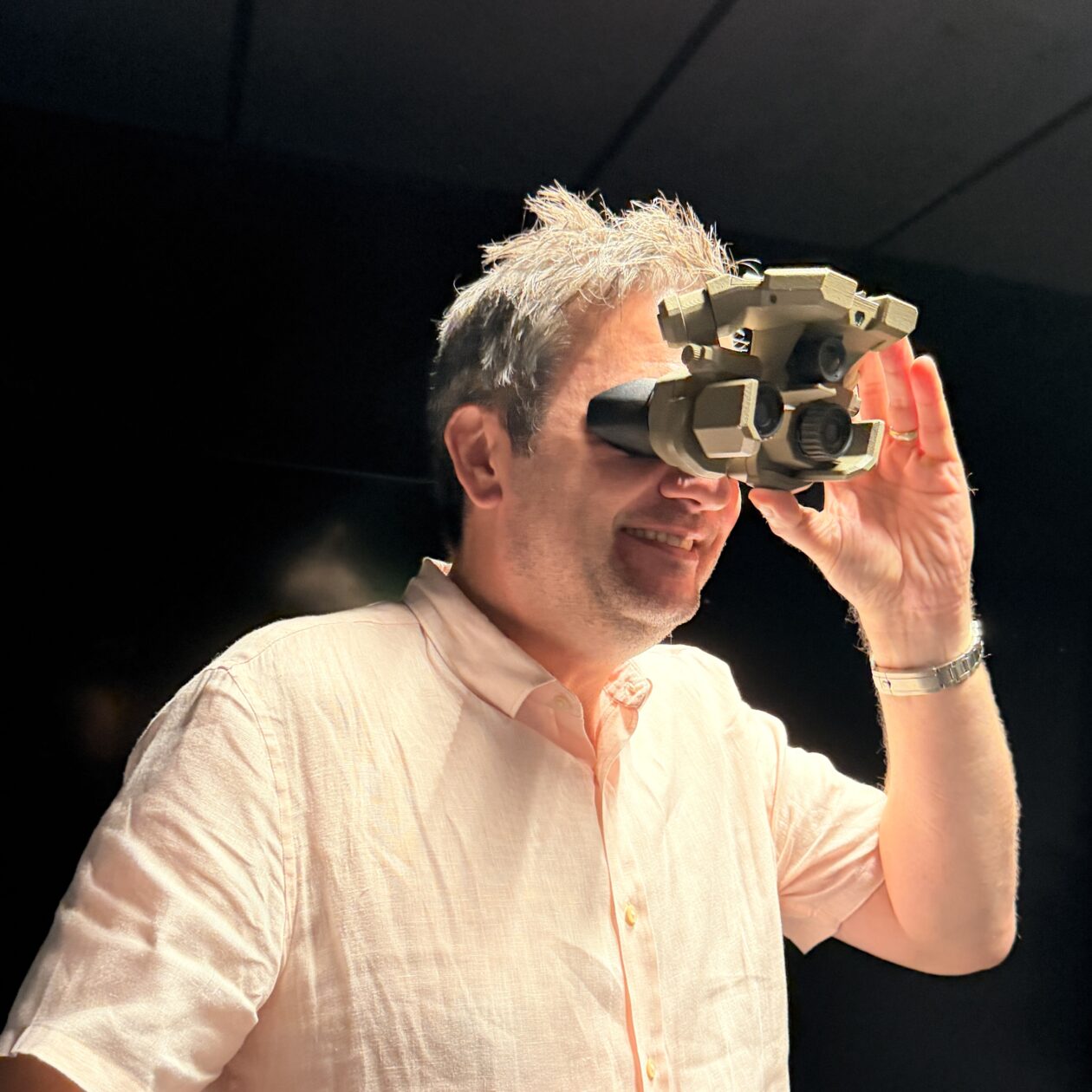
Using machine learning models, the system fuses thermal imagery and low-light camera feeds in real time, making heat signatures leap out in pitch-black environments.
To ensure every pixel lands accurately without causing motion sickness, Anduril’s engineers use custom robotic arms to run geometric calibration on each lens distortion map before it leaves the facility. An engineer running the testing equipment politely asked GeekWire not to photograph the system.
The night vision system has not yet been deployed but will be part of the Soldier Borne Mission Command prototype delivery to the U.S. Army next year, said Stephanie Davis, communications manager for Anduril’s connected warfare group.
Protests, hiring and hardware
Operating a high-profile defense company in the Seattle area doesn’t come without friction. Activist groups recently staged protests outside Anduril’s downtown Seattle offices, targeting the company’s autonomous weapons development and military contracts.
At the time, Anduril issued a statement to GeekWire saying that it respects the right to free speech. “That said, it is perplexing when people choose to protest a company dedicated to supporting the very military that safeguards those rights,” the company added.
When asked about the pushback, Keane said critics don’t affect Anduril’s hiring. “There’s protests at every company, frankly.”
Anduril’s hiring reaches well beyond Big Tech. Drew Swanson, a lead architect, spent 13 years in the military working in communications supporting special operations units in the field. He described an Anduril technology called Squad-A, which helps squad leaders pick the best network connections to stitch together incoming intelligence feeds.
Swanson said the draw of Anduril is the chance to escape corporate bureaucracy and tackle high-stakes physical problems, reflected in comments he gets from others in Seattle tech.
“One of the biggest things that I always hear is: ‘I want to come over there because you guys are going after really hard problems,'” Swanson said of conversations with tech colleagues around Seattle.
Solving those problems often comes down to fundamental hardware redesigns, like combining a soldier’s ballistic vest, battery and edge computing device into a single body plate. Keane showed off a prototype as the tour wrapped up — an example of Anduril’s broader approach.
“Batteries are such a huge thing,” he said, pointing to the body armor. “If you put the three of them together… you can start to get rid of stuff. You take what was historically three separate heavy things and turn it into one software-enabled platform.”