Jeff Bezos’ Blue Origin space venture says it has successfully tested the first three ground stations for a global communications network that will support the company’s missions in Earth orbit and beyond.
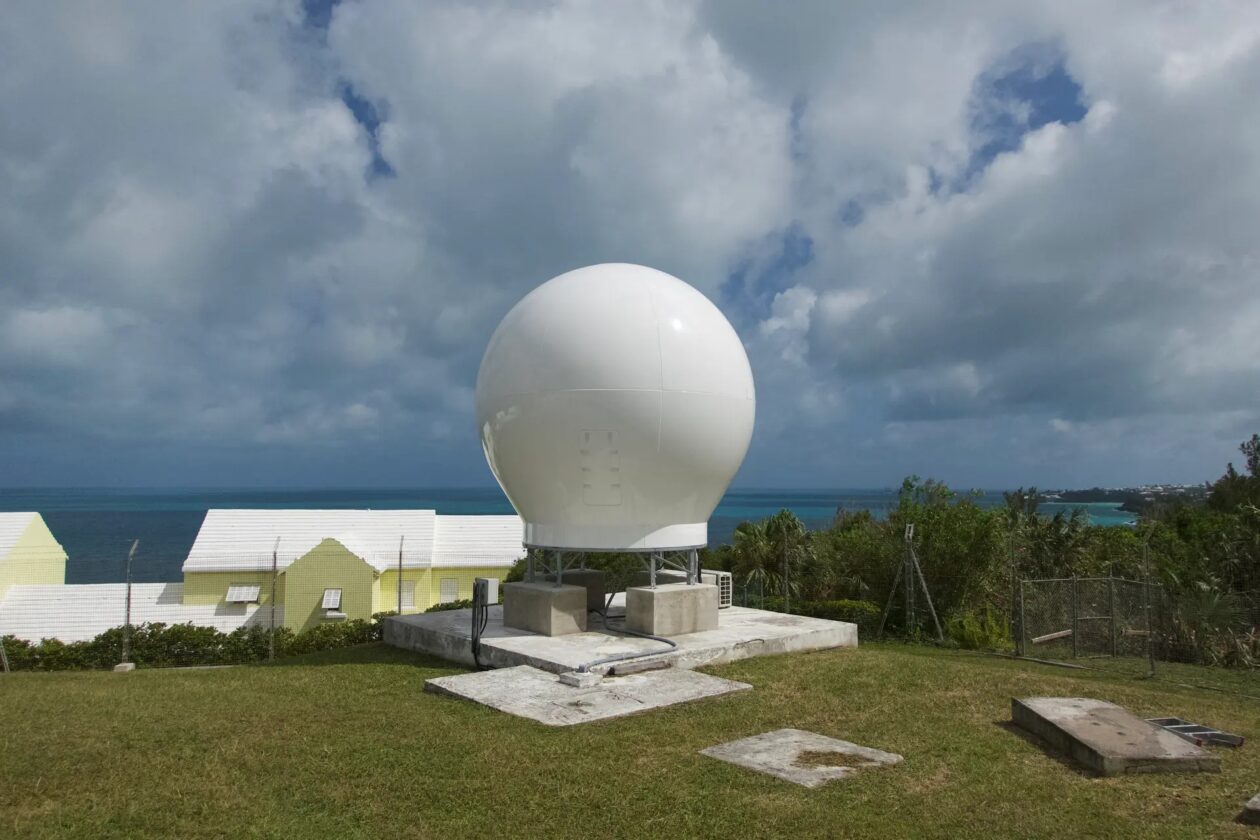
The Quartz network’s first ground stations are in Bermuda, New Zealand and Australia. Blue Origin says the network is due to expand to nine sites by the end of the year.
“Ground communications infrastructure has historically been one of the most fragmented and costly elements of space operations, for national security programs, civil and commercial operators alike,” Tory Bruno, president of national security at Blue Origin, said today in a news release. “With Quartz, we’ve built a single, fully integrated network that changes that equation. One interface, one operations team, transparent pricing and a security architecture built to meet the most demanding mission requirements.”
The first phase of the network buildout features 3.7-meter aperture antennas supporting S-band and X-band frequencies for operations in low Earth orbit. Future installations will feature 9-meter apertures supporting L-, S-, X- and Ka-band frequencies — which are suitable for operations in geostationary orbit as well as cislunar and deep-space missions.
To accelerate the buildout, Kent, Wash.-based Blue Origin is partnering with Redmond, Wash.-based RBC Signals, an 11-year-old company that specializes in providing flexible space communications solutions.
RBC Signals is supporting site surveys, antenna procurement, deployment and hosting across the Quartz network. Once deployed, the new antennas will be integrated into RBC Signals’ Global Ground Station Network, with unused capacity made available to RBC’s other commercial customers.
“Our mission is to provide reliable, flexible and innovative communications solutions for the world’s most ambitious space operators,” RBC Signals CEO Ron Faith said in a news release. “Blue Origin’s vision for the future of space exploration aligns perfectly with our capabilities, and we look forward to supporting their missions with a resilient and globally integrated communications network.”
RBC Signals previously collaborated with AWS Ground Station on a separate ground station network designed to give satellite operators low-latency access to AWS cloud infrastructure.
“Blue Origin’s Quartz ground network is independent of the AWS Ground network (just as Blue Origin is independent of AWS),” Faith told GeekWire in an email. “RBC Signals works with multiple ground networks around the world including Blue Origin’s Quartz network as well as the AWS Ground network.”
In other developments:
- Blue Origin has begun construction of a second launch pad at Cape Canaveral Space Force Station in Florida, complementing a pad that’s being rebuilt after sustaining damage in a rocket explosion in May. Launch Complex 36B will be used for the company’s beefed-up New Glenn 9×4 rockets, while New Glenn 7×2 rockets will use Launch Complex 36A.
- The anomaly that caused May’s New Glenn rocket explosion has been traced to the main oxygen valve on one of the booster’s BE-4 engines, Blue Origin CEO Dave Limp said in a posting to X. New Glenn launches have been suspended while the investigation continues. “Hope you get back to flight soon,” SpaceX CEO Elon Musk said in a reply to Limp’s post.
- Blue Origin is looking at sites in Texas and Florida for what’s said to be a $650 million, 1.3-million-square-foot facility that would be used for manufacturing, logistics and research and development, according to the Austin Business Journal. City officials in Hutto, an Austin suburb, reportedly approved a set of economic development incentives for the project.