While passengers are cruising at 35,000 feet, their checked luggage is already passing through a very different kind of cloud.
In a move designed to eliminate one of the more frustrating friction points of international travel, Richland, Wash.-based Pacific Northwest National Laboratory has co-developed a mid-flight luggage scanning system to streamline arrivals for inbound U.S. travelers.
PNNL has teamed up with federal security agencies and major airlines to launch the International Remote Baggage Screening (IRBS) platform. The cloud-based system screens and analyzes scans of checked luggage before a flight even touches down in the U.S..
Cleared bags are moved straight to a passenger’s connecting flight without the hassle of retrieving and rechecking them through security — unless Customs and Border Protection explicitly flags a bag for a manual check.
Over the past year, the system has rolled out on select international routes into major U.S. hubs—including Hartsfield-Jackson Atlanta, Minneapolis-St. Paul, and Detroit—on flights arriving from hubs like London-Heathrow and Seoul-Incheon. PNNL and federal agencies developed IRBS alongside key airline partners, including Delta Air Lines, Korean Air, and Virgin Atlantic.
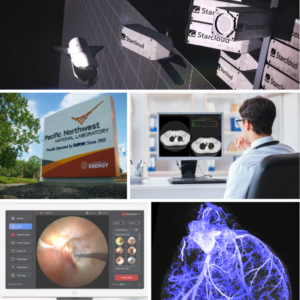
This isn’t PNNL’s first time reshaping airport security — the Department of Energy lab also engineered the millimeter-wave body scanners used in airport checkpoints worldwide. For IRBS, PNNL managed the complex data engineering and privacy compliance needed to stream sensitive imaging between foreign security agencies, private airlines, and U.S. border officials.
The system feeds into the TSA’s “One Stop Security” push to streamline international arrivals. Additional international routes and airports are expected to join the network soon, according to PNNL.