
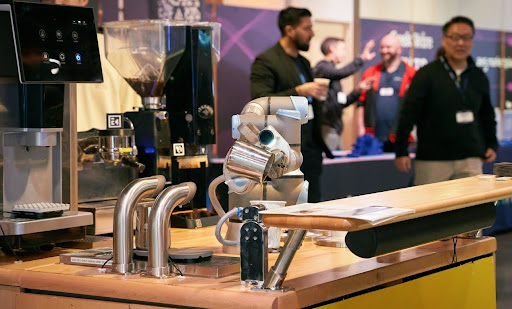
The vision of robots as true partners in our daily work has remained just that—a vision. While we’ve seen an explosion of humanoid and semi-humanoid designs recently, these new platforms face a fundamental, stubborn challenge: the sheer difficulty of teaching them a wide array of tasks. This complexity has become the single greatest barrier to widespread commercial adoption for next-generation robotics.
In the past, bringing a new physical task to a robot was a grueling, months-long endeavor requiring meticulous data collection, bespoke programming, training task-specific models, and exhaustive consideration of every corner case. The result? Powerful, yet fundamentally inflexible and brittle systems. Critically, any change to the robot—a different model or even a minor structural modification—meant restarting data collection and retraining from scratch. In industrial and commercial settings where precision and success rates are paramount, significant human and capital resources are spent with each hardware generation to ensure functional parity and prevent performance regression.
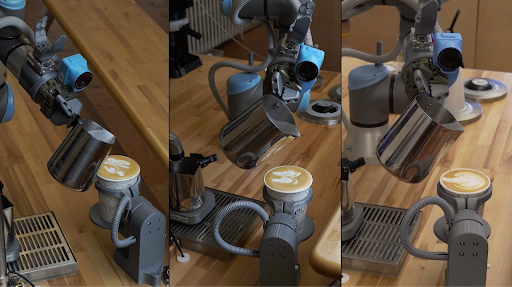
At Artly AI, we recognized that there must be a better, more human-centric path forward. What if robots could learn more as people do—through observation and immediate, hands-on trial and error?
Humans rarely master a new skill purely through instruction manuals. We learn by watching, integrating those observations with our own practiced experience, and leveraging an innate understanding of the physical world to rapidly acquire new physical abilities.
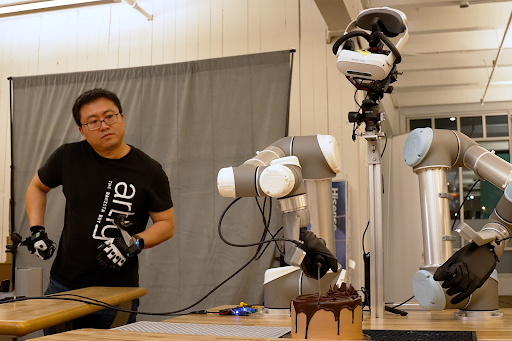
Based on this idea, our team developed a system built on foundation world models and a massive, curated dataset of physical manipulation skills. On the hardware side, we designed a sensor module adaptable to virtually any modern platform—humanoids, semi-humanoids, industrial arms, dexterous manipulators, or even simple grippers. This modularity allows disparate robots to acquire a vast repertoire of physical skills simply by observing a human demonstration.
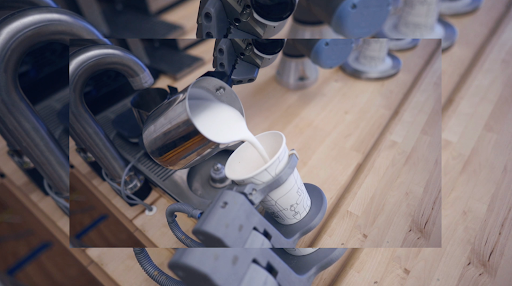
The human instructor is no longer writing thousands of lines of code; they simply perform the task once while the robot watches. Our system captures the motion, comprehends the underlying behavioral logic, and translates it into the robot’s action space.
In many cases, a robot can acquire a new skill in under thirty minutes, a paradigm shift that fundamentally changes how robotics technology is deployed.
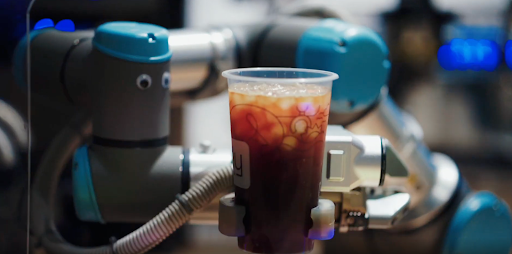
Real-World Validation: The Autonomous Barista.
Our initial proving ground for this technology has been the dynamic, high-stakes environment of the coffee shop.
Artly’s robotic baristas are already serving beverages at multiple locations across North America, flawlessly executing complex espresso preparations and even latte art, while maintaining peak performance 24/7.
The true revolution isn’t the coffee itself—it’s the training system behind it. Artly’s system allows the artistry of a master barista to be perfectly replicated and scaled globally. If a new recipe or preparation sequence is introduced, a single human demonstration is all it takes for the robot to observe, learn, and adapt. The work that used to require months of engineering and programming can now be accomplished through a single, intuitive demonstration.
Many industries face similar mounting pressures: escalating labor shortages and rising operational costs. Hospitality, retail, and service sectors are all seeking ways to increase operational efficiency while maintaining a high-quality customer experience, and robotics has been seen as a crucial part of that solution.
Now, users are no longer limited to deploying “fixed-function” robots. Instead, they can deploy persistent, constantly learning assets that can be re-tasked based on demand, dramatically increasing the robot’s utilization and value. By amortizing the total set of tasks, the Total Cost of Ownership (TCO) for these robotic systems drops significantly.
This combination of lower cost and enhanced capability will inevitably accelerate adoption across verticals—from hospitality and retail to manufacturing and logistics.
The future of robotics technology is less about pure automation and more about collaborative, efficiency-boosting partners. This ability to quickly teach, adapt, and scale physical intelligence is the robot’s “ChatGPT Moment.”
If you are also optimistic about this robot revolution and hope to share in the wealth returns it brings, you might want to learn about Artly’s ongoing funding round: https://invest.artly.ai/, and seize this opportunity to invest in the next generation of AI robots.
