
On the morning of Juneteenth inside the F5 Tower in downtown Seattle, a group of students from underrepresented communities gathered for breakfast before heading to Seattle Stadium to watch the U.S. take on Australia in the FIFA World Cup. But the day was about more than soccer.
F5 CEO François Locoh-Donou stood before the students and told them something he hadn’t planned to share. At age 54, a lifelong soccer player who grew up in Togo playing the game daily, this World Cup match would be his first. “Just know how lucky you are,” he told them, “before you get to the age of 20, you go to a World Cup game. That is a serious deal.”
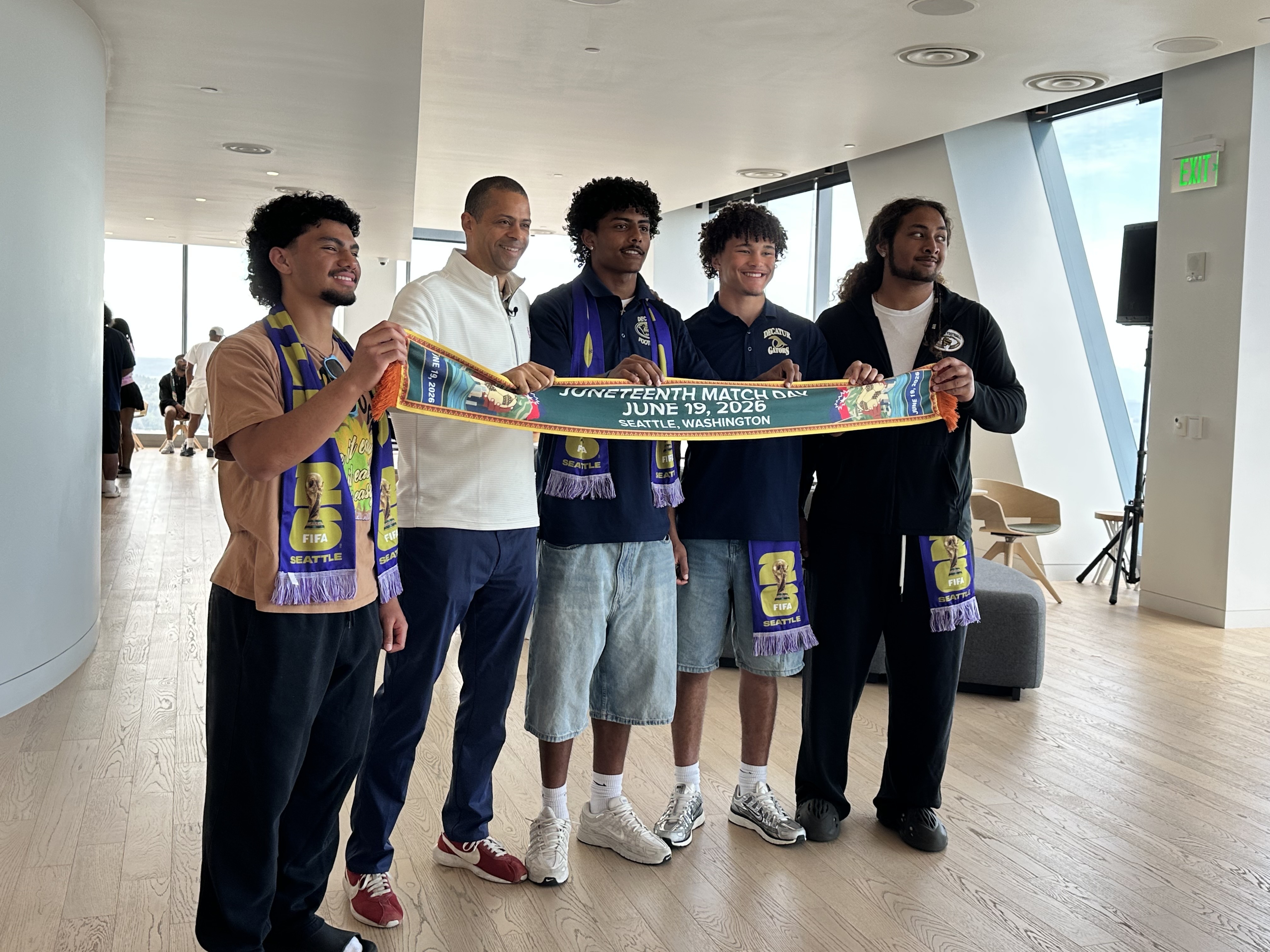
The moment captured something larger about F5, now marking its 30th year as a Seattle-based company. It is not just a major player in the application delivery and security markets, but an important community player in Washington. Approximately 20% of its workforce (1,329 employees) lives in the state, including over 800 at the Seattle F5 Tower, 250+ at Liberty Lake, and the rest working remotely.
For the USA vs. Australia match on Juneteenth, Black Players for Change led programming as part of a broader effort by the Local Organizing Committee and the Mayor’s Youth Access Program, which provided over 1,400 local youth with tickets across all six Seattle World Cup matches. F5 joined several companies in supporting these community goals by providing students with match tickets, food vouchers, a stadium walk, and networking opportunities with senior leaders at the F5 Tower.
“Access particularly to a big event like the World Cup that seems so large and so big for a young person, it can change what you think is possible,” said Allen Hopkins Jr., executive director of Black Players for Change. “If you can see it, you can be it.” Hopkins described his organization as having evolved over six years “from protests to programs to partnerships,” with F5 representing the kind of corporate ally that can help Black Players for Change scale its mission to create equitable space in the game.
For F5 General Counsel and Executive Vice President Angelique Okeke, the day carried personal weight. She serves as the executive sponsor of the company’s Black employee inclusion group: F5 Appreciates Blackness (FAB), and noted that the partnership was a natural expression of its values. “We are all about access, creating access, having deep roots in our community and being present,” she said. “And granting access to something that we can grant access to, which is our space and our time.”
When asked what she wanted students to feel walking into the F5 Tower and a World Cup match for the first time, she said: “That they belong. I want them to feel that they belong in both places.”
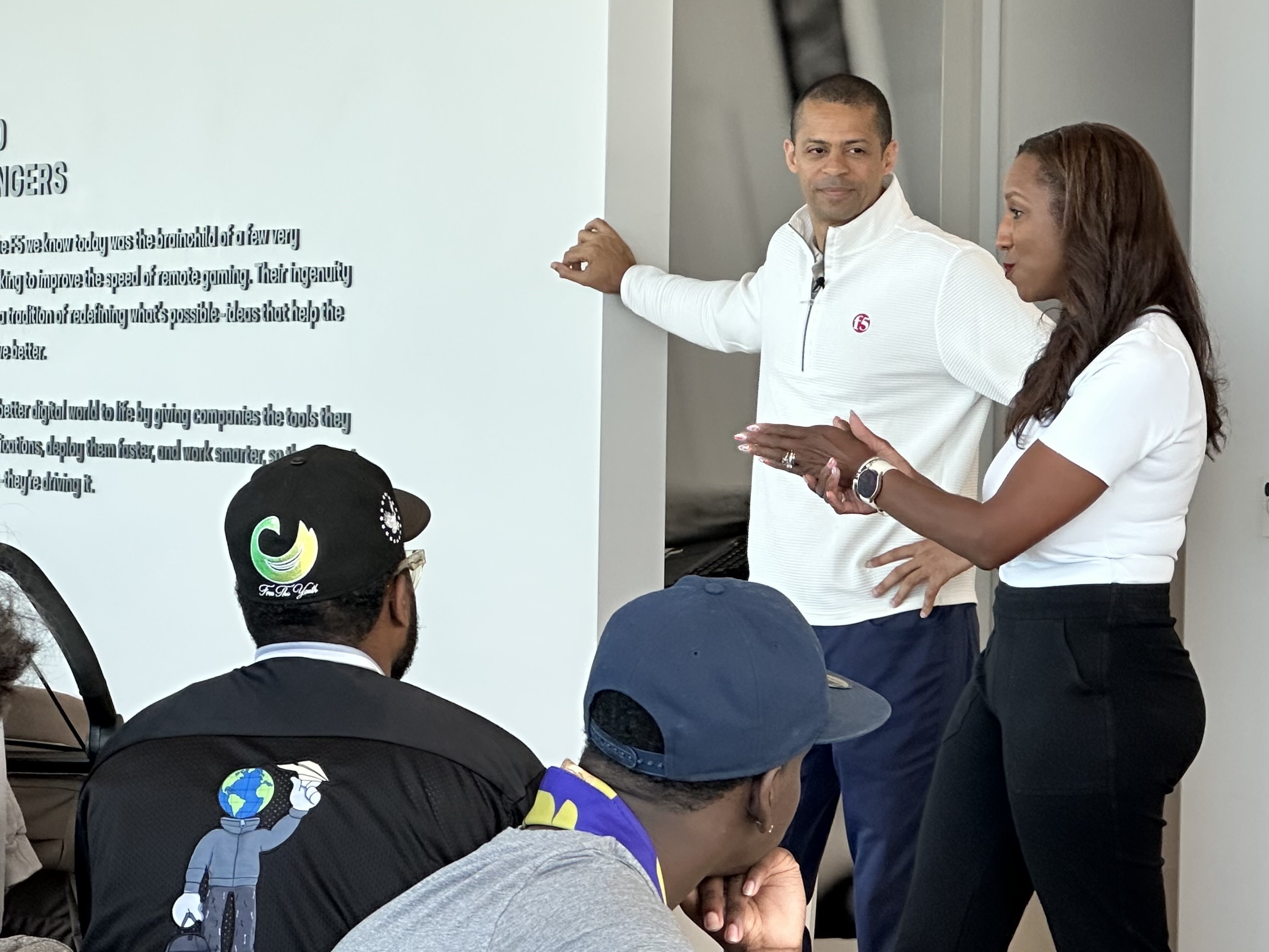
For Locoh-Donou, who didn’t set foot in a corporate office until he was 25, the symbolism of the morning also ran deep. “I want these students to remember that they walked into the walls of a technology company, that two Black executives spoke to them and told them that they belong here,” he said. “And I hope when it comes time for them to make choices about where they go in their careers, if they feel intimidated by this industry or feel it’s not for them, that they’ll remember this day.” He was also direct with the students about the industry’s representation gap, noting that Black people have been underrepresented in the industry. He added that “our voices matter tremendously, and they create change.”
At its core, F5 is a multi-billion dollar cybersecurity company and global enterprise, with more than $3 billion in annual revenue. To show the scale of its reach, F5 is trusted by over 80% of the Global Fortune 500 and serves 23,000+ customers across more than 170 countries. Its customer base spans every vertical, including:
- 30 out of the 30 top U.S. commercial banks
- 9 out of the 10 top U.S. colleges
- 5 out of the 5 top U.S. telecom companies
- 8 out of the 10 top U.S. healthcare companies
But its roots in Seattle run deep.
Participating in an evening panel, Washington State Senator T’wina Nobles urged the local tech community to follow F5’s lead in prioritizing Black voices. Emphasizing the lasting impact of such initiatives, she noted, “The World Cup will come and go, but the community is going to stay here. I would love for tech companies to learn from F5 and really pick up on the importance of including Black voices.”
Echoing this, Okeke noted that meaningful community engagement requires consistently leveraging a company’s resources to expand access. As F5 celebrates 30 years in Seattle, the World Cup gathering served as an investment in the future workforce– giving students a first glimpse inside a tech company and inspiring them to imagine themselves working there one day.
