
62% of Gen Z Americans report feeling overwhelmed by stress on a daily basis, and adults between 18 and 22 are lonelier than those over 72 — making this the most isolated generation on record. As a loneliness crisis sweeps through young people, FaithTime is using a 38% Day 1 retention rate and nearly 200,000 users to make its case: when it comes to solving loneliness, AI that brings people closer to each other may matter far more than AI that talks to them.
For the past two years, most of the conversation around AI social products has pointed in one direction: chatbots. AI companions, generated content, one-on-one interactions between users and machines — this has become the default story in the space. FaithTime is writing a different one.
The platform, which starts with Gen Z users aged 18 to 28 who share a common set of values and beliefs, has grown to nearly 200,000 users across 119 countries, with more than 100,000 meaningful interactions each month. Its Day 1 retention rate of 38% sits well above the industry average of roughly 25%, and it holds a 4.8-star rating in app stores. For FaithTime, those numbers reflect a core design principle: in an age of rising disconnection, using AI to strengthen real human bonds may be the most important thing a social platform can do.
FaithTime’s decision to start with Christian communities comes from a clear-eyed look at a problem that has largely gone unaddressed. A growing gap between modern lifestyles and traditional church structures has pushed more and more young Christians away from in-person worship — not away from faith, but toward the internet, where fragmented spiritual content fills feeds but rarely fills the void. It can’t respond. It can’t show up. And so their prayers, their hopes, their unspoken struggles become islands unto themselves, drifting without reply. FaithTime wants to change that: to make sure that anyone navigating faith alone can find, at the moment they need it most, someone who will truly be there.
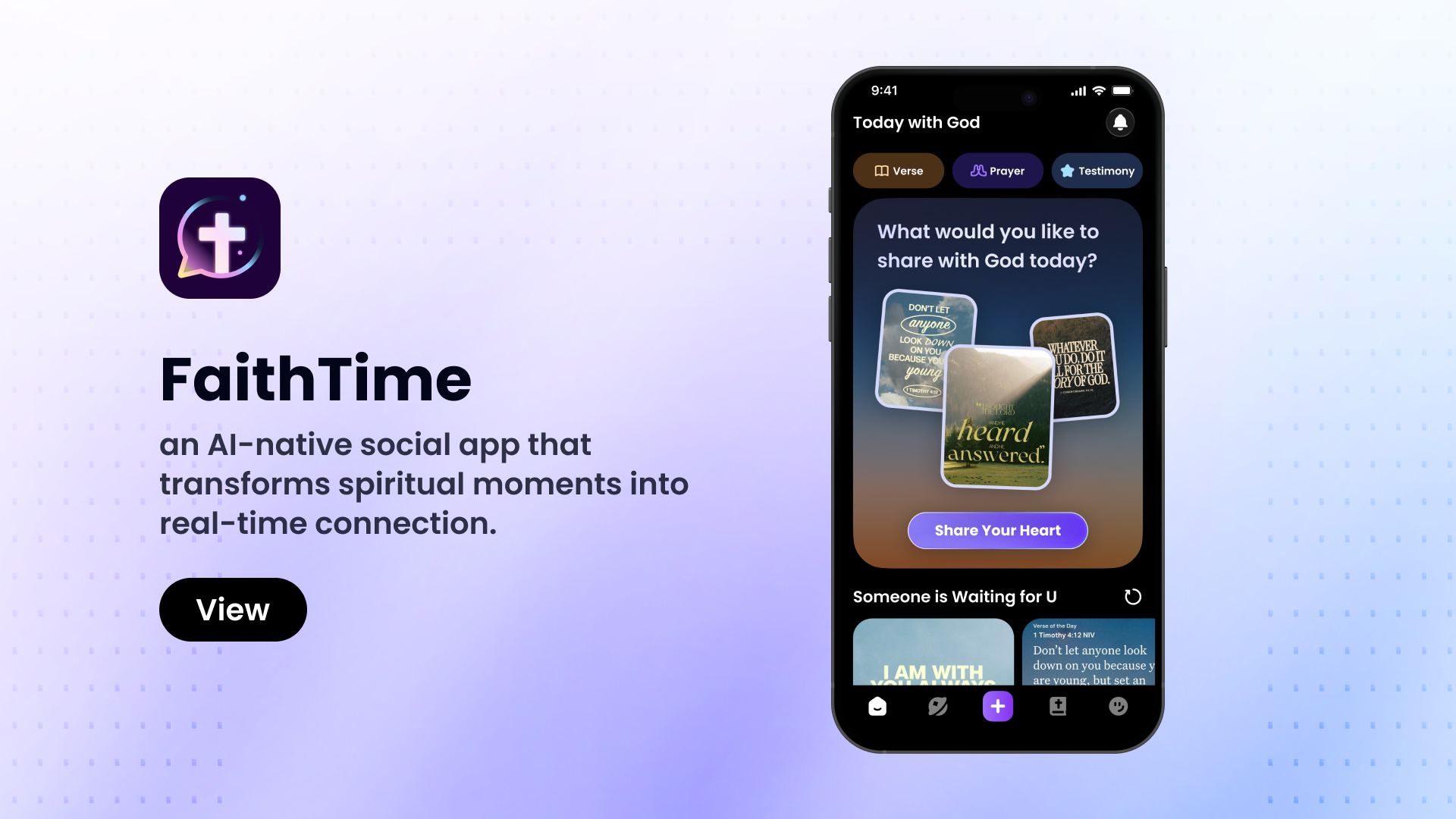
At the product level, FaithTime uses AI to do two things that weren’t previously possible. First, it turns vague inner needs into visible expression — reading a user’s emotional state and generating resonant, multi-format faith content that gives shape to feelings that are hard to articulate, helping people feel seen. Second, it connects people who share similar spiritual states and emotional experiences — not through cold algorithmic matching, but through genuine resonance, surfacing the right person from anywhere in the world at exactly the right moment. Content, in this model, is no longer a static endpoint. It becomes a social object: something to respond to, build on, and move through — a prayer answered, a voice room entered, a real conversation begun, a lasting connection made.
“Most AI products today are built around generation. But generation is only the first layer. The deeper question is whether AI can understand where someone actually is — emotionally, spiritually — and turn that into a connection with another human being.”
This puts FaithTime in a different category from traditional devotional apps, which function primarily as personal tools for reading, reflection, or journaling. FaithTime is closer to a living community — one where content is continuously produced, engaged with, and used as a launchpad for deeper interaction. AI isn’t here to replace human connection. It’s here to make that connection easier to find, richer when it happens, and worth returning to. Longer term, the company’s ambition is to build a values-based social graph — a network shaped not by follower counts or algorithmic reach, but by shared belief, emotional resonance, and the relationships that grow from them.
Beginning with a high-trust, values-aligned community is itself a strategic decision. On open social platforms, users wade through noise, strangers, and uncertainty. Faith communities arrive with something most platforms spend years trying to manufacture: a shared language, mutual expectations of care and support, and a genuine foundation of trust. That environment gives FaithTime the conditions it needs to prove out its central thesis. Faith communities are where FaithTime starts — not where it ends. Over time, the company aims to extend this model to a much broader audience: every young person who feels alone and is looking for somewhere real to belong.
“The last decade of social media trained people to keep scrolling. The next phase will belong to platforms that are genuinely better at bringing people together.”
FaithTime is available on iOS and Android. The company continues to invest in expanding its live voice rooms, deepening social connections between users, and developing new interactive content formats.
Disclaimer: GeekWire newsroom and editorial staff were not involved in the creation of this content.
