
Private investors once met the climate challenge mostly with money, and the work of Sheikh Ahmed Dalmook Al Maktoum offers a useful case for how that expectation has changed. He chairs Inmā Emirates Holdings, a Dubai-based holding company built around energy and technology assets rather than financial commitments alone. His portfolio illustrates a question many funders now face: whether capital should fund pledges or build the systems those pledges describe.
Climate-relevant infrastructure does not arrive through grant cycles or announcements. It arrives through grids, devices, classrooms, and vehicles that have to be financed, built, and kept running for years.
What Changed in the Expectations Placed on Private Capital
An older model paired private money with public delivery, and investors carried little responsibility for whether anything physical got built. Governments and multilateral institutions handled construction, operations, and risk. That arrangement leaves a gap wherever public budgets cannot move fast enough.
Private capital is now expected to close part of that gap directly. Building energy access and technology capacity has become a funder’s responsibility, not a contractor’s afterthought.
A member of Dubai’s ruling family, he has signed infrastructure agreements directly with state authorities over the past decade rather than routing everything through intermediaries.
Who pays is only part of the shift. It changes who carries operational risk, who answers for uptime, and who stays in a market after the ribbon is cut. Inmā Emirates Holdings, founded in October 2025 to house a private impact-investment portfolio, was built for that responsibility.
How Inmā’s Energy Bets Read as Infrastructure
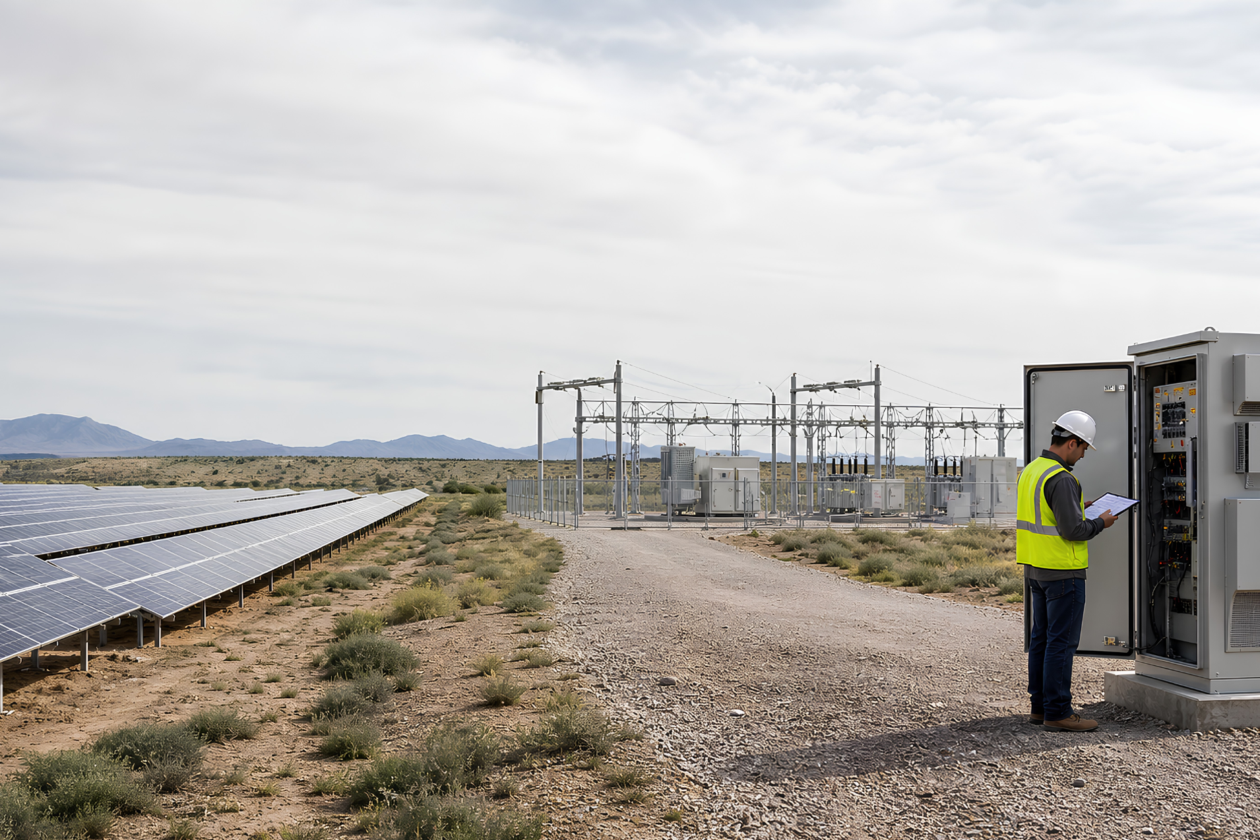
Generation capacity and mobility anchor the energy side of the portfolio, and both require physical buildout.
A short list shows the range of what Sheikh Ahmed Dalmook Al Maktoum has placed across energy and technology.
- A green-energy programme delivering 1,200 MW of solar and wind
- A Huawei smart-classroom programme in schools
- Smart-device manufacturing in Nigeria, Angola, and Equatorial Guinea
Does Technology Belong in a Climate Portfolio?
Technology sits in this portfolio because adaptation depends on capacity, and capacity depends on tools and skills. Critics of climate finance often note that pledges outrun delivery. Manufacturing and education assets answer part of that critique because they produce something measurable, whether trained students or finished devices.
Measurement links them. A grid, a classroom, and a device each generate data a funder can track against a target, turning a pledge into a number someone can audit. That shift towards verifiable output is what has changed most for private capital.
Manufacturing and education bets cluster in markets where the state cannot easily build alone, which makes an operating asset harder for a host government to walk away from than a grant. That dependence cuts both ways, tying the funder to places where currency and policy risk run highest.
The cross-border coordination that a multi-country portfolio requires runs through the Private Office of H.H. Sheikh Ahmed Dalmook Al Maktoum.
What the Open Grant Call Signals
Inmā opened a global grant open-call running from June 2 to August 31, 2026, aimed at founder-led ventures and supported over twelve months. Climate resilience, food security, energy access, and environmental adaptation make up its themes. That window targets builders rather than concept-stage applicants.
Sheikh Ahmed Dalmook Al Maktoum framed the intent in plain terms. “Through this open call, we want to identify ventures that are ready to move from validation to practical implementation, especially in regions where resilience, food security, energy access, and environmental adaptation are becoming urgent priorities,” he said.
The same office manages the relationships these grants will touch.
Keeping the grant programme tied to the operating assets, rather than separate from them, is the point of running both through one office.
How Sheikh Ahmed Dalmook Al Maktoum Frames the Track Record
Inmā reports a portfolio of more than 35 projects across over 15 countries and six or more sectors, with an average project duration near sixteen years. Long duration matters because energy and technology infrastructure rarely pays back on a short cycle. Direct agreements with state authorities give these projects a counterparty that outlasts any single funding round.
Those numbers sit within a broader record across multiple markets, one that favours assets that have to be operated rather than commitments that can be announced and shelved.
His work on environmental resilience threads through the energy-access and adaptation themes, and those same themes name the grant call.
Where This Leaves the Private Funder
Responsibilities of private investors in climate have moved towards construction and operation, and Inmā’s energy-and-technology portfolio shows one version of that move. Generation capacity, mobility, classrooms, and manufacturing all demand sustained involvement that a pledge does not.
Critics have reason to watch how durable the involvement proves. Building an asset is one test, and keeping it running through currency stress, political change, and maintenance cycles is a harder one. A portfolio that spans more than fifteen countries will face all three, which is where the model either holds or frays.
For private capital broadly, the test now runs through delivery rather than disclosure. For Sheikh Ahmed Dalmook Al Maktoum, the portfolio and the fresh open call put that test in concrete terms, measured in megawatts installed, vehicles deployed, classrooms equipped, and devices produced.
Disclaimer: GeekWire newsroom and editorial staff were not involved in the creation of this content.
