
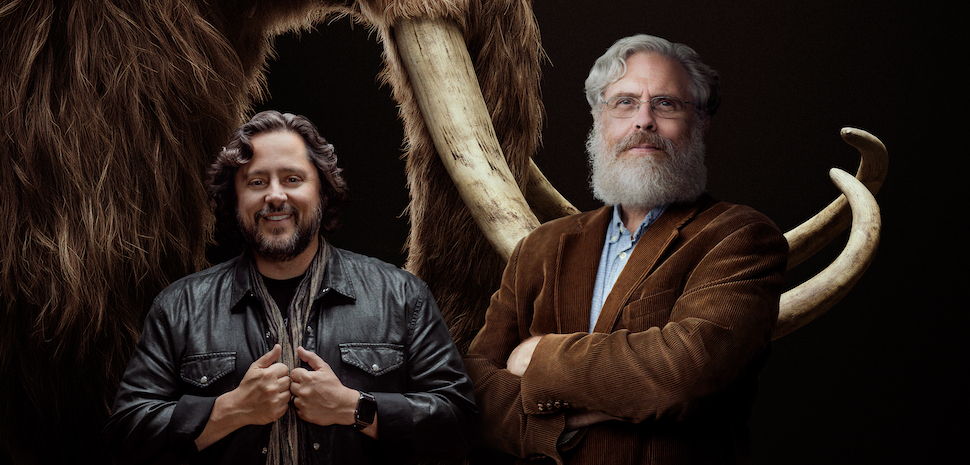
Entrepreneur billionaire Ben Lamm and renowned scientist Dr. George Church have teamed up again to create another unicorn company. The duo behind Colossal Biosciences is launching an AI-based predictive biology company, Astromech, that has the potential to upturn numerous, now outdated methods of discovery – in human oncology, antimicrobial resistance, vaccine design, livestock disease, and engineered biology – by treating biology as software and anticipating bugs based on past historical analysis.
How did this begin?
Astromech was developed within Colossal to look historically at gene divergence over time. But the more historical information the engine ingested, the more it began to develop the capacity for predictive analysis as well. This means that Astromech can now predict likely divergence in biological material over time.
By integrating deep learning across species with ancestral reconstruction, the platform aims to identify the regulatory mechanisms and selection pressures that shape biological outcomes. It predicts which targets will matter before they’ve been clinically identified, and which therapeutic interventions a pathogen, tumor, or disease system is most likely to evolve resistance against.
What does that actually mean in practice?
Think of it less like a diagnostic tool and more like a weather model for disease built on billions of years of evolutionary data. Rather than trying to figure out what is happening now with specific biological material, the company wants to instead answer what will happen next.
In a field like oncology, that means spotting tumor evolution patterns and resistance mutations before they emerge in a patient. In antimicrobial resistance, it means anticipating which strains are most likely to acquire dangerous new capabilities. In vaccine design, it means building immunizations against today’s pathogen, and against the versions that evolution is already drafting.
As Lamm put it: “The model will be transformative for prediction modeling across a number of industries that are in need of a better, more efficient way to bring products to market.”
A unicorn before it’s out of stealth
According to its latest Form D filing, the startup recently closed a $10.5 million fundraise, bringing its total funding to $40.5 million and reaching a valuation of $2 billion just nine months after being spun out of Colossal. This is another example in which Lamm has demonstrated a rare ability to attract serious capital to ideas that sound like science fiction, and then make them real.
Why this, why now
Most AI-biology efforts have focused on pattern recognition in static datasets i.e. analyzing what exists. But, Astromech’s bet is that the more valuable frontier is dynamic and that modeling what will exist, and when, will have an outsize impact. In a world where pandemic preparedness, antibiotic resistance, and cancer immunotherapy are all simultaneously at a crisis point, getting upstream of biological change and being able to spot it before it happens could not only be critical but save tens of thousands, if not millions of lives.
Disclaimer: GeekWire newsroom and editorial staff were not involved in the creation of this content.
