
Over the past two years, AI has found use cases in most corners of the home services industry, but one aspect many have ignored is perhaps the one that matters most. Startups and incumbents alike have poured capital into automating call centers, optimizing dispatching, and streamlining back-office operations.
However, the technician who drives to the job site, diagnoses the problem, and collects the payment has been largely left without purpose-built tools. That means they continue spending valuable time on paperwork instead of on the skilled work that actually drives a company’s bottom line.
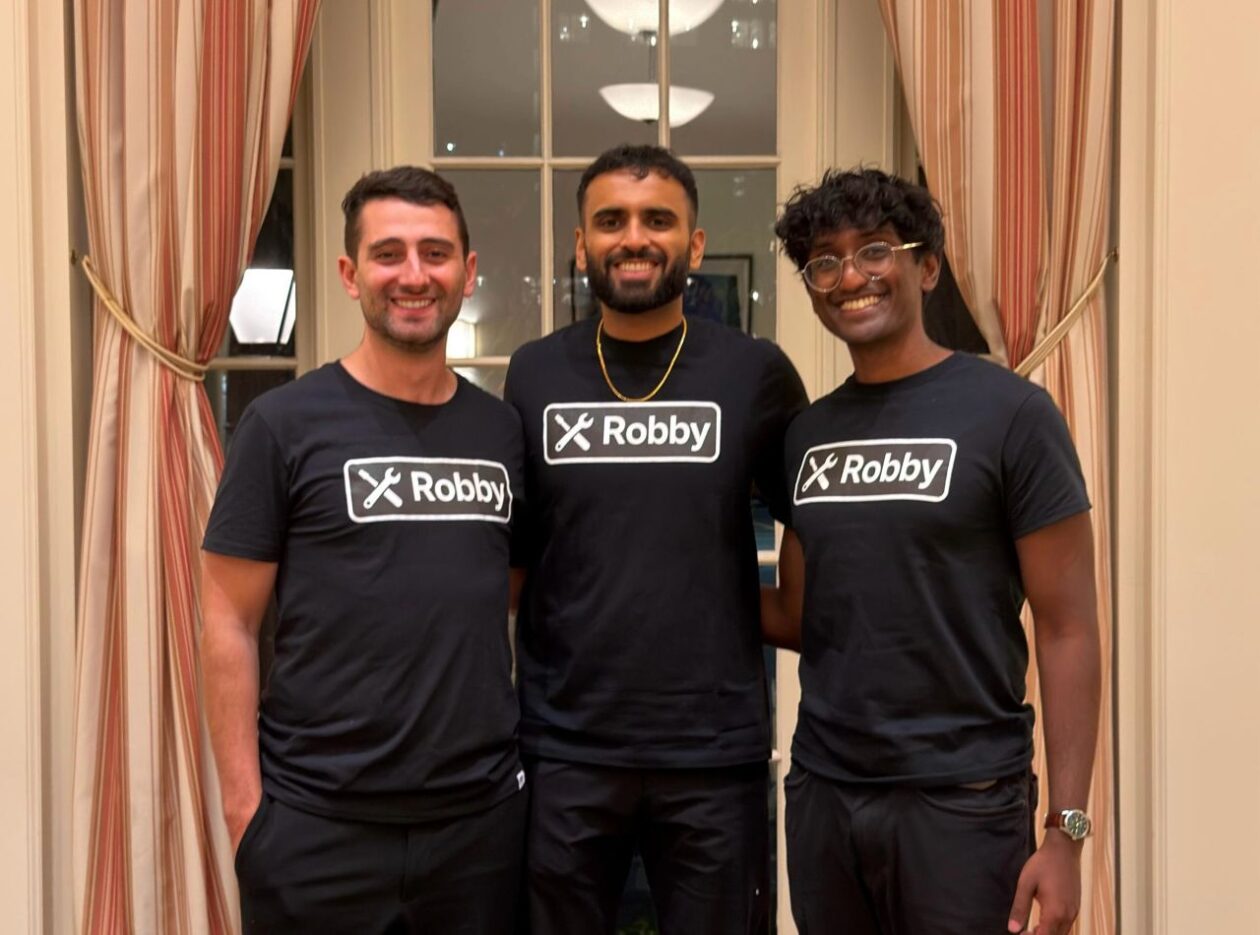
Robby, a startup co-founded by Joseph Schwarzmann, is betting that appealing to this market represents the largest unclaimed opportunity in field service technology.
How AI’s Focus On Back Office Leaves the Technicians Behind
The recent wave of AI in home services has followed a predictable pattern. Investment has concentrated where data is most structured and workflows most repetitive: phone systems, scheduling software, and administrative dashboards. YC-backed companies like Avoca and Broccoli have raised funding by building AI specifically for customer service and front-office needs. Additionally, ServiceTitan, the dominant field service management platform, recently launched Atlas, an AI suite that deals with front-office and back-office operations.
What none of these products address in any dedicated way is the technician standing in the customer’s garage, trying to diagnose a failing compressor with no equipment history and no real-time support.
Schwarzmann, who serves as Robby’s COO, sees this gap as structural, one that can be reflected in different aspects of how AI is developed. “There’s a lot of AI built for back-office tasks, but not much helping technicians do their jobs,” he points out. “And if you think about it, they’re the main assets of the business, because they’re the ones that are actually generating all the revenue.”
The reason is largely practical. Tasks like ordering equipment, dealing with invoices, and addressing customers produce clean, structured data that can be automated and dealt with relatively easily. A technician’s work is the opposite: it happens in unpredictable physical environments, involves real-time judgment calls that only professionals can assess, and generates very little usable data unless someone is deliberately capturing it.
Most software companies have understandably gone after the low-hanging fruit first, and few have been willing to embed themselves in the field long enough to understand what a technician actually needs. Robby was founded with the explicit goal of closing that gap.
A Labor Shortage That AI Could Help Solve
The business case for technician-focused AI isn’t built solely on convenience. Reports suggest the heating, ventilation, and air conditioning (HVAC) industry will have over 40,000 unfilled job openings by 2033. That deficit will get more prescient as data center construction, commercial buildouts, and residential maintenance demand continue to rise.
For experienced technicians, the shortage would mean they’d be working for longer days and would be dealing with a greater administrative burden per call. For new hires, it means entering a trade where full competence can take years to develop, often with limited mentorship and no structured technical support in the field.
Schwarzmann argues that AI can deal with both of these problems at once: veterans could handle more jobs if it means they’re dealing with less paperwork, and the learning curve would get easier to handle for junior workers since they’d work with AI to surface equipment history, suggest diagnostic steps, and answer technical questions on site.
“If you can speed up the path to learning, then that would obviously be extremely valuable,” he explains, “as it would take away the admin from these technicians, help them excel at their jobs, and close that gap of supply of labor versus demand of labor.”
How Robby Works
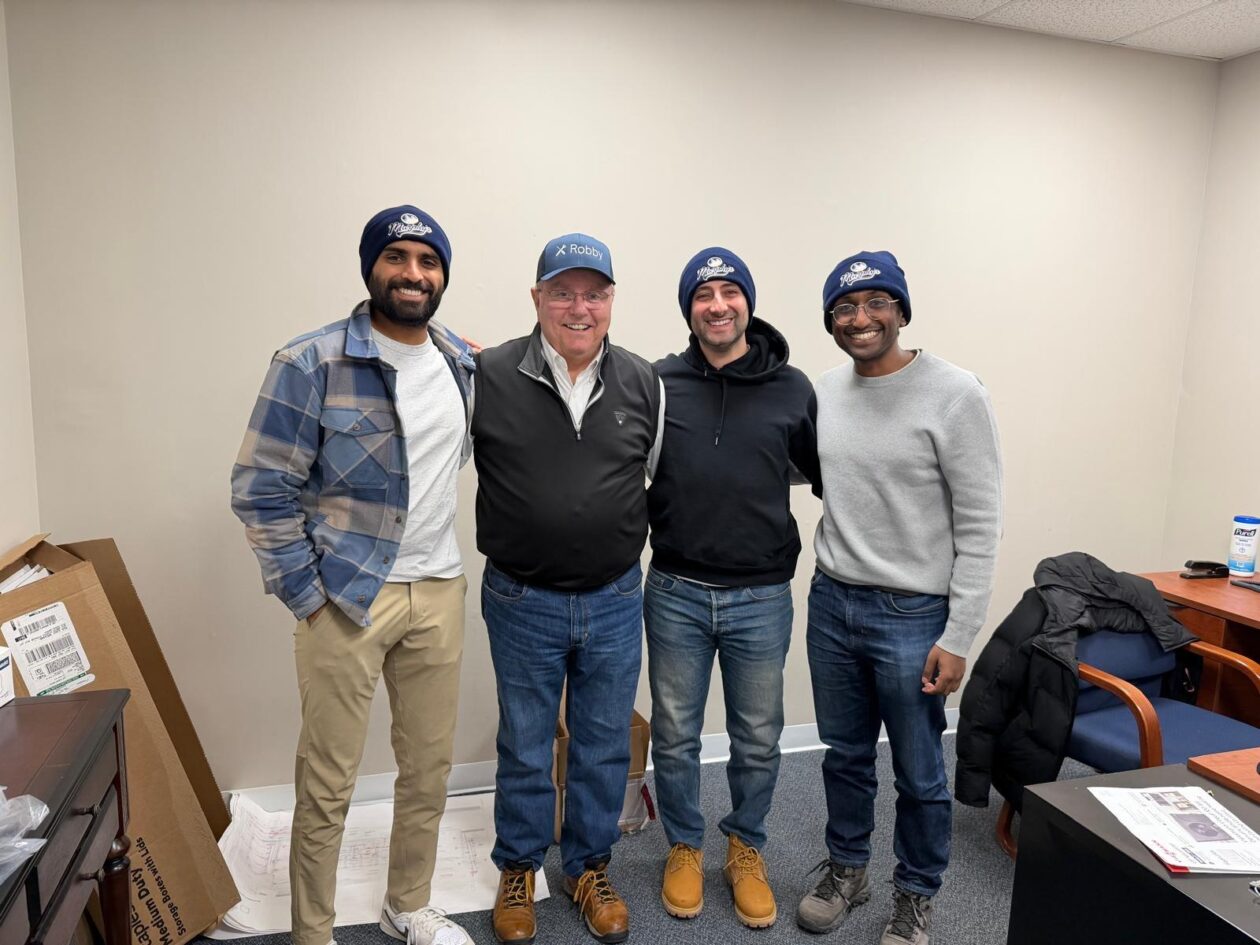
Before writing a line of code, Schwarzmann and his co-founders Feroze Mohideen and Vineet Jammalamadaka, two software engineers he met at Harvard Business School, spent months riding along with HVAC technicians at local companies. They sat in the truck, watched diagnostics unfold, and observed how technicians interacted with customers and navigated their workdays.
The fieldwork surfaced pain points that no office-based interview or sales call would have revealed: redundant paperwork completed after every job, a lack of equipment history available at the point of service, and no mechanism that would give them immediate access to technical guidance. These observations became the foundation of Robby’s product roadmap, and ride-alongs remain a core practice.
The product that emerged works as an assistant that rides alongside the technician throughout a job. Before a visit, it pulls together customer history, equipment details, and important context so the technician arrives prepared. During and after the call, it automates job documentation and paperwork: the administrative tasks that technicians consistently identified as their biggest time drain. It also identifies upsell and follow-up opportunities that might go unnoticed, feeding them back to the technician and the office in real-time.
The result is more revenue captured per visit, less time lost to paperwork, and a technician workforce that can work at higher capacity without adding headcount.

Where Incumbents Struggle and Robby Fits
The major field service platforms control much of the market, but their AI efforts attempt to cover the entire operational stack at once. Schwarzmann contends that building excellent AI across that full range is structurally difficult, a thesis the market has already validated, given that narrowly focused AI startups have managed to have significant VC funding by owning single functions that the incumbents theoretically should have locked down themselves.
“It’s just hard trying to build AI across the full stack rather than picking one piece that’s immediately more valuable for companies,” he points out.
Robby’s strategic play follows that logic: own one high-value segment of the stack (in this case, the technician experience) and make it exceptional. Instead of placing itself as a competition for all-in-one platforms that manage scheduling, dispatching, and invoicing, Robby is building a complement to the existing tech stack.
The home services industry has spent two years incorporating AI into its regular workflows, but those services haven’t served the person behind the product. Through Robby, Joseph Schwarzmann is betting that correcting that oversight is not a niche play but the central one. If the technician is the asset, it follows that the best AI should be built for them first.
Disclaimer: GeekWire newsroom and editorial staff were not involved in the creation of this content.
