
In the bustling heart of San Francisco, Boris Cherny runs Anthropic’s Claude Code; this makes him one of a small number of people whose daily work today previews everyone else’s. He recently claimed that he does not prompt Claude anymore. He has loops running that prompt Claude, and his job is delegated to writing the loops.
Even Peter Steinberger, the creator of Openclaw, has been making this argument: to stop prompting agents and to start designing the systems that prompt them. In the grunt work of running a fast-paced startup or growing business, what does this mean?
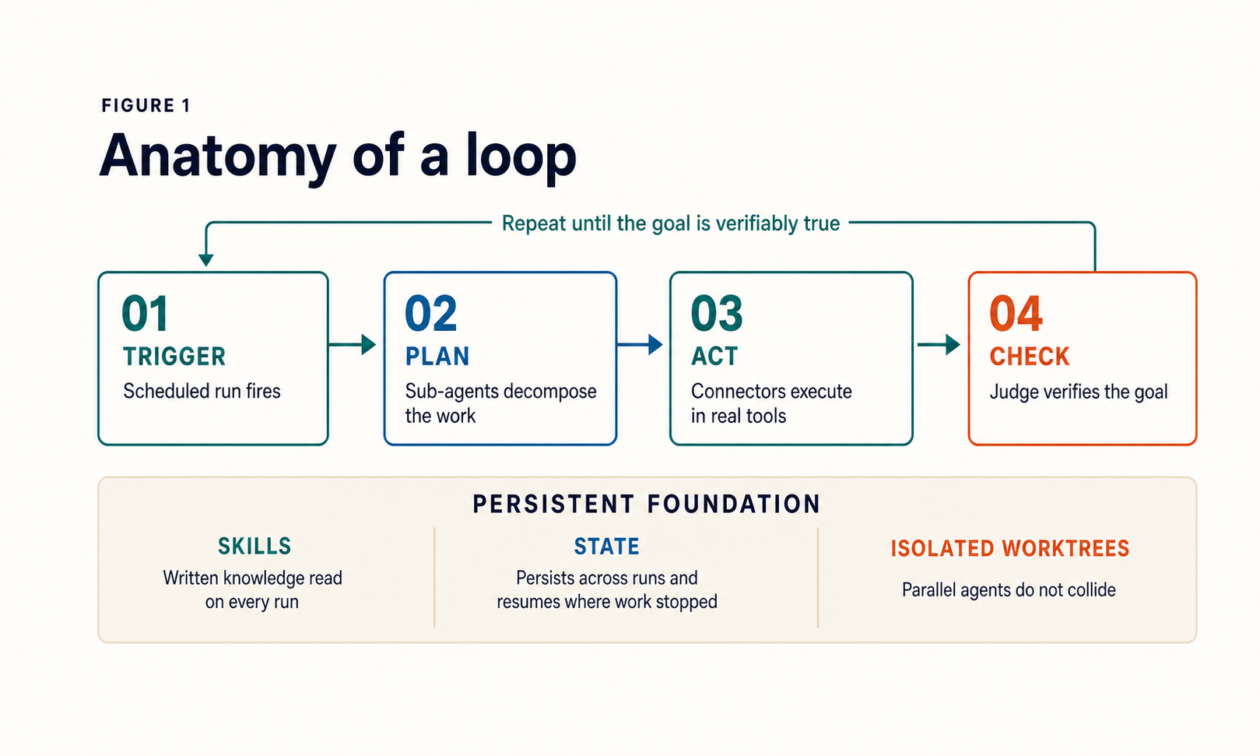
The mandate of this post-GPT era is increasingly clear for everyone semi-technical and eager to implement LLMs in business workflows: it’s time to think like loop engineers. Loops, by Addy Osmani’s definition, are made of five parts with memory. These include scheduled automations that find and triage tasks on their own, isolated worktrees so parallel agents do not collide, skills that hold written-down project knowledge, connectors that let the system act in your real tools, and sub-agents used as a primitive.
Today, both Claude Code and OpenAI’s Codex now ship all five in some capacity, including a goal primitive that keeps working until a condition you wrote is verifiably true, with a separate model judging whether it is done. Clearly, core to this new paradigm of loop engineering is processizing all operational work and spawning loops with well-defined goals for everything that can be done on a computer.
Evidence for A New Age of Operations
Before we discuss loops, the most prescient question here is whether these recent advancements transfer past code at all. Software is the friendliest territory a control system could ask for, because tests verify outcomes crisply and cheaply (though METR’s own analysis shows that even in code, passing the benchmark and being mergeable can be different).
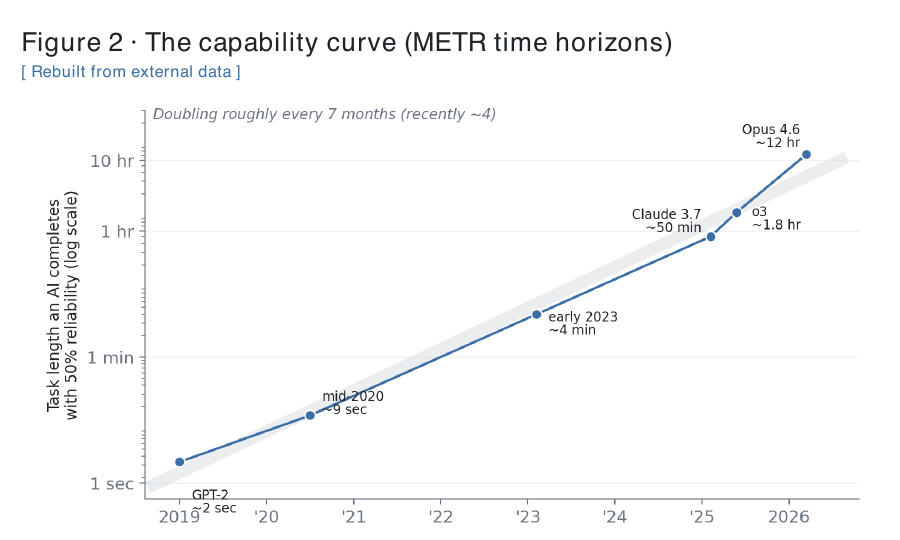
That said, the early evidence on extension is encouraging. Mollick’s survey of the current tools describes harnesses like Claude Cowork carrying the same machinery into documents, spreadsheets, and research, and his experiments with agents on real business tasks show strong results exactly where outcomes are checkable.
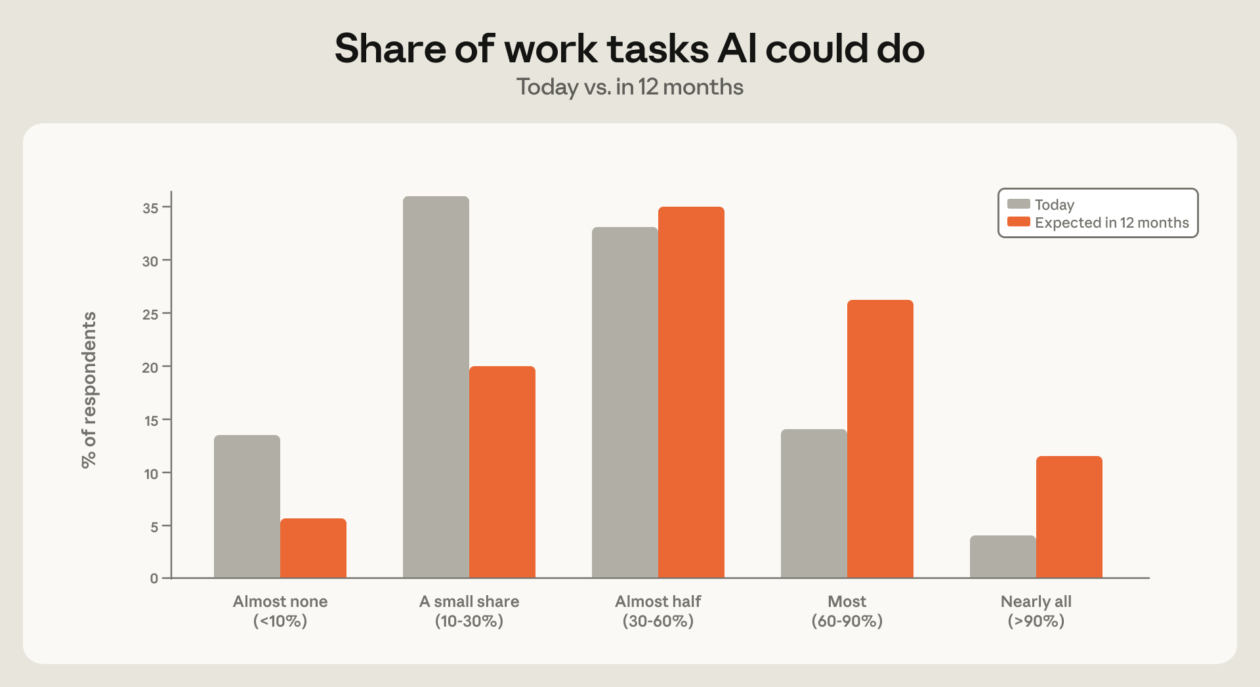
The cautionary case is Klarna, which announced its assistant doing the work of 700 agents and then rehired humans after conceding quality had slipped: customer conversations were treated as self-verifying, and they are not. My working rule is that the factory pattern follows the verifiability, not the industry.
The aggregate numbers say most organizations are nowhere near this frontier, which I read as opportunity and warning in equal parts. Gartner counts 17 percent of organizations with deployed agents against 60-plus percent intending them, expects more than 40 percent of agentic projects canceled by 2027, and MIT found the overwhelming majority of earlier deployments produced nothing measurable, which is what tools without control systems around them produce.
Moving from Procedures to Loops
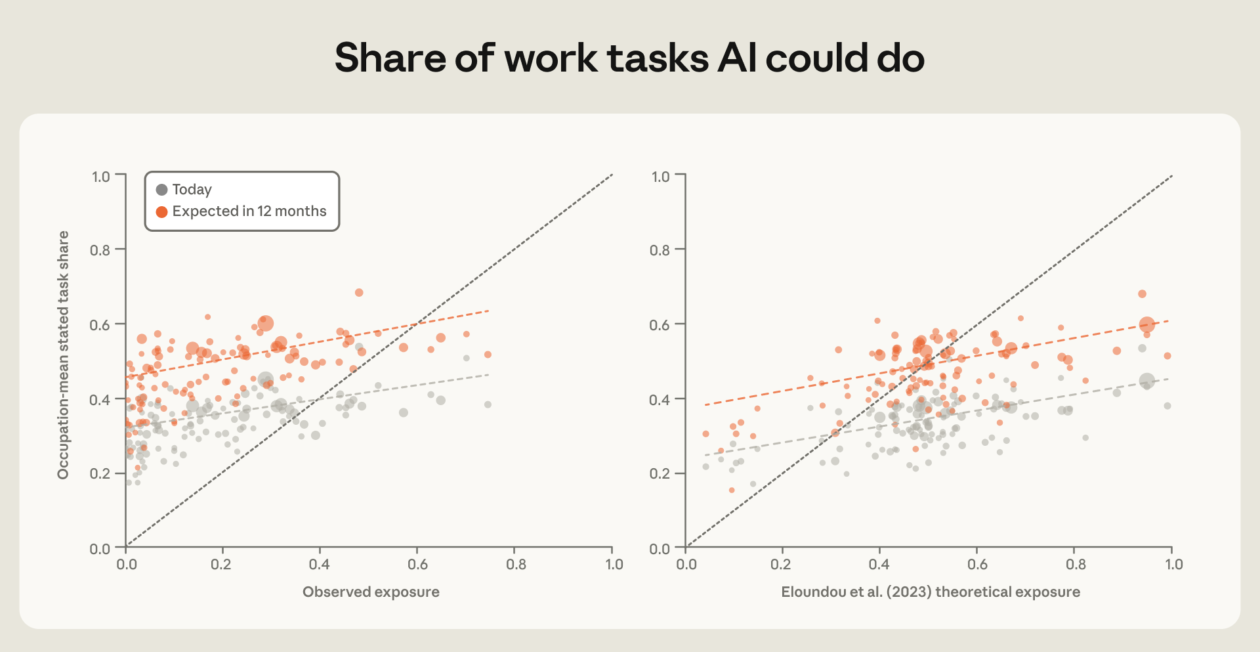
In practice, a Standard Operating Procedure (SOP) that a run-of-the-mill LLM can read is a useful asset, but one that an agent executes can reduce operational burden; it’s this transition that has clearly been the past year’s defining shift.
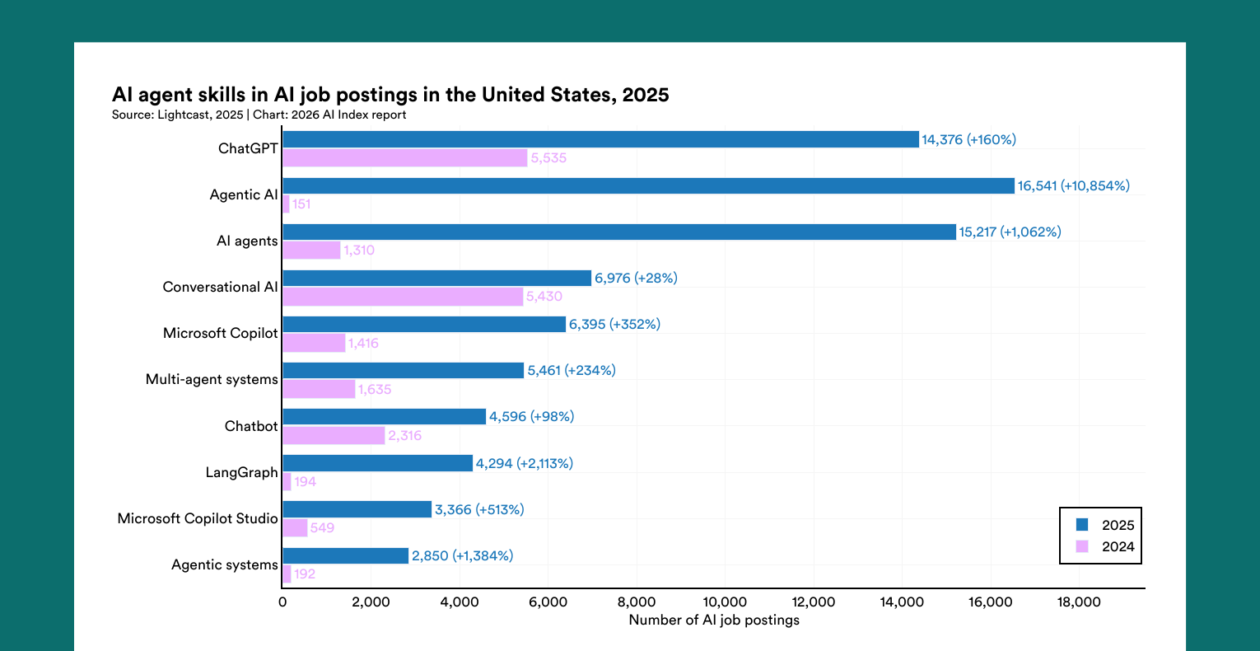
But what does this look like?
Consider a customer support workflow: instead of an agent reading an SOP to process a refund, a loop monitors your support queue, applies your specific account policy logic to verify the claim, and updates the ticket status automatically.
For a vendor invoice reconciliation workflow, sub-agents exist where one agent drafts the line-item matching against purchase orders, and a second “auditor” agent verifies the math against historical ledger data before any approval is logged. You need connectors to the ERP system that directly flag discrepancies in the ticket tracker or automatically push approved payments. Finally, you need a shared state file that persists across runs. If the agent gets stuck because a PO number is missing, the state file records exactly where it stalled, ensuring the next run picks up precisely where it left off (rather than re-scanning everything).
Operations as System Design
So what does an operations team actually design? Fundamentally, a loop is only as useful as its definition of done. This means golden sets of, at least, tens of real cases run as a regression suite on every change. Then skills, beginning with whatever your best people currently re-explain weekly (the conventions and the rules that exist because of one specific incident).
The cost of not writing these down can be viewed as intent debt—the friction created when a system’s goals and constraints exist only in a developer’s head. It is the tax paid every time an agent fills a gap in your intent with a confident guess. Then the money: per-loop token budgets and circuit breakers, because usage varies wildly and a loop is a meter that runs while you sleep, the lesson the cloud taught a decade of finance teams before FinOps had a name. The NIST AI Risk Management Framework is a reasonable scaffold for the governance layer, and IBM’s survey of 2,000 technology executives, which found an average of 54 agent incidents per enterprise in 2025, is a reasonable estimate of what skipping it costs.
Source: NIST, Artificial Intelligence Risk Management Framework 1.0 — Figure 5.
Historically, Firms Have Always Scaled with SOPs
It is also worth remembering how much of business history is just writing things down. The railroads could not have run without rulebooks, because no supervisor could watch three hundred miles of track, the rise of vertical integration and large-scale commercial operations required replacing informal market forces with rigorous managerial control and standardized organization.
Frederick Taylor’s whole movement, whatever its sins, was the insistence that the best-known way to do a task should be recorded rather than rediscovered—he applied the scientific method to the manufacturing industry to systematically determine the “one best way to do every job” through rigorous time and motion study. Aviation became safe substantially through checklists, which exist because experienced people forget steps under load; simple checklists have proven to be essential tools utilized by engineers and pilots to ensure safety and translate complex knowledge into consistent competence.
The SOP is institutional memory—modeled by foundational organizational theorists James Walsh and Gerardo Ungson as the primary structural frame that retains an organization’s preserved experiences—that survives the employee who learned the lesson, and firms that wrote things down have outgrown firms that did not for a century and a half.
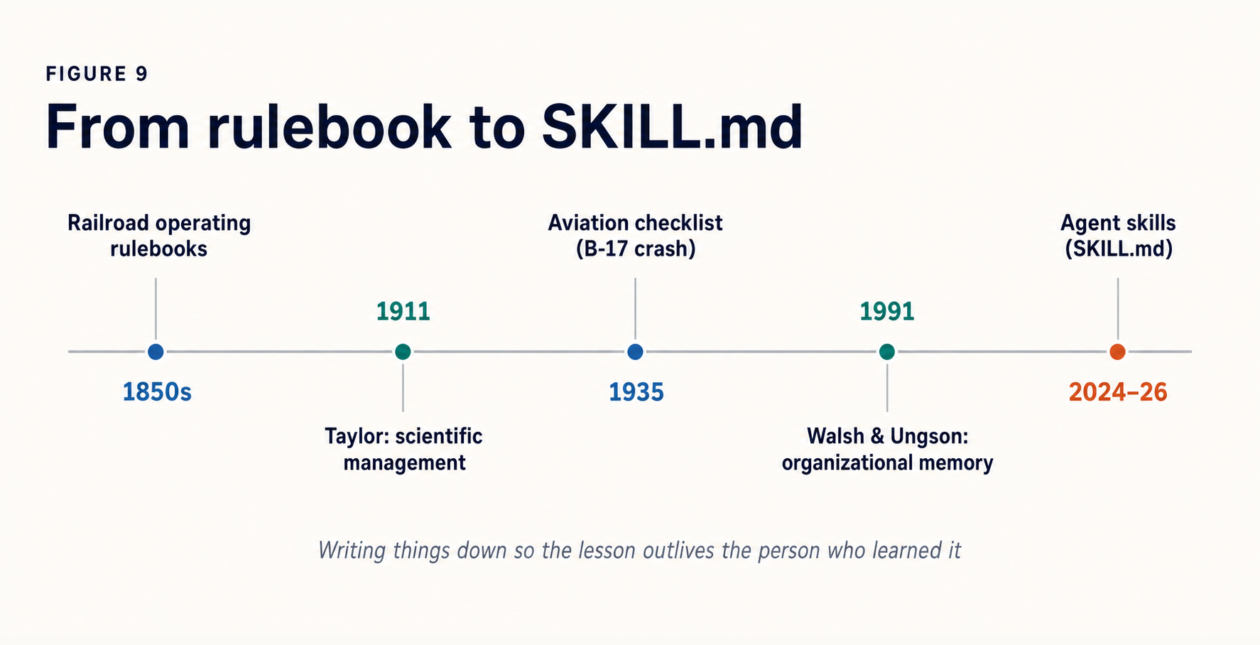
The agent-era version of the SOP is the skill: a directory containing a SKILL.md file of instructions and context that the agent reads on every run, now a shared deployment pattern across Claude Code and OpenAI’s Codex. A skill holds the conventions, the build steps, and what Osmani describes as the rules that exist because of that one incident. Written once, it is read by every agent on every run.
The Limitations of Loop Engineering
The most dangerous habit, however, is cognitive surrender – the temptation to blindly trust whatever the system returns because it’s easier than forming your own opinion. As defined by researchers Steven Shaw in his theory of cognition, this occurs when users bypass effortful reasoning and wholesale adopt an AI’s outputs, abandoning their independent judgment.
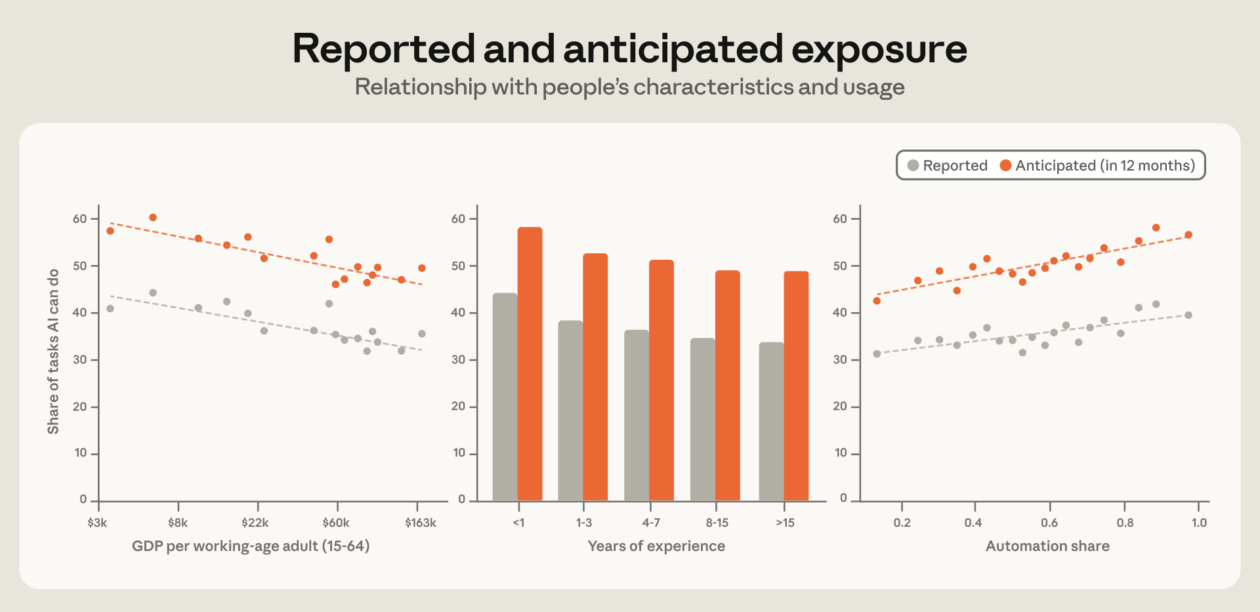
Even with a perfectly automated loop, you’re likely to face a fairly large orchestration tax. This is the gap between how fast an agent can produce work and how fast a human can actually review it. While software can handle the mechanics of the work, it cannot replace human review, yet.
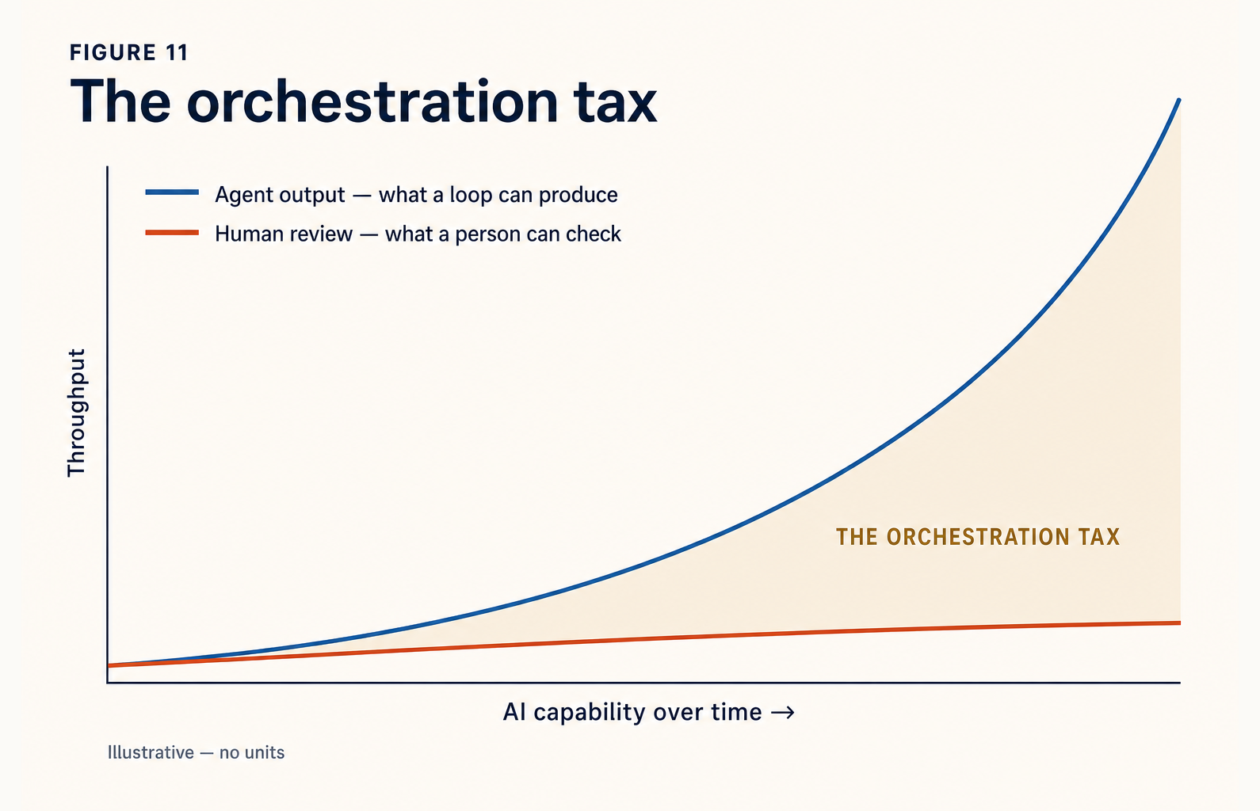
This simply shifts the focus of our work. Two people can run the exact same setup and get different results: one person will use the leverage to speed up work they deeply understand, while the other will stop paying attention entirely. The real value isn’t just in the AI; it’s in the operations skills you use to manage it—the written procedures, the clear rules, and the final human judgment. The railroads needed superintendents who could write rules, not just train operators. Today, that is exactly what you need to be.
Disclaimer: GeekWire newsroom and editorial staff were not involved in the creation of this content..
