
The financial markets are unpredictable by nature. A policy announcement in one hemisphere can have unforeseen effects on different asset classes overnight, and conditions that held steady for months can shift within hours.
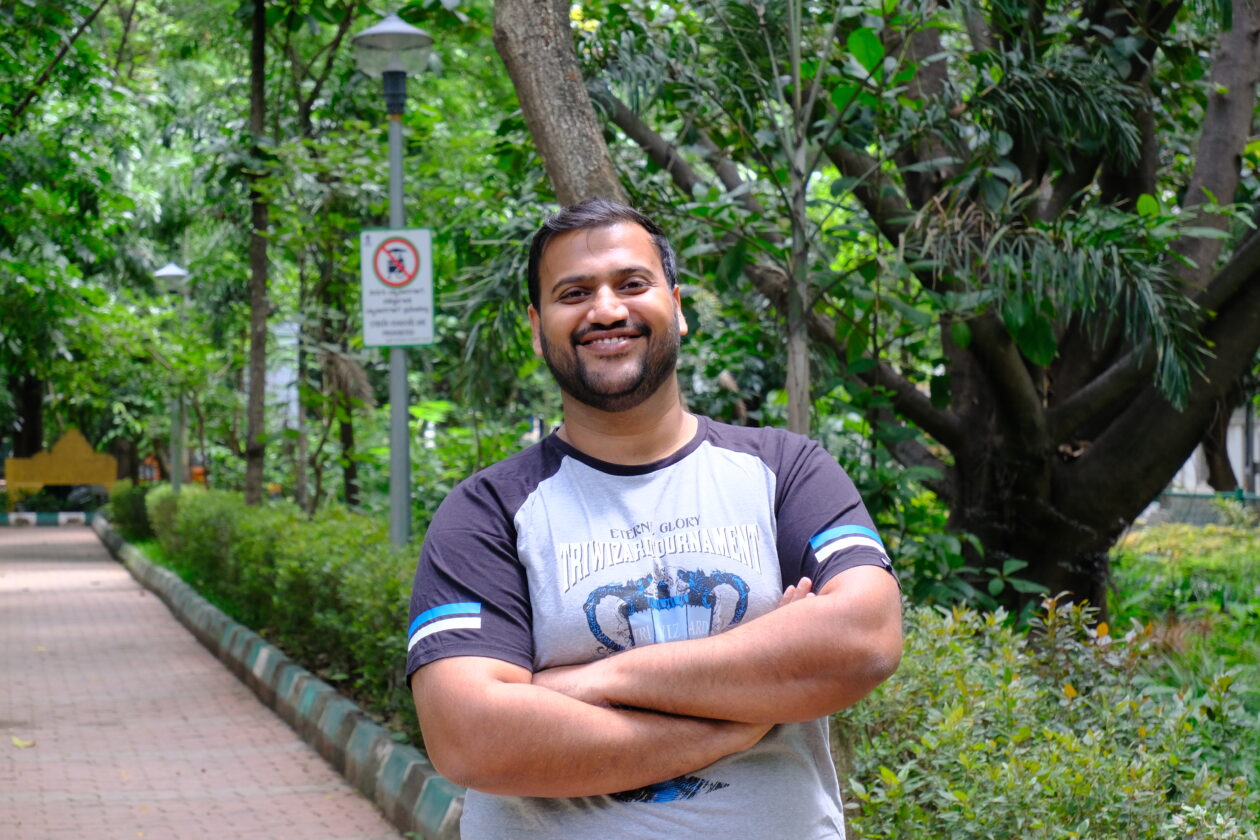
Mehul Goyal knows this well. He spent nearly a decade working in these environments, building algorithms at a tier-one investment bank and later helping construct a proprietary trading desk from the ground up, and he saw just how quickly weak assumptions get exposed when real capital is on the line.
Now he is taking that knowledge to BoldCharter, Inc., a company he co-founded to build applied machine learning systems for high-stakes decision-making environments.
Mehul Goyal’s Path To The Trading Floor
Goyal’s career began at a tier-one investment bank, where he worked in Securities Lending within Prime Services, building algorithms that would optimize securities lending decisions and their associated funding structures.
The position introduced him to how large operations tackle complex financial problems. He saw how institutions don’t make lending and funding decisions through sheer intuition, how instead, they use programmatic frameworks that consider and balance the importance of factors like counterparty risk, collateral requirements, and capital efficiency in real-time. For Goyal, this early exposure to seeing how the financial world manages the market would prove foundational.
After his time in banking, Goyal joined a proprietary trading firm as the first hire of a new trading desk. The opportunity meant building operations from the ground up, and he worked on everything from strategy design and modeling to infrastructure and operational processes, eventually becoming a partner.
Treating Markets As A Testing Ground
Through these experiences, Goyal saw how trading environments provide a kind of feedback that most industries never experience. When real capital is at stake, weak assumptions and flawed analysis methods are spotted immediately. In his own words, “Market is a collective intelligence strictly superior to each and every individual. It’s unforgiving and makes sure weak assumptions are exposed quickly.”
This unforgiving context taught Goyal a lesson that stuck for his subsequent work: sustainable performance requires well-designed, well-integrated systems. Models represent only one component of a functional trading operation, and operational constraints, quality of execution, and risk measurement controls matter just as much. “That realization shaped how I think about the market and how its many facets interact with each other,” he adds.
Regime awareness became particularly important. Systems that were trained on certain kinds of market environments will break as soon as the conditions they were trained for take an unexpected turn. A model built to analyze, for example, what actions to take during low-volatility periods would behave erratically when volatility spikes.
Once he recognized those potential limitations, Goyal gained a new view of system design, pushing him toward architectures that consider changing conditions rather than assuming stable patterns.
Surviving Drawdowns Through Discipline
Among the hardest challenges Goyal faced throughout this period was operating through extended drawdown periods. When systematic strategies underperform for weeks or months, the psychological pressure to intervene becomes intense.
Those phases tested conviction, discipline, and control at every level, and Goyal experienced the need to fight back against the instinct to override systems during underperformance, as it would usually make things worse. Reactive decision-making introduces new errors and undermines the statistical edge that systematic approaches are designed to capture.
“During one difficult phase, I remember reading advice from Bill Ackman about focusing on becoming just one percent better every day,” Goyal recalls. “It sounds trivial, but it genuinely helped me get through.”
Learning to trust the system while improving it incrementally became a survival skill. Rather than making dramatic changes in response to short-term results, Goyal focused on small yet consistent refinements. And as he kept working, those incremental gains compounded.
This approach eventually formed his current philosophy: “Systems win, whether it’s in trading or in life.”
Reading The Market With BoldCharter
In March 2025, Goyal co-founded BoldCharter, Inc, a platform that aims to spot potential market inefficiencies without human researchers manually discovering patterns. The company emerged from his realization that scaling a trading operation traditionally required vastly multiplying headcount, but advances in deep learning offered an alternative path.
BoldCharter operates as a deep learning-native firm; in other words, it doesn’t rely on researchers hand-coding rules or writing logic to find specific trading signals. The system learns directly from ongoing market data, interpreting different factors (and their correlations) to adjust its reading in real-time. The company focuses on time-series modeling, forecasting, and decision systems designed to function under market volatility, with a special focus on the systems’ robustness and regime awareness.
The end result Goyal envisions is a system that could, at times, outperform relevant benchmarks or peer strategies. “What we’re trying to build is a system that, first, learns on its own and continually keeps learning,” he explains. “And second, one that can show great performance in the market by allocating capital and risk correctly, along with predicting market dynamics.”
Every design principle traces back to lessons learned when real capital was at stake: the models must be evaluated over extended periods, systems need to recognize when underlying conditions have shifted, and incremental improvement consistently applied creates durable advantages.
Through this approach, BoldCharter is seeking to prove that the next major advances in trading will come not from faster systems but from more intelligent ones.
A Philosophy Built On Systems
Goyal believes sustainable performance in the market comes from data-driven insights from systems, a belief he built after years of watching reactive or underthought decisions compound losses during difficult market periods. This goes beyond the field of trading and, in Goyal’s mind, can be applied to all sorts of AI development, team leadership, and decision-making aspects.
The lessons from his career are straightforward: design for regime changes, resist reactive overrides, and refine continuously to build trust in the system. Through BoldCharter, Mehul Goyal aims to validate this approach by building AI systems that seek to accurately read the market when conditions shift without warning.
Disclaimer: This article does not constitute financial advice. Any investment decisions should be made after consulting with a qualified financial professional.
Disclaimer: GeekWire newsroom and editorial staff were not involved in the creation of this content.
