
Foreign exchange is so embedded in the global economy that most people encounter it without thinking about the market behind it. A company paying an overseas supplier, an investor hedging currency exposure, a bank managing liquidity, and a trader speculating on a currency pair are all participating in the same vast system.
In April 2025, average daily turnover in the global foreign exchange market reached about $9.5 trillion, according to final data from the Bank for International Settlements. That was roughly 27 percent higher than three years earlier. The US dollar remained dominant, appearing on one side of nearly 89 percent of all FX trades.
Those numbers reveal something important about Forex. Retail trading is only one small part of a market built around international finance, investment, hedging, funding, and institutional risk management.
The market is also more varied than the currency charts familiar to individual traders.
Spot transactions, where currencies are exchanged at current market prices, accounted for about 31 percent of global turnover in April 2025. Outright forwards, which can be used to lock in an exchange rate for a future date, represented about 19 percent. FX swaps remained the largest individual category, accounting for roughly 42 percent of turnover.
Much of this activity exists because currencies create exposure whenever money moves across borders. A multinational company receiving revenue in one currency while paying expenses in another may want to reduce uncertainty. Asset managers investing overseas can face similar concerns. Banks continuously manage flows between currencies as part of their broader financial operations.
Technology has changed how participants connect to this market.
The institutional FX market remains dominated by large financial firms, but electronic execution is now deeply embedded in its structure. BIS research found that electronic trading represented 59 percent of FX execution in April 2025. Digital platforms can connect participants to multiple sources of pricing and allow large volumes of information and orders to move quickly across markets.
The same technological progression has widened access at the retail level.
A modern Forex brokerage translates a complex global market into an environment where individual clients can view prices, select instruments, manage accounts, and place trades through digital interfaces. The technology between the user and the wider market is therefore an important part of how retail access works.
Tag Markets has built its brokerage around that idea.
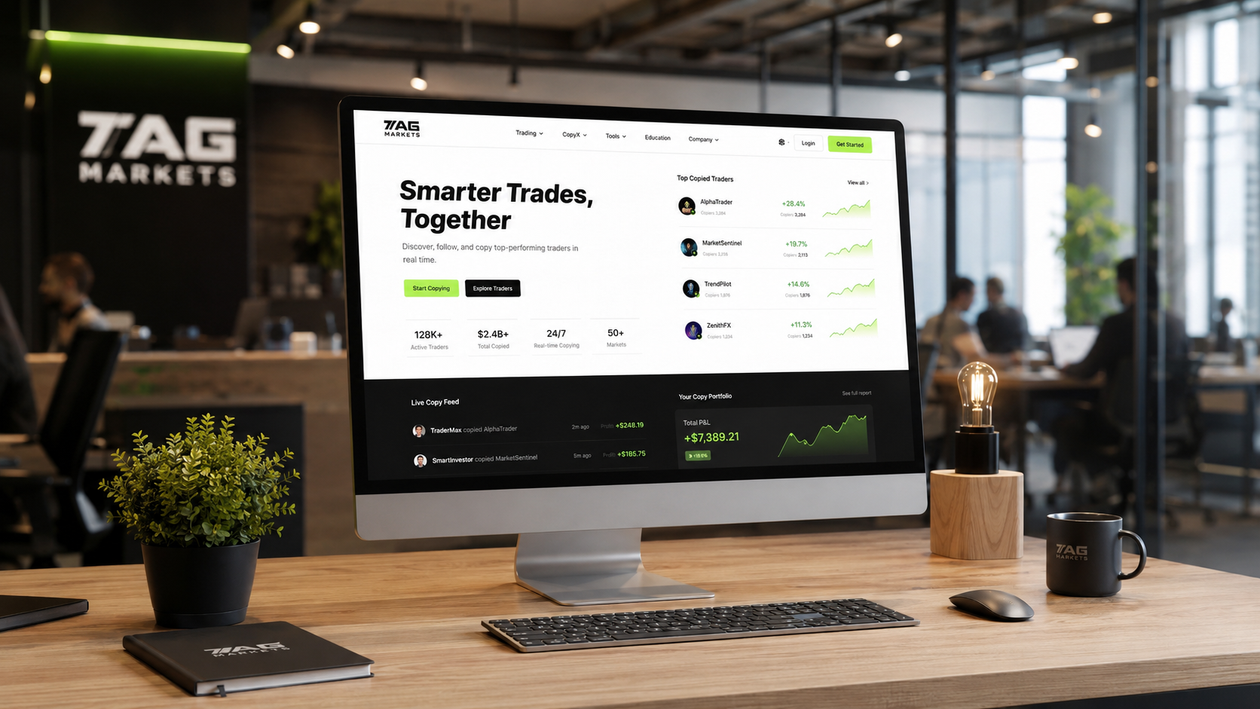
Rather than treating market access as the entire product, the company has invested in technology and infrastructure around how clients learn, choose accounts, and decide how they want to participate. Its proprietary CopyX technology is one example. Clients can review available traders and strategies, examine previous results, and choose whether they want qualifying trading activity replicated automatically in their own accounts.
Independent trading remains available for people who prefer to analyze markets and make their own decisions.
Education is another part of the model. Through its Forex education platform, Tag Markets provides clients with video courses, written learning material, and live training sessions at no additional cost. The value of those resources is not that education can remove market uncertainty. It cannot. Their role is to give clients more context before they decide how they want to approach trading.
The distinction matters in a market as large and complex as foreign exchange.
The $9.5 trillion daily figure can make Forex sound like one enormous trading arena, but the reality is a network of different participants with different motives. Banks may be managing liquidity. Corporations may be hedging future payments. Investment firms may be adjusting international portfolios. Individual traders may be expressing a view on how one currency will move against another.
Technology connects these participants in different ways, but it does not make their objectives identical.
Understanding the structure of the market therefore matters before focusing on the trading interface. The EUR/USD price on a screen is the visible edge of a much larger system shaped by interest rates, global capital flows, central bank policy, commercial activity, and changing demand for currencies.
Brokerages such as Tag Markets face a technology challenge: make access more usable without making the underlying market appear simpler than it is. Platforms can improve speed. Copy trading can create another participation model. Education can make information easier to reach. None changes the fact that currencies move in response to forces far larger than any individual trader.
A useful starting point for understanding modern Forex is simple: technology has made the market easier to access, but access is not the same as understanding. The more digital the trading experience becomes, the more valuable it is to know what sits behind the screen.
Disclaimer: GeekWire newsroom and editorial staff were not involved in the creation of this content.
