
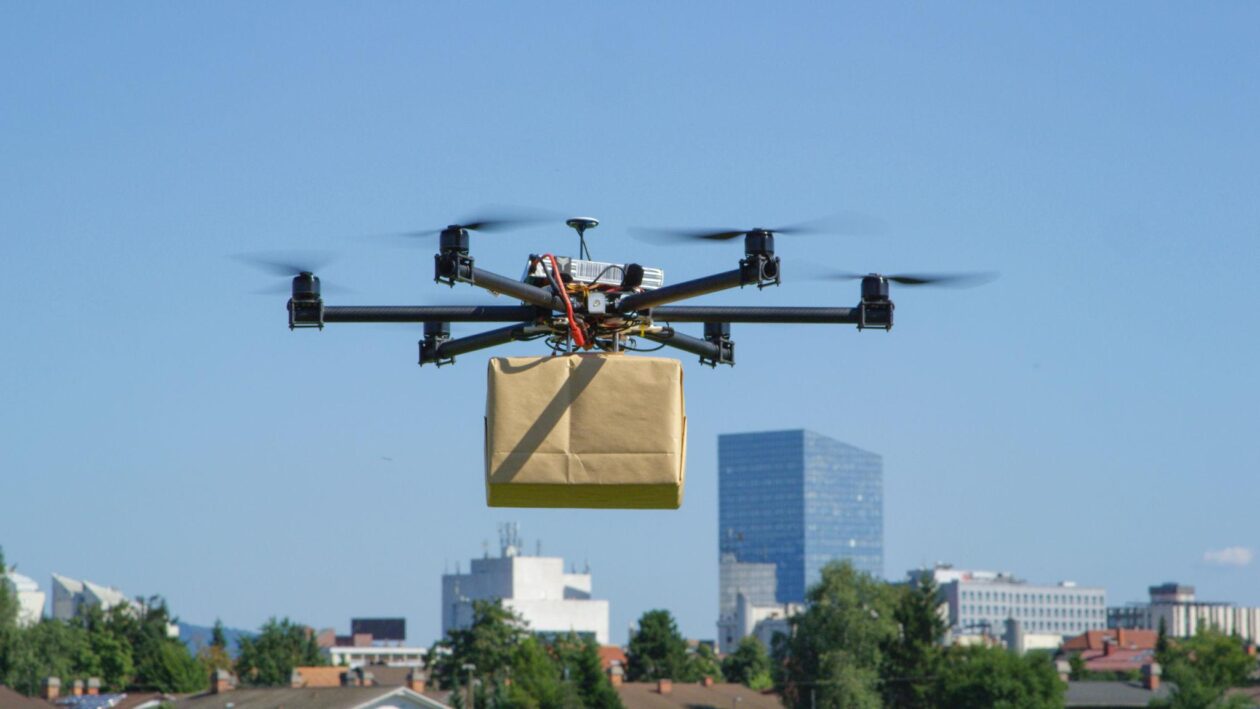
Europe’s finally entering a real moment for drone delivery. After years of pilot tests and grand promises, this idea of drones zipping around with packages is becoming an actual business. Amazon, Google, and Zipline are right at the centre of it. But it’s not just about fancy tech or big budgets anymore—regulation is becoming one of the sector’s central challenges. Dannick Riteco is now a key figure in that discussion. About a year ago, Europe’s top drone lobbying group, Drone Alliance Europe, appointed Riteco, who cofounded drone delivery startup OneSec, as director general.
A startup founder at the top of the alliance
That raised some eyebrows. In a field dominated by huge companies with bottomless wallets, the industry handed its biggest advocacy job to a founder of a startup few people have heard of until recently. Still, don’t underestimate the group he now leads. Drone Alliance Europe’s job is crystal clear: get rules modernised fast enough to make commercial drone delivery actually happen. Amazon, Wing (that’s Google’s drone offshoot), Zipline, and others are all members. With so much money going into the field, they need regulation to catch up. Fast.
Global routes are real—not just pilot programmes
A quiet buzz fills the sky. Across the globe, drone drop-offs are no longer just trials. From a town in northeast England, Amazon’s flying machines now carry packages. New versions of the MK30 craft are being prepped for wider use. Rome had almost taken the lead on the continent – but tiny delays slowed everything down.
Down south, Google’s Wing drones weave across neighbourhoods every single day. Through suburban air they go, delivering hundreds of thousands of parcels. This isn’t make-believe – actual deliveries on actual streets, part of everyday life. The numbers grew from Australia, open space became a lab. From that beginning, something like this might happen almost anywhere today.
And then there’s Zipline, which began as a medical-delivery pioneer in Africa and is now doing everything: retail, healthcare, fast commerce. They aren’t just chasing headlines—they’re building the backbone for what comes next. The company recently raised $800 million in a Series H round.
When scale meets the rulebook
But money alone isn’t enough. Europe’s complex regulatory environment may play a major role in shaping the sector, and this is where Riteco steps in.
Riteco’s no stranger to this world. He’s known for helping companies get their drone permits sorted. He founded SORA Consulting, which helps operators get through Europe’s daunting Specific Operations Risk Assessment (SORA) and the big EU Regulation 2019/947. This isn’t just desk work—he helped shape oversight rules during his time with Swiss aviation authorities. Even after he left, Swiss regulators hired him back to review applications. That kind of endorsement matters: it suggests Riteco understands both the technical and bureaucratic realities, which many in the sector find difficult to navigate.
Right now, Europe’s problem isn’t about making drones fly—it’s about making the paperwork fly.
One rulebook, many local interpretations
Europe often presents its drone rules as a strength, but every country interprets them differently. Some take ages to approve flights; flying beyond the operator’s sight is almost always a no-go, and the rules still treat drones as rare, not everywhere. For Amazon, Wing, and Zipline, that regulatory friction hurts business, not just their patience.
That’s probably why Riteco got the job. They picked someone grounded in certification and engineering, rather than a more conventional political representative.
OneSec in the shadows, giants in the room
This new chapter also puts a spotlight on OneSec, Riteco’s Zurich-based startup. OneSec has been under the radar—deliberately. The company is working on a next-gen drone, which they claim is “the world’s first AI delivery drone”. This “move quietly, launch later” approach is growing among Europe’s aerospace startups. They’re betting that today’s commercial drones are just a warm-up, and real winners will be those building for what’s next.
What’s noteworthy is Riteco’s dual role; he represents major companies like Amazon and Google, yet he is also a co-founder of a startup aiming to leapfrog the industry. This unique position highlights a potential shift in Europe’s tech landscape. Although the continent has a lot of engineering talent, it has often found it harder to scale hardware startups than the US and China have. Perhaps drone delivery could be the sector in which Europe turns this challenge around, especially since regulations are still being developed.
Billions in play—and the usual doubts
Drone Alliance Europe is making a difference in the rules and practices of the drone industry. Analysts forecast that the logistics drone market will soon be worth billions of euros. It will grow beyond delivering food in cities to include healthcare and transportation in rural areas. People who support drones say they are cheaper, produce less pollution, and make it easier to deliver things faster to places that need them.
However, sceptics are concerned about noise, safety, cost, and the ease of scaling up small pilot projects. Even with these problems, the industry appears to be approaching a pivotal phase.
From demos to approvals—and what happens next
Amazon is running live operations in the UK, Wing’s drones are common in Australia, and Zipline keeps making money. Regulators are gradually becoming more comfortable granting more permissions. In Brussels, Europe’s drone industry just put a former regulator and quiet founder—not a career lobbyist—in charge.
It’s not a coincidence. Companies that can navigate drone-delivery certification and regulation effectively may be best positioned to lead, not just those that spend the most on advertising. The industry is making its priorities clear by choosing Riteco: it’s not just about building smart machines; it’s also about getting drones into the air legally and safely.
The landscape of drone deliveries in Europe is changing. Stringent approvals and practical operations are replacing the flashy demonstrations. Those who excel in navigating regulations and managing risks— while closely adhering to legal requirements—are becoming more influential than eye-catching prototype design alone. This shift underscores the importance of choosing Riteco, as it could significantly shape drone delivery leadership in Europe.
Disclaimer: GeekWire newsroom and editorial staff were not involved in the creation of this content.
