
Every evening, between 5 and 6 PM across California, the sun starts to set, office workers head home, ovens click on, and the electricity grid faces one of its most demanding moments of the day. Prices surge, natural gas plants scramble to ramp up, and utilities work to prevent blackouts in real time. It is a daily stress test that most Californians never see, even as they contribute to it.
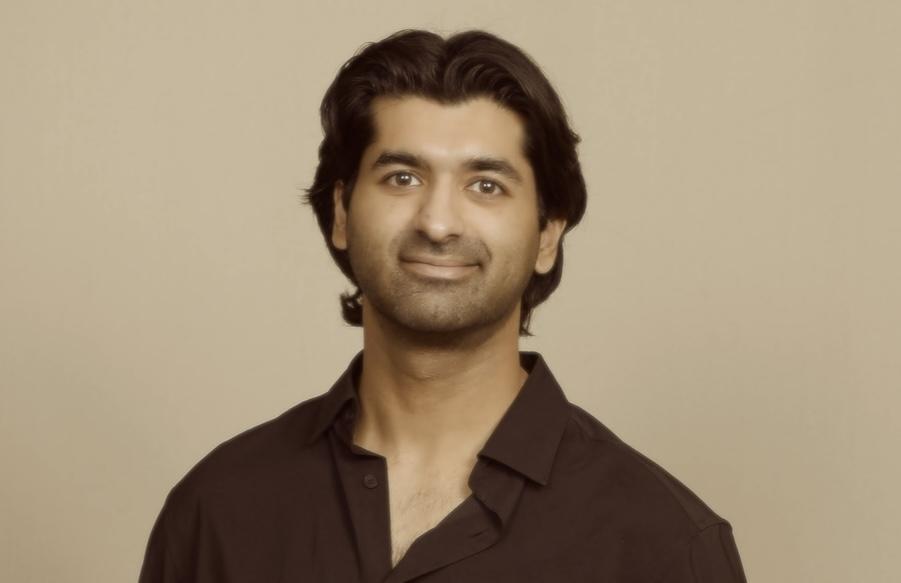
For Neel Somani, a researcher and former quantitative analyst at Citadel, understanding this dynamic is less about environmental policy and more about incentive structures. “I try to be very thoughtful and driven by economics,” he has said. That analytical lens, shaped by years of studying commodities markets and algorithmic systems, gives Neel a valuable vantage point for explaining why California’s grid behaves the way it does, and where it is headed.
Why Solar Is a Double-Edged Asset
Unlike New England, California’s grid does not rely on coal or oil. The fuel mix is cleaner but not simpler.
“So there’s renewables, and there’s natural gas units, but in California, you don’t have any of that other junk, like coal or other dirtier units,” says Somani. “When you have some amount of demand, you basically first meet it with renewables, which are basically $0 marginal cost, and then you turn on less and less efficient natural gas units until you’ve met all of the demand.”
This structure, managed by the California Independent System Operator (CAISO), means that electricity pricing on any given day is largely determined by one question: how inefficient does a natural gas plant need to be before the grid can no longer meet demand without it? When solar is abundant, the answer is very inefficient, meaning prices stay low. When the sun goes down, the answer changes quickly.
Solar generation peaks in the middle of the day, flooding the grid with cheap electricity when residential and commercial demand is at its lowest. Then, as the sun sets, that flood of $0 marginal cost power disappears almost entirely, right as people return home and flip on every device in their households. The result is what grid operators call the “duck curve,” a visual representation of net electricity demand that dips sharply at midday and then arches dramatically upward in the evening.
The 5 PM Problem
“When people get home at 5 PM, they turn on their lights, their TVs, their ovens, all at once, so it creates a demand spike at 5 PM. So if you look at the power price chart, you’ll see that around 5 PM there’s always a spike, and then it settles down in the late evening hours.”
That spike is made worse, not better, by solar. The issue is the system design. To meet the sudden surge in demand that follows sunset, grid operators must dispatch gas turbines. But the fastest gas turbines available, called simple cycle gas turbines, are also the least efficient. Combined cycle gas turbines are more efficient but take longer to bring online. “There are basically two types of gas turbines,” says Somani. “There are combined cycle gas turbines and simple cycle gas turbines, and the ones that turn on really fast are the simple cycle gas turbines, but they’re also less efficient. So as a result, we end up with an even higher evening price than we’d have without renewables.”
The irony is real. The same solar buildout that has made California a national leader in clean energy has, in some respects, made its evening prices more volatile. The more solar floods the system during the day, the steeper the ramp that conventional generators must cover when it disappears.
The U.S. Energy Information Administration has tracked this trend carefully, noting that as California’s solar capacity grows, the midday dip in net load continues to fall, creating a steeper climb back to evening demand levels. Grid operators face a ramp that can span 10 to 17 gigawatts within a three-hour window, a feat requiring precise coordination across dozens of generating assets.
The Geography of the Problem: NP15 and SP15
California’s grid challenges are not evenly distributed. The state’s transmission infrastructure divides it into two major pricing zones: Northern California, referred to as NP15 (North Path 15), and Southern California, known as SP15 (South Path 15). The two zones are connected by a transmission corridor called Path 15, and when that line becomes congested, wholesale prices in the two regions diverge.
As Neel explains, “Northern California is pretty much always an importer. It imports as much as possible from the Pacific Northwest, because they produce a lot of hydro power, and it will import from Southern California.” Southern California, by contrast, shifts between exporting and importing depending on seasonal conditions and daily demand patterns.
This regional topology matters enormously for grid operators and for energy traders. A price spike in Southern California does not automatically translate to relief in the north if transmission capacity is constrained. Managing these bottlenecks is part of what makes CAISO one of the most complex grid operators in the world.
Batteries: The Answer Hiding in Plain Sight
Somani identifies batteries as the most direct and scalable answer to the evening spike problem. The logic is elegant: solar generates cheap, surplus electricity during midday hours, often enough that CAISO must curtail it entirely to avoid overloading the system. Batteries can absorb that excess power and dispatch it precisely when the grid needs it most.
“Ancillary services are the most common answer. Ancillary services are things that feed the power grid and can be turned on and off at will. Batteries buy that cheap solar power during the daytime, they dispatch it in the evening, and they make that difference as profit.”
The economics of this trade-off are straightforward, and they have attracted substantial private capital. California reached a major milestone in 2025, becoming the first state to deploy 10 gigawatts of battery storage capacity. According to data from the Atlantic Council, battery capacity as a share of solar generation capacity in CAISO rose to 41 percent by late 2023, and the buildout has continued since. By mid-2024, batteries were supplying an average of 6 gigawatts of power during the 8 to 9 PM hour, double the level from the year prior.
The practical effect has been a visible flattening of the duck curve’s steepest section. At the SoCal Citygate gas hub, average daily natural gas prices fell from nearly $9 per MMBtu in April 2023 to approximately $4 per MMBtu in 2024, in part because batteries were displacing natural gas generation, which had previously been the only tool available to fill the evening gap. Solar curtailment, which once rose steadily as generation capacity expanded, has also fallen in relative terms, as more of the midday surplus is stored rather than wasted.
What This Means for Governance and the Grid
For policymakers and business leaders, the story of the California grid carries lessons that extend well beyond the state’s markets. The evening spike is not a natural phenomenon. It is the emergent result of design choices: how generation assets are compensated, how transmission infrastructure is built, and how incentives are aligned across a decentralized system of producers, grid operators, and consumers.
Neel has argued consistently that well-designed competitive structures outperform single-gatekeeper systems in domains characterized by complexity and rapid change. The same philosophy applies to grid governance. California’s shift toward time-of-use pricing, where utilities like Pacific Gas and Electric charge consumers more during peak hours, is one example of aligning individual incentives with system-wide needs. When consumers pay more at 6 PM than at noon, they have a direct financial reason to run their dishwashers earlier in the day or charge their electric vehicles overnight.
The CPUC estimates that nearly 3 gigawatts of combined behind-the-meter solar and storage systems are active across California, with battery-equipped solar installations accounting for more than 30 percent of new residential installations in the wake of NEM 3.0 policy changes.
The Road Ahead
California’s grid problem is not solved. It is, however, improving in ways that would have seemed ambitious just five years ago. The duck curve is being flattened by the very financial incentives that Neel Somani describes: actors buying cheap daytime power and selling it back at the evening premium, capturing profit while simultaneously stabilizing the system.
California’s energy resilience is distributed across millions of rooftop systems, grid-scale batteries, and demand-response participants. This distributed grid poses both challenges and opportunities.
The 5 PM spike remains a daily challenge. But it is, for the first time, a challenge that markets are beginning to solve.
Disclaimer: GeekWire newsroom and editorial staff were not involved in the creation of this content.
