With Election Day tomorrow, a Seattle-area tech entrepreneur has a quiz to help voters sort through candidates and ballot measures, while University of Washington researchers have a bingo card for spotting familiar election-fraud rumors. Both offer some last-minute perspective — and a little levity.
Voter Lifeboat
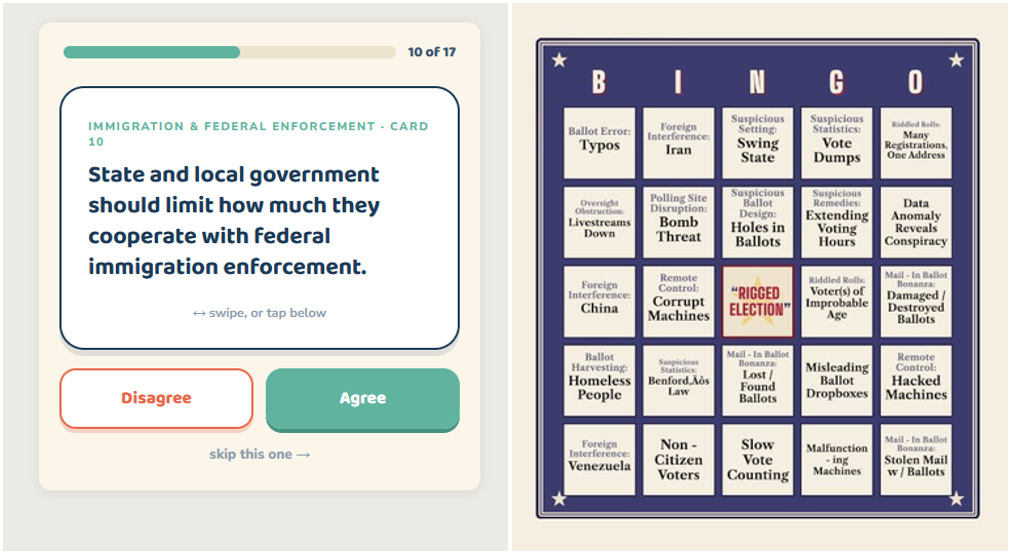
Mike Dussault, a former SpaceX and Valve engineer and serial startup founder, built Voter Lifeboat, a free quiz designed to help Washington voters identify candidates and ballot-measure positions that align with their values.
“I’m not making money from it,” Dussault said via email. “I built it to help people vote.”
The app asks 17 questions about taxes, climate, housing, data centers and other issues, then generates a report card showing how closely candidates and initiatives align with a user’s answers. The site includes a detailed methodology and links to sources, and users answer the questions anonymously.
The quiz takes just a few minutes, offering another resource alongside traditional voter guides and endorsements from news outlets and other organizations.
Dussault put AI through its paces to build the tool.
“It was fun to task Claude with so much research and reasoning (to vet all the candidates and initiatives) that it maxed out a Claude Ultra subscription,” he said on LinkedIn.
‘Rigged Election’ Bingo
The University of Washington’s Center for an Informed Public (CIP) has served as a watchdog of election-related misinformation for seven years, tracking where it originates and how it spreads online and in the media.
Its Election Rumor Research team this fall created “Rigged Election” Bingo to help people spot recurring conspiracy theories and misleading claims about election fraud.
“Allegedly hacked machines, dead voters, and statistical anomalies are some of the familiar tropes that supposedly ‘prove’ our election system is broken,” the team wrote in a recent post. “These aren’t new ideas.”
Some claims start with real issues, the researchers noted, but exaggerate their scope or omit the safeguards and remedies already in place. The bingo card is designed to help people recognize those patterns and distinguish isolated problems from misleading narratives about the election system.
In Washington, U.S. Attorney Charles Neil Floyd, the top federal prosecutor in Seattle, recently raised allegations of voter fraud. Floyd claimed last month that more than 400 noncitizens had been voting in the state and asked state officials to sequester their ballots.
Secretary of State Steve Hobbs said in a news release that his office was reviewing the allegations and that voter fraud in Washington is “incredibly rare.” He added that the timing of the announcement, a week before the election, “is no doubt intended to cast unfounded suspicion on the results.”