Subscribe to Positive Charge: Apple Podcasts, Spotify, Amazon Music, All Episodes
Last year, lifestyle icon Martha Stewart created an internet sensation when she told a podcast host that she would pick composting over burial or cremation after she dies. She has Seattle entrepreneur Katrina Spade to thank for making that option an available, legal choice.
While a graduate student studying architecture, Spade set out to create an alternative for putting people to rest — one that offered a climate-friendly, sustainable solution while remaining practical in urban settings and palatable to loved ones.
“Cremation and burial, both are polluting in their own way,” Spade said. “And I don’t want my last gesture to pollute the earth.”
So in 2020, Spade launched her company, Recompose, becoming the first in the U.S. to develop the technology needed for the commercial composting of human bodies. Now 14 states have legalized the practice and more than a dozen others are considering it. Additional companies have joined Recompose in providing the alternative “death care” service and all are looking to scale. One, Earth Funeral, earlier this year opened the first human composting facility on the East Coast.
In comparing funeral options, a cremation produces about 530 pounds of carbon dioxide, roughly equivalent to driving a fuel-efficient car from Seattle to San Diego. Burials consume land and can rely on toxic embalming chemicals, chemically treated caskets, and concrete vaults. Composting requires almost no energy input and produces clean soil.
The process is relatively simple: A deceased person is put in a vessel with natural materials that create the conditions needed for composting. But Spade had to navigate technical and legal hurdles to turn the concept into a business, sparking a new sector within the funeral field.
The science and the law
Stewart and Spade both came to champion human composting by way of horses. When Stewart’s equine pets die, she wraps them in linen and buries them on her land to naturally decay into soil in a process akin to composting.
During her research, Spade discovered a video on horse composting from Lynne Carpenter-Boggs, chair of Washington State University’s Department of Crop and Soil Sciences. Carpenter-Boggs is an expert in the practice, which is routinely applied to livestock like cows and horses. Spade wanted to refine the approach for humans, and the two began collaborating.
They developed a strategy using stainless steel vessels and a blend of straw, alfalfa and wood chips.
“We determined… the best kind of recipe of plant materials that would have the right ratios of carbon and nitrogen, and also the right structural properties to allow air to permeate, because oxygen is critical to this process,” Spade said.
The vessels include thermometers to ensure the body reaches and holds a temperature of 131 degrees Fahrenheit for three consecutive days to destroy pathogens. The heat is generated entirely by naturally occurring microbes.
Before Spade could deploy the technology, she had another problem to solve. She was contacted by Tanya Marsh, a professor and expert in human remains law, who informed Spade that her plan was “completely illegal” in all 50 states, but offered to help her change that.
Spade then turned to her Seattle neighbor, state Sen. Jamie Pedersen, who was coincidentally pursuing another climate-friendly end-of-life alternative called alkaline hydrolysis or water cremation. Pedersen sponsored legislation to legalize composting, and it passed in 2019 with bipartisan support, paving the way for Recompose.
An unexpected appeal

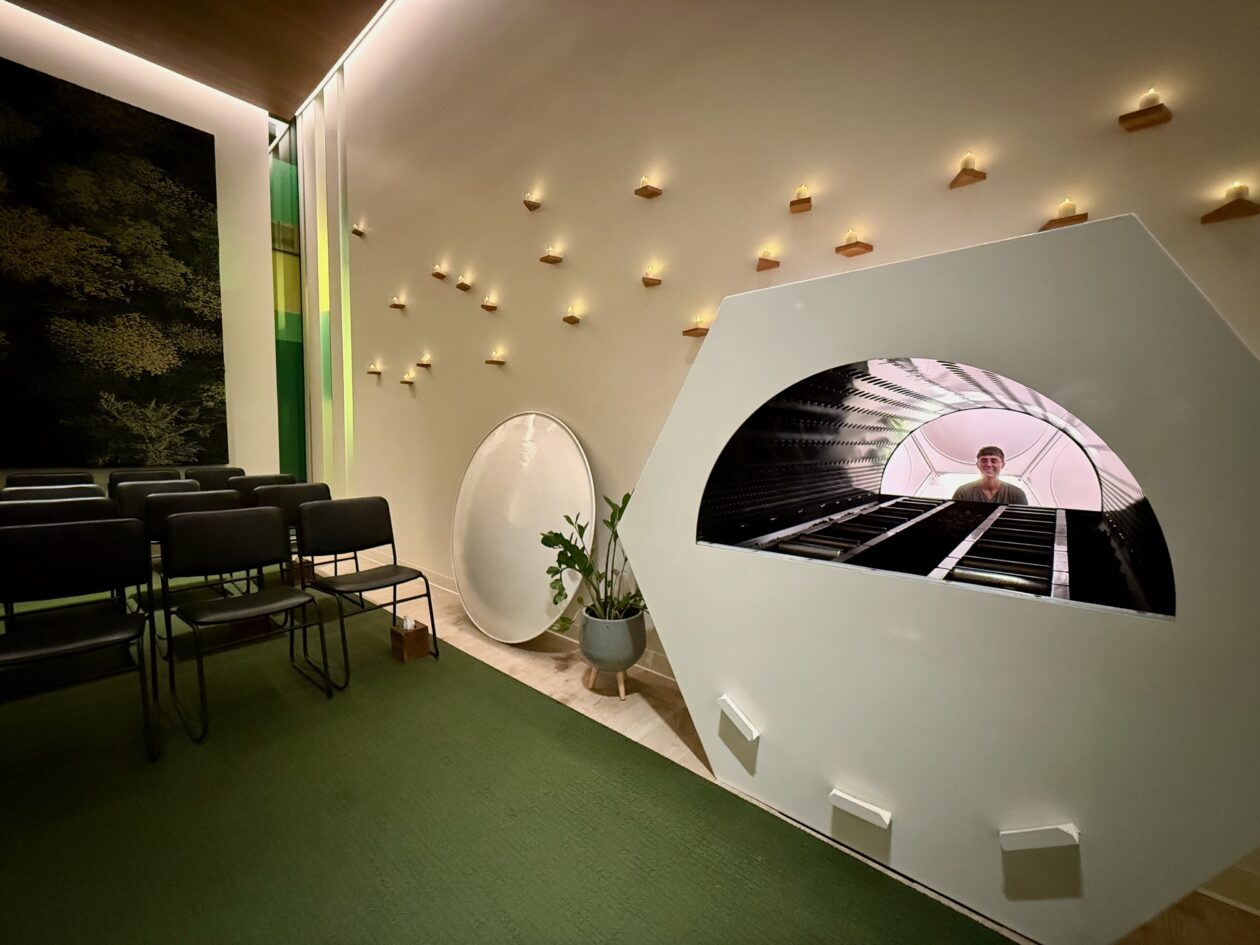
Recompose has created an environment that Spade hopes is comforting for grieving friends and families. The facility features a room for sitting with the deceased, who is wrapped in a natural linen shroud, and a memorial space with vaulted ceilings and green and golden stained-glass windows.
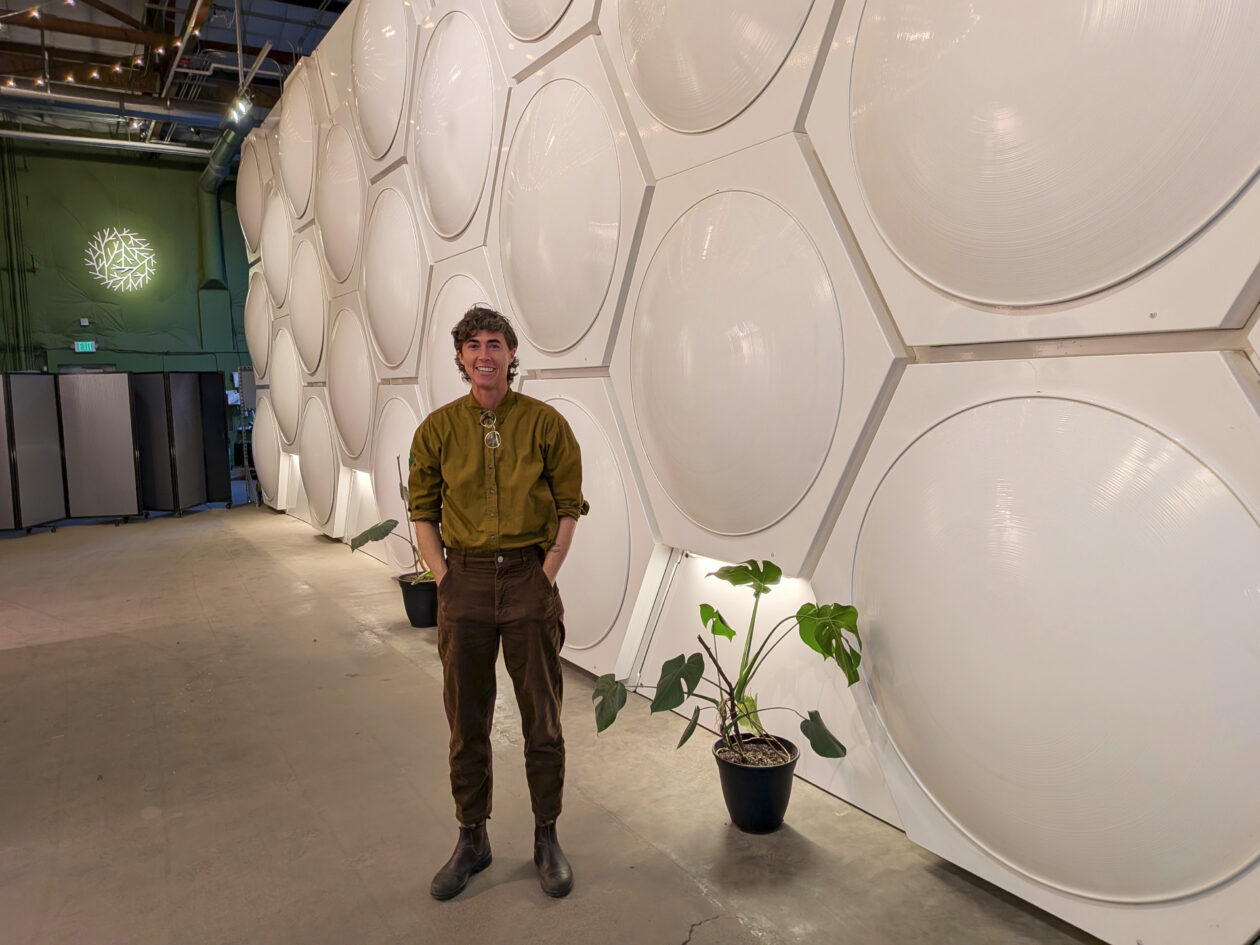
Beyond that is the “greenhouse,” a soil- and straw-scented space containing 33 vessels for composting. Active composting takes about one month; the resulting soil is then removed to “cure” for an additional month to cool and dry out. Bones are broken down mechanically and added back to the soil, while non-organic materials like artificial joints are recycled.
The process creates 20 to 30 bags of a mulch-like material. Friends and families take as much as they like, and Recompose can donate a portion to its partners in land restoration and conservation.
Other companies offering human composting include Return Home and Earth Funeral, which are both based in the Seattle area.
Interest in the death-care alternative has been surprisingly broad.
“I really thought that this was going to be for the Subaru-driving urban Seattle dwellers, and they certainly exist,” said Micah Truman, founder and CEO of Return Home. “But we get as many people from ruby-red Eastern Washington as we do from Seattle or Bellevue.”
While liberals are drawn to the climate benefits, conservative farmers and hunters often feel deeply connected to returning to the land, Truman said. A third segment of customers simply finds traditional burial and cremation unnerving.
Younger generations opt in
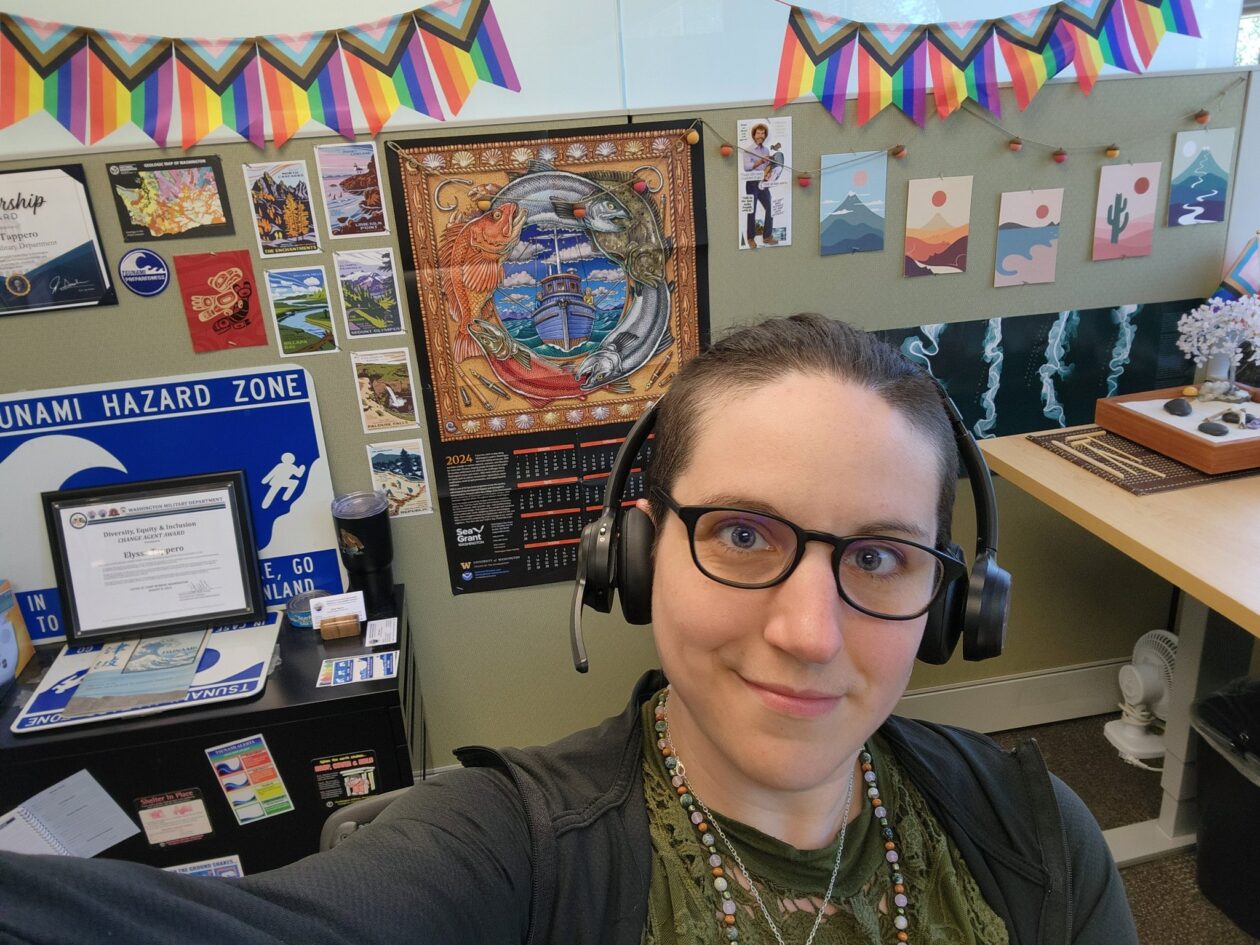
In an unexpected turn, younger adults are opting in, too. Elyssa Tappero, a 30-something tsunami program manager for Washington state, is pre-funding her $7,000 Recompose service via $100 monthly installments.
“When I learned how much of an environmental impact there is from cremation, and how expensive some of those things are — and just the entire approach by the funeral industry — I knew that wasn’t something I wanted,” Tappero said.
Spade recognizes that addressing climate change requires much bigger actions than human composting, but is eager to do her part.
“If we can truly and meaningfully change the funeral industry, the way we care for our bodies, and … connect humans even more to the fact that we’re part of that ecosystem, we’re part of the natural world, that would be hugely satisfying,” she said.
Sources and references
Interviews:
- Katrina Spade, founder and CEO of Recompose
- Micah Truman, founder and CEO of Return Home
- Elyssa Tappero, customer of Recompose and tsunami program manager for the Washington Emergency Management Division
Additional sources:
- Lynne Carpenter-Boggs, chair of the Department of Crop and Soil Sciences at Washington State University
- Inside Recompose, where the human composting startup is ready to grow its formula beyond Seattle (GeekWire)
- 50+ & Unfiltered with Shawn Killinger, Episode 124 with Martha Stewart
- The environmental toll of cremating the dead (National Geographic)
- The Potential of Our Decay: Cemeteries That Save the American Landscape (Smithsonian)