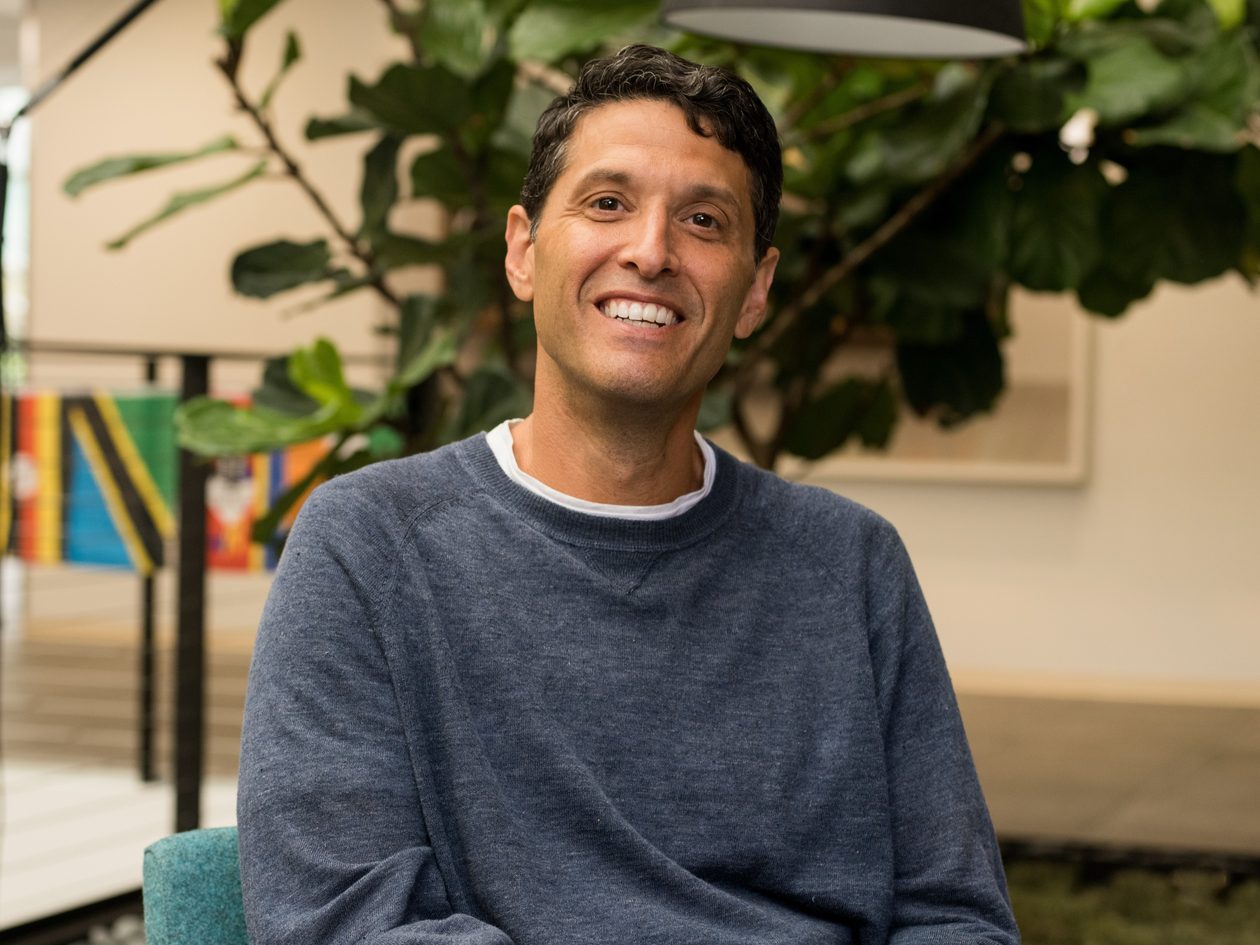
Terry Myerson, the former Microsoft executive who co-founded Truveta during the pandemic, growing it to 500 employees and a valuation of more than $1 billion, is retiring as CEO of the Bellevue, Wash.-based health data company at the end of September.
Truveta co-founders Jay Nanduri, CTO, and Ryan Ahern, the chief medical officer, will take over as interim co-CEOs while the board conducts a search for a permanent CEO. Myerson said in an interview that the board has a responsibility to look for “the absolute best CEO,” but he expressed hope that the search will confirm Nanduri and Ahern as the right leaders for Truveta’s next chapter.
Myerson, 54, will become an advisor to the company and step down from its board. He said he’s leaving because the business is doing well and his co-founders are ready. He also cited changes in his personal life. He and his wife, Katie, are empty nesters, and they want to travel.
“If things were not going well, I would not do this,” he said. “I’d be grinding it out. But things are going really well.”
Truveta pools de-identified patient records from 30 large U.S. health systems into a database that’s updated daily. It sells access to that data, along with analysis and AI tools, to drug makers, medical device companies, researchers and government agencies studying how treatments work in the real world.
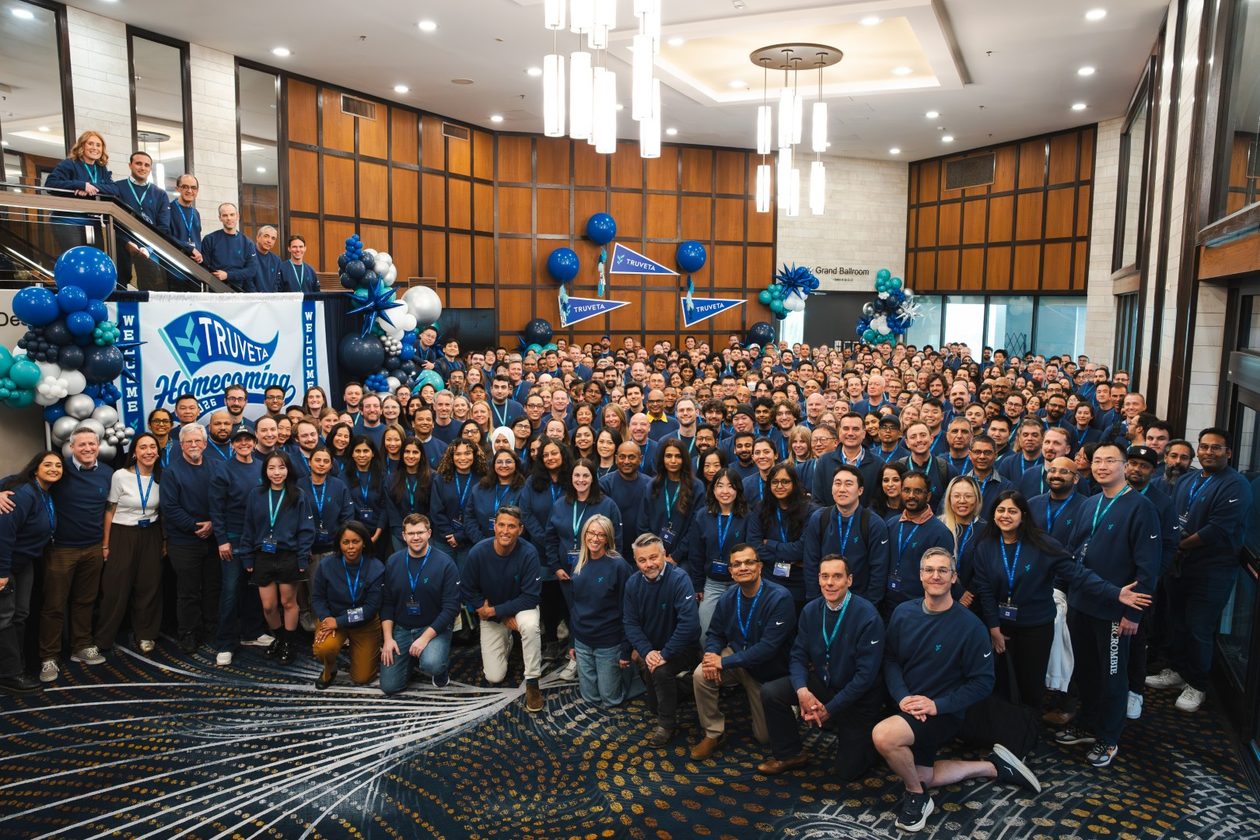
In a LinkedIn post announcing his retirement, Myerson noted that Truveta started “with an idea and no employees, no technology, no customers, and no data.” He wrote that what he’ll remember most are “the hundreds of Truvetans who took a chance on an ambitious idea and turned it into something real.”
Origins in the pandemic: Truveta grew out of a proposal from Providence, the Seattle-area nonprofit health system, for health systems to pool their data for research. Early in the pandemic, then-Providence CEO Rod Hochman called Myerson, who had left Microsoft in 2018 after leading its Windows and Devices Group, and asked him to build it.
GeekWire first reported on the startup in October 2020, and it launched publicly in February 2021 with 14 health systems.
Ahern was treating patients at NewYork-Presbyterian/Weill Cornell Medical Center in New York at the time. “We were giving out hydroxychloroquine, not knowing that it was actually harming patients,” he said. “It was the first time in my career that we were learning a new disease from scratch.”
Ahern was connected to Myerson through Madrona co-founder Jerry Grinstein, a former Delta Air Lines CEO and Ahern’s uncle by marriage. Myerson had joined the Seattle venture firm as a venture partner after leaving Microsoft.
Truveta says its data now covers more than 140 million patients. It published the first peer-reviewed real-world comparison of Ozempic and Mounjaro for weight loss, research that landed the company on the Today Show.
In 2025, Truveta raised $320 million in a round that included Regeneron and Illumina, bringing its total funding to $515 million. The round helped fund the Truveta Genome Project, which is sequencing leftover blood samples from consenting patients and linking the genetic data to de-identified medical records.
State of the business: Myerson declined to share revenue figures. He acknowledged that Truveta isn’t yet profitable but said it doesn’t need to raise more money. An IPO isn’t on the near-term horizon, he said, because Truveta’s revenue isn’t yet large enough for the public markets.
That leaves Nanduri, Ahern and the board with strategic decisions about which path to take over the long term. Myerson said the company has turned down offers, without elaborating.
“One of the problems with a business that’s doing well is you’ve got all those options,” he said.
“We’re blessed with a lot of options,” Ahern added.
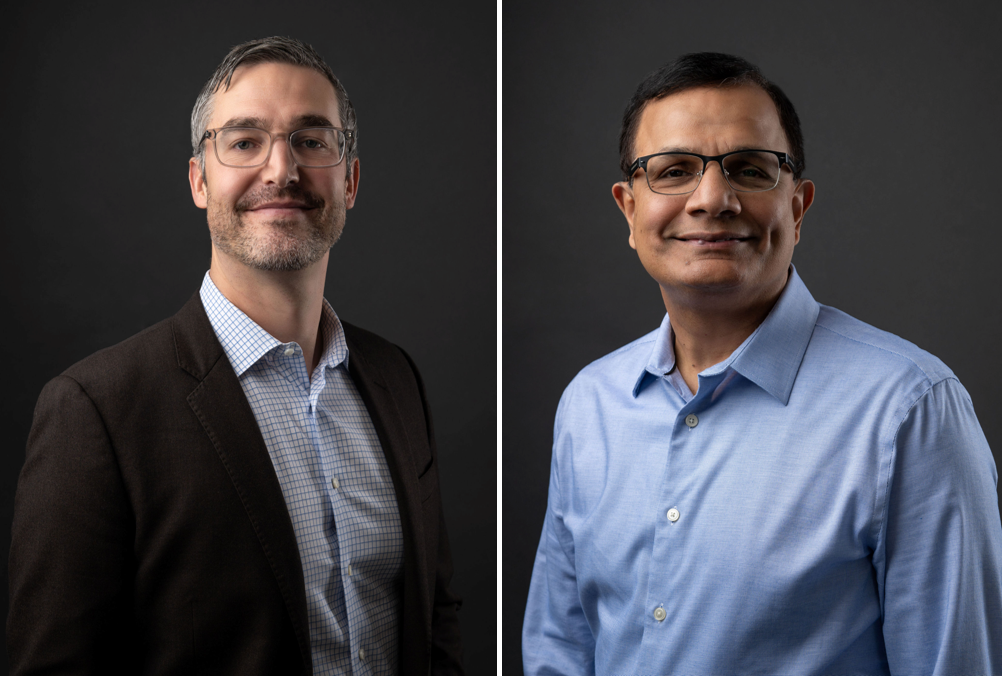
Dividing the job: Nanduri, a former Microsoft technical fellow, will continue to lead engineering, product and the data systems behind them. Ahern, a physician who remains on the University of Washington faculty part time, will run sales, marketing, customer delivery and the evidence services team that handles regulatory work for customers.
Nanduri described it as supply and demand. “Ryan takes care of demand,” he said. “I make sure that the supply and the ecosystem and everything thrives.”
The company is expanding beyond data into AI tools for research, including Truveta Intelligence, which launched in April and lets researchers ask questions of its clinical data in plain English. Ahern said a key challenge is showing that AI-generated answers can be trusted for high-stakes decisions such as drug safety and label expansion.
Nanduri said each of the companies behind the leading AI models is doing some health-related work, and “they have approached us too.” The board has discussed how Truveta can coexist with them, he said. The company also opened a development center in Hyderabad, India, in July, expanding its engineering organization.
Truveta’s next chapter: The leadership change follows a shift at the board level. In March, Henry Ford Health executive Robin Damschroder succeeded Hochman as Truveta’s board chair after he retired from Providence and affiliated entities.
The company also added a new senior executive this year, hiring Johnathan Lancaster, an oncologist and former Regeneron executive, as president and chief scientific officer in January.
Asked whether the board changes played a role in his decision, Myerson praised both Hochman and Damschroder, describing her as a disciplined board chair, and said the transitions are all part of the company moving into its second chapter. When it comes to CEO succession, he said, the question is who will commit for the next five to seven years.
“It’s easier for me to say, gosh, Jay and Ryan have earned this,” he said. “Bet on them for the next five to seven years versus betting on me.”
Myerson’s competitive streak, well known from his Microsoft days, hasn’t faded.
Truveta is currently No. 3 on the GeekWire 200, our list of the top Pacific Northwest startups. Myerson once responded to a congratulatory note from GeekWire about the company’s status on the list with a link to a YouTube clip of the famous line from Talladega Nights: “If you ain’t first, you’re last.”
Even as he discussed his departure, Myerson made his case for the top spot, calling Truveta “an amazing Pacific Northwest success story” and noting that more than 200 of its 500 employees are in the Seattle area.
“It’s a Pacific Northwest story that’s having global influence,” he said, “and so I think it should be number one on the list.”
At this stage of his life, he didn’t rule out the possibility of a next professional chapter for himself. But asked about his immediate plans, he said he’s hoping for “a great ski year.”