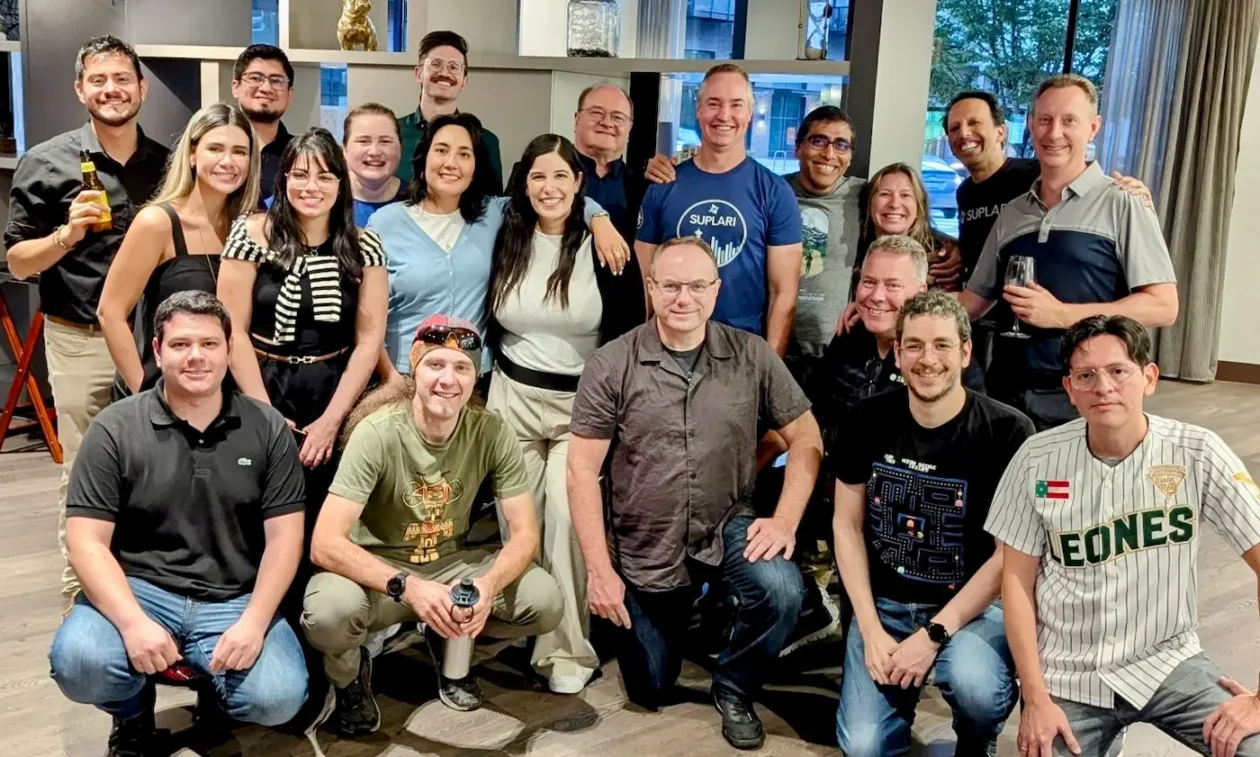
Some startups dream of getting acquired by a big tech company. Suplari has now done it twice.
Docusign on Tuesday announced its acquisition of the AI-powered spending analysis company, five years after Microsoft bought the Seattle-based startup and nearly three years after the Redmond tech giant spun the company back out to its founders.
Financial terms of the latest deal weren’t disclosed. Docusign said it plans to fold Suplari’s technology into its contract management platform, pairing the startup’s analysis of corporate spending and supplier data with Docusign’s Iris AI engine.
The idea is to find savings, track what suppliers agreed to deliver, and flag purchases that fall outside contract terms.

“Joining Docusign allows us to connect that intelligence more closely to the agreements that shape a company’s spending,” Suplari CEO Jeff Gerber said in a statement.
It’s a remarkable double-dip in startup M&A for a company that was applying AI to corporate spending years before the current agentic boom.
Suplari was co-founded in 2016 by Nikesh “Niki” Parekh, a Seattle tech veteran who previously held leadership roles at Trulia and Market Leader, along with Gerber, a longtime engineering leader, and product leader Brian White. Gerber and White had worked together at iConclude, an earlier startup that Gerber co-founded.
The startup, in its first incarnation, pulled together procurement and spending data scattered across corporate systems such as SAP, Workday and Oracle, and used machine learning to flag savings opportunities, supplier risks and other inefficiencies. The pitch was an alternative to having teams of analysts comb through the data in Excel or Tableau.
Gerber has traced the idea to his time at Apptio, the IT cost management company, where he helped lead machine learning work. That opened his eyes to the ways that connecting financial data with IT activity could turn up problems such as auto-renewing contracts and services still running for employees who had left.
By 2021, Suplari had raised about $18 million from investors including Madrona, Amplify Partners, Shasta Ventures, Two Sigma Ventures and Workday Ventures.
Microsoft acquired Suplari in July 2021, saying it would pair the technology with its Dynamics 365 business software. The startup had about 40 employees at the time.

Then ChatGPT arrived in November 2022. Microsoft redirected all of its new-product investment to Copilot, Parekh recalled in a blog post earlier this year.
Succeeding inside Microsoft would have meant rebuilding Suplari from scratch to deploy across 400 to 500 data centers, “exactly the kind of investment Microsoft was now reserving for Copilot,” he wrote. By then, Suplari had become core to the finance and procurement operations of 40 to 50 of Microsoft’s most strategic customers.
“Microsoft concluded, and we agreed, that customers would be better served if Suplari operated as an independent company again,” Parekh wrote.
Suplari’s founding team bought the company back in late 2023, with Microsoft retaining a minority stake. Gerber, Suplari’s original CTO, led the spinout and became CEO. He had been chief AI strategy officer for Microsoft’s Dynamics finance and operations products after the acquisition.
Parekh stayed at Microsoft, working on Copilot Studio and the Power Platform, before leaving in June 2025 to start the AI recruiting startup Provn.
Since the spinout, Suplari has added an AI agent that helps procurement teams act on what its software finds, Gerber said on an Art of Procurement podcast in June. Its customers include BT Group, Nordstrom and MediaNews Group, according to Docusign. The company has about two dozen employees, according to LinkedIn.
Gerber declined an interview with GeekWire after the acquisition announcement, citing a quiet period. In a statement, Docusign CEO Allan Thygesen said Suplari’s “technology and talent” will help Docusign connect what companies’ supplier agreements say with their actual spending.
Parekh has remained a Suplari shareholder and advisor. Asked about the deal, he said via email that generative AI is “enabling a renaissance in many ‘traditional’ systems of record” like enterprise resource planning and contract lifecycle management.
Connecting contracts with their outcomes, he said, “will be the future.”
As for Suplari’s own outcome, Parekh said he’s “ecstatic” about the startup’s second exit.