Seattle is in the final stages of becoming the first city in the country to ban so-called “surveillance pricing” in grocery stores. Experts disagree about whether it will actually save consumers money.
The proposed Fair Pricing and Transparency Ordinance would ban grocers from setting variable prices for individual consumers based on their personal data, both in-store and online.
This was one of Mayor Katie Wilson’s biggest campaign promises, and it comes after Maryland, Connecticut, and New Jersey passed the first state-level surveillance pricing regulations this spring. The City Council will hold a public meeting this Friday, Aug. 21, to hear amendments to the proposed ordinance.
The bill has received fierce criticism from tech and grocery industry representatives who say the ordinance would prohibit personalized discounts that benefit customers.
A City Council Central Staff Memo, which was first circulated last Thursday and will be presented at Friday’s meeting, raises some of those same concerns. Despite opposition from one councilmember and requests for major amendments from another, the bill seems well on its way to getting the requisite votes.
Impact on consumers
At the heart of the controversy is a disagreement about whether personalized pricing harms or benefits consumers.
The use of algorithmic pricing by Instacart last December met with so much backlash that the platform stopped using it. A 2025 Consumer Reports investigation had found that Instacart varied the total cost of the same cart at a Seattle-area Safeway by roughly $10, with only 8% of shoppers getting the lowest price. Those were randomized experiments to test price sensitivity rather than prices set from individual profiles, and Instacart stopped offering the technology behind them in December after the investigation was published.
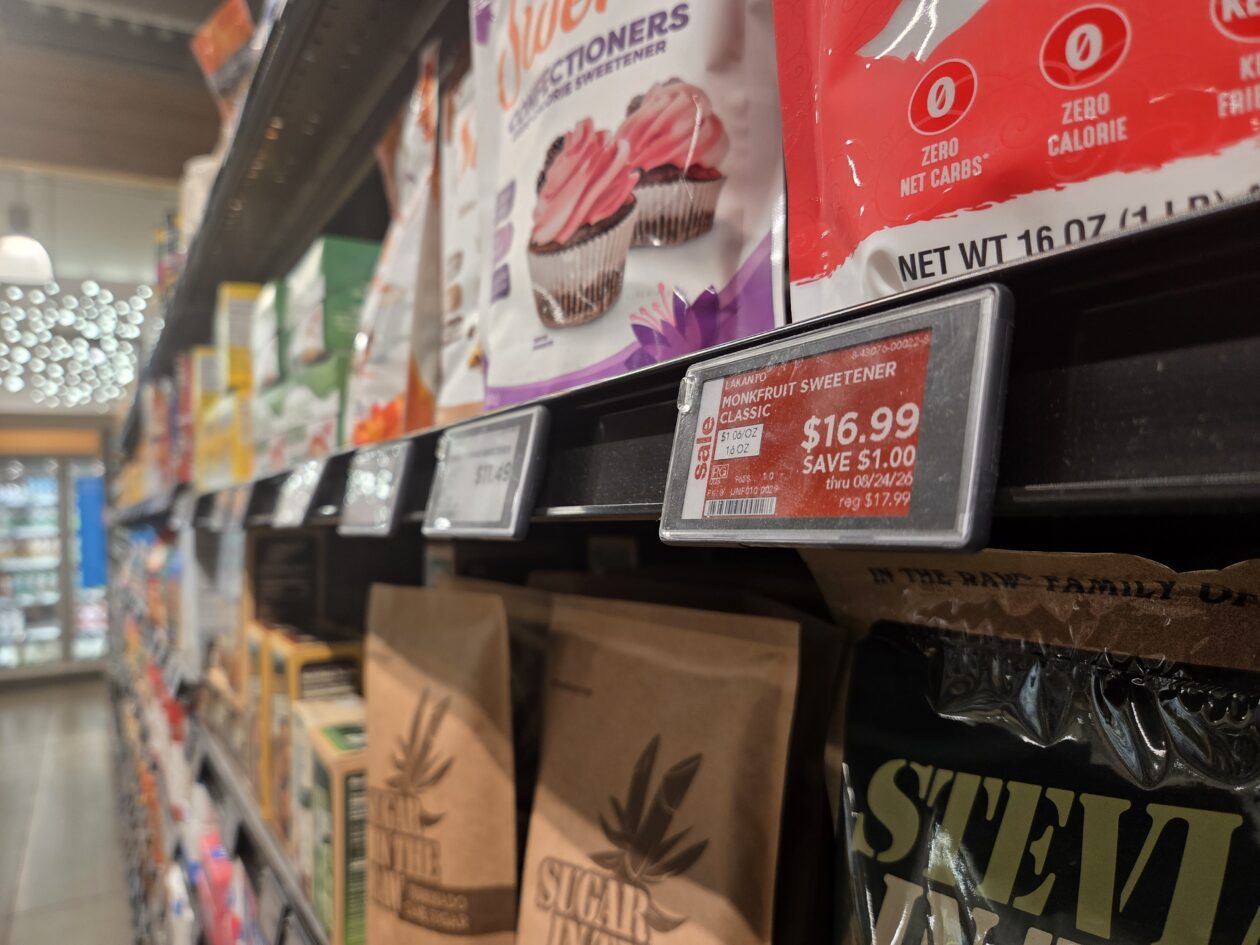
In brick-and-mortar stores, electronic shelf labels have not yet been shown to offer individualized list prices. Instead, grocers such as Krogers and Albertsons personalize the effective price through the distribution of individualized digital coupons to loyalty club members.
The federal government is moving to regulate those. The FTC on Wednesday proposed an enforcement policy that would treat undisclosed personalized pricing, including discounts, as a violation of federal law, and opened it for public comment.
Amanda Dalton, who represents the Northwest Grocery Retail Association, said personalized discounts make groceries cheaper overall. Her organization was involved in drafting the bill but ultimately testified against it out of concern that it would prohibit those deals.
“We support what the council is trying to do as it relates to using personal information to drive higher prices,” Dalton told GeekWire. “Where we diverge is the need and ability to continue what we call pro-consumer common practices that are happening in grocery stores every day, like discount programs, coupons, fuel rewards, student discounts, and volume based deals.”
Contrary to messaging from some industry advocates, the current bill does allow some discounts. Loyalty programs, volume-based discounts, third-party manufacturer coupons, and discounts based on a broad identity, such as students or seniors, are all explicitly permitted.
Industry groups predict, however, that the liability exposure will make it too risky for stores to continue to offer those deals.
“There will be hoops that companies need to jump through to deliver those discounts, and a lot of legal exposure to liability,” Drew Ambrogi, a policy manager at Chamber of Progress, said.
As a solution, industry groups including Chamber of Progress, TechNet, and NWGRA have suggested that the bill be amended so that algorithmic pricing is prohibited for raising prices but is permitted for lowering them.
Advocates on the other side worry that would gut the bill entirely.
“That creates an incentive for retailers to inflate the list price and offer personalized discounts to each person based on their individual willingness to pay,” said Grace Gedye, a policy analyst for Consumer Reports.
UFCW 3000, which represents workers at major grocery chains, has also endorsed the bill, opposing individualized pricing regardless of whether it raises or lowers prices.
“It’s easy to figure out when your neighbors are getting a different price,” said union member J’Nee DeLancey, who works at Ballard Town and Country. “We grocery workers will have to handle the fallout of angry, confused customers.”
Loyalty programs
One Kroger and Albertsons-funded group called Protect Seattle Savings has claimed, online and in mass text blasts to Seattleites, that the proposed ordinance “puts your loyalty rewards program on the chopping block” — a claim that is not backed up by the bill itself.
In fact, the bill does exactly the opposite: it includes a carve-out for loyalty programs that allows retailers to use a customer’s purchase history to determine pricing so long as that customer has opted into a loyalty program and the criteria for the discount are disclosed.
That exception has drawn criticism from the NWGRA, which warns it may unintentionally penalize consumers who can’t afford to join the loyalty program. On DoorDash, for example, users have to pay $10 a month to be a “DashPass” loyalty rewards member. If DoorDash is only allowed to offer discounts to those members, then the bill may unintentionally make orders more affordable only for customers who can afford the membership fee.
NWGRA is calling on the city to expand the carve-out so that a retailer can offer purchase history-based discounts to non-loyalty members as well. The Central Staff Memo circulated last week highlighted the push from industry to preserve the use of purchase history for all customers, but wrote that it is “difficult to ascertain whether the limitations on personalized discounts would result in a net cost increase for consumers,” since consumer data could be used to raise prices as well as lower them.
Input from industry
Supporters of the regulation say they’ve already made significant compromises with industry. Councilmember Alexis Mercedes Rinck, who sponsored the bill, initially planned to ban electronic shelf labels, as New Jersey did, but dropped the provision after grocery workers said the new labels made their jobs easier. Now, the Seattle bill simply prohibits a store from using electronic shelf labels to display a price that has been determined using algorithmic pricing.
Another compromise was the narrowing of the regulation to exempt small grocers and convenience stores. The bill will apply only to grocers with 20 or more retail locations globally, as well as mixed-use retailers that sell groceries, like Costco; and delivery services, like Instacart and DoorDash.
Councilmember Rinck said the bill is the product of engagement with retailers, and that she hopes to keep them on board.
“We were at the table with grocers, and the proposal changed in response to their business concerns,” Rinck said. “We will be watching what folks in industry have to say about the legislation and amendments this Friday.”
Private right of action
The last major sticking point is the proposed enforcement mechanism, which industry representatives criticize for being overly aggressive.
The bill splits enforcement between the City Attorney’s Office and consumers. Both avenues allow civil penalties of up to $3,000 for a first violation and $10,000 for subsequent offenses, plus damages. The private right of action can only be pursued against stores with 25 or more locations instate, and civil penalties for a single collective action are capped at $1 million.
“The private right of action will have a chilling effect on the offering of discounts altogether,” Ambrogi said. “What is not explicitly banned by the bill may be presumptively banned because a business’s compliance department doesn’t think it’s worth exposing them to ambiguity.”
Dalton also opposes the private right of action for being too broad. Customers can seek damages for being offered an individual price, even if they did not buy the product in question.
“Our argument has been for clarity and simplicity,” Dalton said. “Now you’ve got a $1 million class action threat on every single product in your grocery cart.”
Consumer advocacy groups say the expansive private right of action is what gives the bill teeth, pointing to the similar clause in New Jersey’s surveillance pricing ban.
“If it was only public enforcement, there are practical limits on how frequent enforcement could be,” Gedye said. “Compliance might not be as rigorous as it would be if any consumer who thinks they’ve really been harmed by this practice can start looking into it and potentially initiate a case.”
City Attorney enforcement
The Central Staff Memo warned that the City Attorney’s Office may not be up for enforcing this law, either. Stores will be required to retain records on prices and discounts for three years. The bill charges the CAO with the task of auditing stores and ensuring compliance with the record keeping requirements.
Unlike the law that passed last year regulating algorithmic rent-fixing in Seattle, this bill does not enlist a city agency to help the CAO with enforcement. The regulation also applies to a far larger potential pool of complainants, and it does not arrange for additional funding in its fiscal note.
“The CAO may have to develop new systems and procedures to handle intakes directly and may not have capacity to conduct thorough investigations that would involve analyzing large volumes of data,” the memo said.
In response, a CAO spokesperson told GeekWire their office does not share the memo’s concerns and is in “full support” of the proposed ordinance.
“The City expects that grocery retailers will voluntarily comply with the legislation once it’s adopted, which includes a 1-year phase-in while the City will inform and educate retailers about the bill’s provisions,” a CAO spokesperson told GeekWire. “We anticipate the expected level of work can be managed using existing resources and funds recovered through litigation.”
The council will vote on the bill in September after they return from recess. But first, Friday’s committee meeting will reveal which councilmembers are in support of the legislation and what kinds of amendments will be considered.
Councilmember Rinck said she “feels good” about getting the bill passed, and looks forward to making Seattle the first city to regulate algorithmic pricing on groceries.
“Government gets a bad rap for being reactive,” Rinck said. “This is an opportunity for us to be proactive in trying to regulate this kind of practice before it really takes hold in our city.”