Pascal Matta has a background building software for tech giants like Google and T-Mobile. But when he wanted to have a deck added to his Seattle home, he discovered that municipal code was far trickier than software code.
After trying to sort through a mess of permitting regulations for a deck he never had built, Matta decided to tackle the problem himself in two ways. First, he started Kolmo Construction, his own Seattle-based general contracting company. Second, he built a free online tool to decipher convoluted permit rules in the city and elsewhere.
The site, kolmo.io/permits, serves as an un-gated database designed to answer the questions that usually send homeowners into a spiral of municipal PDFs. The AI-powered tool covers 457 verified rules across 80 jurisdictions in King, Pierce, and Snohomish counties, linking each rule directly to specific city source pages and exact wording rather than forcing users to rely on rough guesses and Google searches.

It also layers in a Washington state baseline across 82 jurisdictions, clearly labeling what has been directly verified by a city and what hasn’t.
“It exists because the information genuinely isn’t anywhere else,” Matta said of the site, noting how simple permit questions can vary wildly across neighboring cities. “It has a different answer in Bellevue, Kirkland, and Seattle, each buried in a different city’s PDF — and homeowners find out after they’ve signed a contract, which is when it gets expensive.”
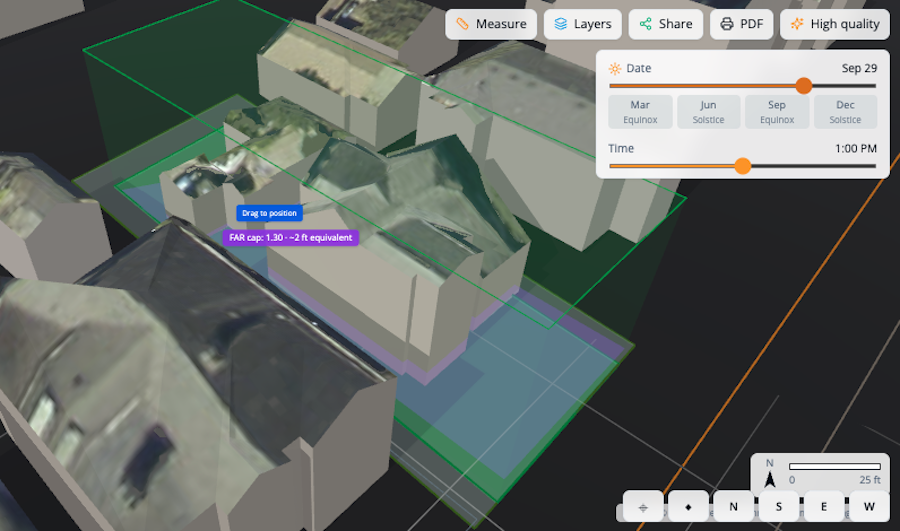
Users enter a specific address into the site to generate a lot-level breakdown, complete with a 3D visualization of their property’s buildable envelope, height limits, and existing structures.
From there, the tool evaluates local zoning and building codes to show what can be built — such as whether a lot qualifies for two detached ADUs under Seattle code — while providing instant “Do I need a permit?” answers for tasks ranging from plumbing work to tree removal to heat pump installation.
Matta’s project arrives as cities and tech startups alike try to untangle municipal permitting backlogs.
The City of Seattle announced plans in 2025 to deploy AI to streamline its own housing and small-business permit reviews, while local startups like Govstream AI have raised millions to modernize government land-use workflows.
But while those enterprise efforts focus on back-end bureaucratic efficiency, Matta’s tool approaches the problem from the ground up — putting clear, searchable code rules directly into the hands of homeowners and builders before a shovel ever hits the dirt.
Behind the user interface sits an AI layer powered by Google’s Gemini model using Retrieval-Augmented Generation (RAG), which feeds the system exact city rules so it can answer specific permit questions with citations rather than AI guesses.
Matta also exposed the entire database over Model Context Protocol (MCP), allowing third-party AI assistants to query the rules directly. To keep the information accurate, an automated weekly process re-checks every source page for updates and posts the results to a public data-quality log — a system Matta notes caught an error in his own fee calculator when Seattle updated its 2026 permit fee schedule.
While the permit tool costs Matta around $2,000 in LLM API tokens just to process Seattle’s data, he has no plans to monetize it or put it behind a paywall. He simply wants people — and fellow general contractors — to use it.
Back on the job site, his software background gives Kolmo a distinct edge. Using internal AI tools he built, Matta can take voice notes and photos during a walkthrough and generate a detailed project quote in under a minute, giving clients clear answers while he’s still at their front door.
That overlap between code and physical construction is what keeps him energized. When asked whether he prefers building software or physical decks, Matta points to the sweet spot where his two careers meet.
“I think I like what I’m doing now,” Matta said. “I like building decks, but I can see also the potential that I have because I have a software background — how it changes the game, honestly.”