Less than a year after emerging from stealth operations with $12.7 million and partnerships with pharmaceutical giants, Seattle-based biotech startup Accipiter Biosciences has added $10.5 million to its funding total. The new cash will let the company move faster on promising drug candidates.
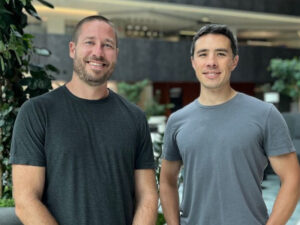
“We could have stuck with the original plan and been just fine,” said Matthew Bick, Accipiter Bio’s co-founder and CEO. “But we thought we’d rather capitalize on the progress we’ve made now and diversify our clinical portfolio.”
The team has grown to 22 people and includes researchers who worked at the University of Washington’s Institute for Protein Design under Nobel laureate David Baker.
The company uses artificial intelligence tools developed at the institute to engineer proteins with the unusual ability to bind multiple cellular targets at once, potentially amplifying their ability to fight illnesses.
“We’re not just trying to replicate what antibodies can do,” Bick said. “We’re unlocking some really interesting biology.”
Accipiter Bio has a collaboration and license agreement with Pfizer to research and engineer new molecules. The deal provides an upfront payment and the potential to earn more than $330 million through milestones and royalties. The startup has a similarly structured agreement with oncology drug company Kite Pharma, owned by Gilead Sciences, to design proteins for use in cell therapies.
The startup also runs its own in-house drug-development programs. It originally planned to advance one or two into the clinic, but the extra cash will allow it to bring three or four programs forward into clinical trials. Bick said the company is now primarily focused on immunology-related conditions, alongside its lead oncology program.

The company launched in March 2023, emerging from stealth in November 2025. The new funding is an addition to Accipiter Bio’s seed round and includes only existing investors. Flying Fish Partners and Takeda co-led the seed round, which included Columbus Venture Partners, Cercano Capital, WRF Capital, Alexandria Investments, Pack Ventures and Argonautic Ventures.
The new funding will help grow the team, bringing in additional scientists and reaching a headcount of about 30 people over the next six months to a year.
Interest continues to grow in AI’s potential to speed up the creation of new drugs. But Bick cautions that the process isn’t as simple as some might suggest, particularly for more complex therapeutics.
He knows this firsthand: he and two of his co-founders worked at Neoleukin, a biotech company co-founded by Baker that spun out of the UW in 2019. The startup’s lead drug candidate, an engineered protein used in cancer treatment, underperformed in a Phase 1 trial. Neoleukin laid off many of its employees before merging with another company.
“There’s an impression with AI methods that you can just hit a button and you get your molecule out, but it’s not that easy — and certainly when you’re pushing the methods to their limits, it’s really not that easy,” Bick said.
The process still requires asking the right therapeutic questions, manual engineering and a deep understanding of the molecules, he said. “There’s still protein intuition that comes into it.”