The University of Washington on Thursday celebrated the opening of a public-access battery manufacturing lab that aims to propel energy innovation.
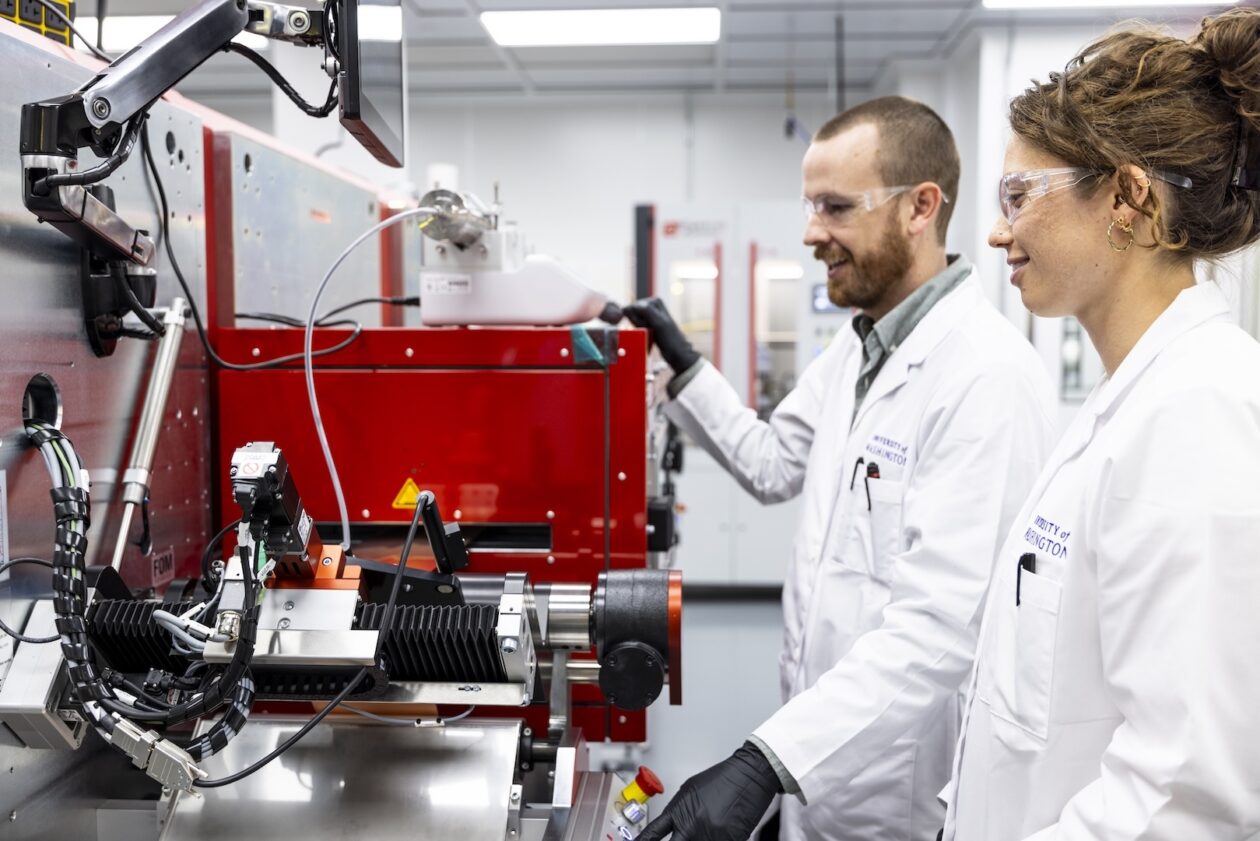
The new lab — the first of its kind on the West Coast — is housed within the UW’s Clean Energy Testbeds, a site that has helped launch multiple battery startups.
The expanded facility for researchers and entrepreneurs comes as battery demand surges, particularly for large deployments supporting solar energy and grid operations. Over the past three years, U.S. utility-scale battery storage capacity has grown at an average annual rate of about 70%, according to federal data. Other key applications include batteries for defense and transportation.
While China and other Asian nations overwhelmingly dominate the global supply of batteries, there is still room for U.S. companies to grow, particularly in developing new technologies, said Dan Schwartz, founding director of the Clean Energy Institute, which operates the Testbeds.
“We want to be part of the new chemistries that can serve new markets,” he said.
Those innovations include batteries using sodium or potassium ions, or replacing graphite with silicon-carbon materials in traditional lithium-ion batteries.
The new 1,600-square-foot lab was created by repurposing storage space inside the current 15,000-square-foot testbed facility, located east of the UW’s main Seattle campus. The $7.5 million capital project was completed in February and funded by the state’s Climate Commitment Act, which also supports additional facility staff.
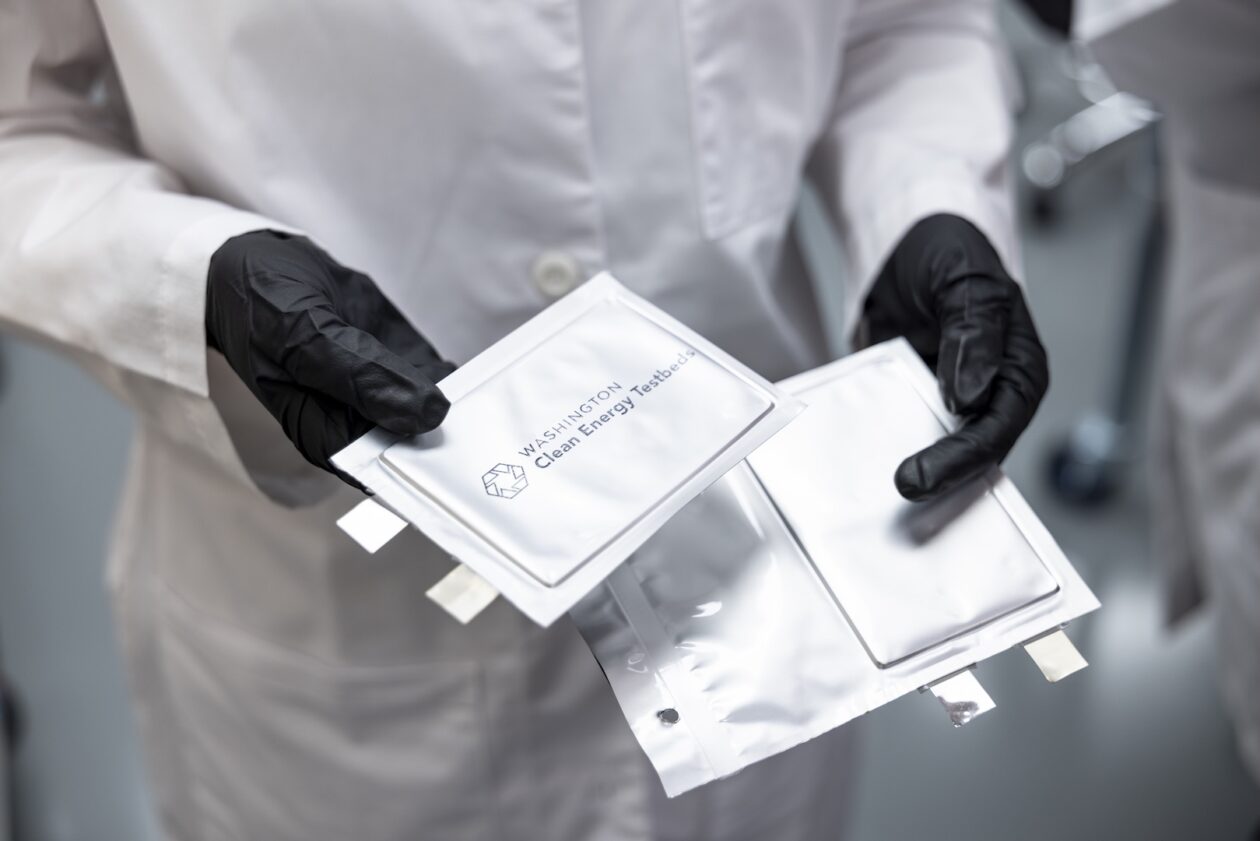
The lab is focused on building pouch cells, a format that offers more flexibility than traditional cylindrical cells used in consumer goods. The metallic pouch, which resembles a Pop-Tart package, enables users to create and test both small-scale experimental cells and larger prototypes for wide-ranging applications.
The facility features a dry room equipped to mix electrode slurries, coat electrodes and assemble components inside plastic-lined aluminum pouches, alongside a room with tools to test battery performance. UW experts are on-hand to help.
Seattle startup Emerald Battery Labs produced its first pouch cells in the new facility. The company is developing sodium-ion batteries, which use cheaper raw materials, offer longer lifespans and pose fewer fire risks compared to lithium-ion alternatives.
“We wouldn’t have started this company in Seattle if not for the Testbeds,” said Kjell Schroder, co-founder and CTO of Emerald Battery Labs, in a statement. He added that the facility allows the startup to iterate and produce demo cells “for a range of potential applications without major capital expenditure.”
The UW announced plans for the lab in October 2024 with an expected summer 2025 launch. Permitting challenges and long lead times for high-demand tools delayed the opening until early 2026, Schwartz said.
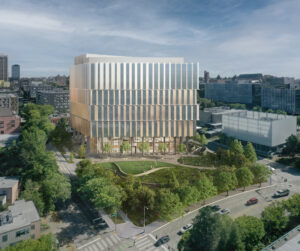
The entire Clean Energy Testbeds was originally slated to relocate to a new building called Brightwork, but ground was never broken and the project was quietly scuttled.
Schwartz said the new lab is booked out for the coming months. Other companies using the space include a California startup called Project K Energy that’s pursuing potassium-ion batteries. The Testbeds also partners with academic institutions such as Big Bend Community College in Moses Lake, Wash., to offer battery fabrication workshops.
Schwartz sees potential for the facility to support specialized, high-value applications with Pacific Northwest ties, including aviation, data centers and electric semi-trucks.
When it comes to clean energy, “batteries are just winning,” Schwartz said. “And the question is, who’s going to win in all the sectors that batteries are transforming?”