Long before the July email arrived confirming she was one of thousands of Xbox employees laid off in Microsoft’s latest round of job cuts, Agnes Kim could feel the impending doom hanging over big tech.
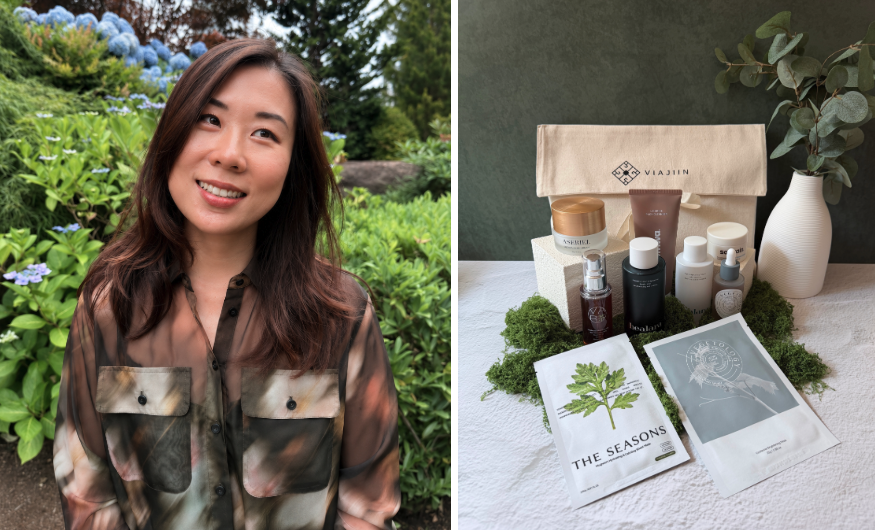
But instead of waiting around for the next pendulum swing, the eight-year Xbox veteran spent her nights and weekends laying the groundwork for a very different kind of reboot: a boutique Korean skincare startup called ViaJiin.
The pivot from big tech and gaming to startups and beauty is an illustration in how preparation can help a laid off worker upend the usual five stages of grief that come before figuring out what to do next. Kim skipped straight to acceptance — announcing her new venture on LinkedIn just two days after getting her pink slip from Microsoft.
Kim joined the tech giant in 2018 after roles at Sony Pictures Entertainment and Deloitte Consulting, eventually rising to director leading Xbox’s market expansion in Asia. For years, she thrived in the role, building teams and expanding the gaming footprint in regions close to her roots. But as post-pandemic gaming demand normalized, the environment shifted from ambitious growth to what felt like a cycle of corporate survival.
Starting in early 2023, layoffs began rolling through the company every six months. Seeing the predictable pattern take its toll on team morale, Kim realized she couldn’t rely on long-term corporate stability to fulfill her goal of becoming an entrepreneur.
“You have a sense of impending doom,” Kim recalled. “There’s a shadow lurking. I felt like every six months we were waiting for the next round. I just didn’t feel like I was in an upswing anymore.”
Determined to take control of her timeline, she began tinkering with her business concept in late 2025, officially forming an LLC for ViaJiin in March 2026 and running focus groups by May — all while balancing her full-time executive role. When the July cuts finally hit Xbox, eliminating 1,600 jobs, Kim had already built six months of momentum.
Kim’s connection to skincare is deeply personal, rooted in her childhood spent living in South Korea from ages eight to 15. She grew up watching her mother religiously follow a multi-step routine and stress the daily necessity of sunscreen — a reflection of a culture where maintaining a youthful appearance carries immense social expectation.
That intense domestic demand has birthed a fiercely competitive market of over 30,000 brands, driving rapid scientific innovation. It has also turned South Korea into a global beauty powerhouse, with cosmetics exports surging past $10 billion as the U.S. recently surpassed China as the top destination for Korean beauty products.
ViaJiin aims to solve the overwhelming paralysis that American consumers face when trying to navigate the K-beauty market. Instead of building a massive retail catalog or pushing complicated 12-step routines, Kim simplifies the process into a streamlined four-product kit — cleanser, toner, serum, and cream — curated through a digital skin quiz. And she bypasses mainstream brands sold at big-box retailers to source exclusively from boutique Korean makers.
“The products I carry, you can only get through me,” Kim said. “I find boutique products that are filled with good ingredients, come to the U.S. compliantly, and turn it into a kit.”
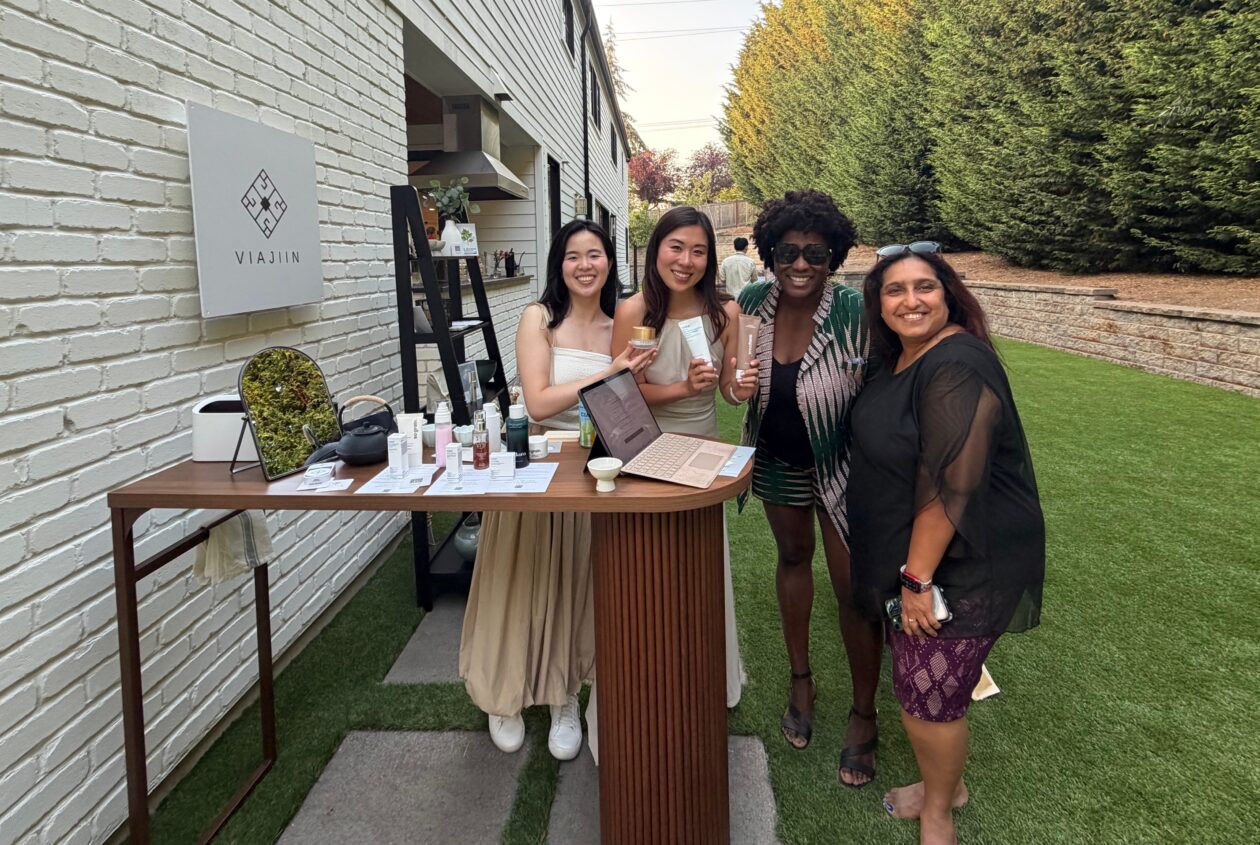
ViaJiin’s full kits sell for $179, while smaller duo sets are priced at $99. Since shipping her first orders in August, Kim has been hand-packing boxes herself with personalized touches, building early traction online while hosting small, local events like “ViaJiin Nights” to let clients test products in person. The kits have also secured retail shelf space at K-Beauty & Skin in Renton, Wash., where Kim lives.
Kim’s transition from managing corporate teams to operating as a solo founder has meant trading human delegation for AI assistance.
Toward the end of her tenure at Microsoft, every conversation and initiative was dominated by a relentless push toward AI. Kim is now embracing those tools to execute work that would typically require a suite of employees or contractors.
She’s relied on Anthropic’s Claude as a virtual strategist and used platforms like Lovable to try her hand at “vibe coding” — the trend of using conversational natural-language prompts to generate functional software code — building out ViaJiin’s website and skin quiz without hiring a developer.
“I don’t have a co-founder… I’m delegating to Claude and GPT,” Kim said. “People are very surprised by my website or the skin quiz. I’m not an engineer, but it looks like I hired a web designer.”
While AI can handle code and logistics prompts, Kim quickly found that software can only go so far when running a physical inventory business. Between navigating complex U.S. FDA labeling regulations, managing customs paperwork, and verifying ingredient compliance, the operational heavy lifting remains resolutely analog.
And the shift from corporate structure to total solitary accountability is daunting at times.
Without a team to delegate to or a clear roadmap of objectives and key results, Kim admits there are moments where the freedom of entrepreneurship gives way to self-doubt.
“I think I understand why some people just work for the man,” Kim joked. “When you work for Microsoft, certainty and structure are more there. There are definitely moments where I’m like, ‘What the f*ck am I doing? What is today’s goal?'”
Still, Kim has no interest in turning back. Energized by the daily hustle and the creative control of building something from scratch, she insists she wouldn’t trade the experience for her old corporate desk. She hopes to grow ViaJiin into a household national brand while staying out of big tech for as long as she can.
“I’m 1,000% energized. I absolutely would not trade it,” Kim said. “This is allowing me to be truly the version of Agnes that I thought I would be when I was 12, and I want to keep going at it.”