
Augmeta, a startup that assigns an AI agent to monitor, investigate and act on each of a company’s key business metrics, has raised $3 million in seed funding to speed up customer deployments and expand what its agents can do.
The idea is to have software keeping watch over every key metric around the clock — everything from online sales to airline bag check-in rates — instead of waiting for the inevitable question at the weekly business review. The company, based in Redmond, calls this “Agentic KPI Ops,” short for key performance indicator operations.
Augmeta CEO Salman Jamali gave the example of an e-commerce company that switches email systems, and the move pauses a campaign aimed at winning back lapsed customers. Sales slip, and the explanation is scattered across six or seven different systems.
“Everyone reads part of it,” he said. “Nobody reads it end to end.”
How it works: Augmeta refers to its agents as “operators.” Jamali said the company took the name from startup culture, where an operator owns a problem end to end.
“They don’t just stop because the role tells them to stop,” he said. “They only stop when the outcome gets delivered.”
When an agent finds a problem or an opportunity, it estimates what it’s worth in dollars, brings the evidence to the right team, and checks back to see whether the fix worked. What it can change on its own depends on the permissions a customer grants, and not every fix is automated, according to the company.
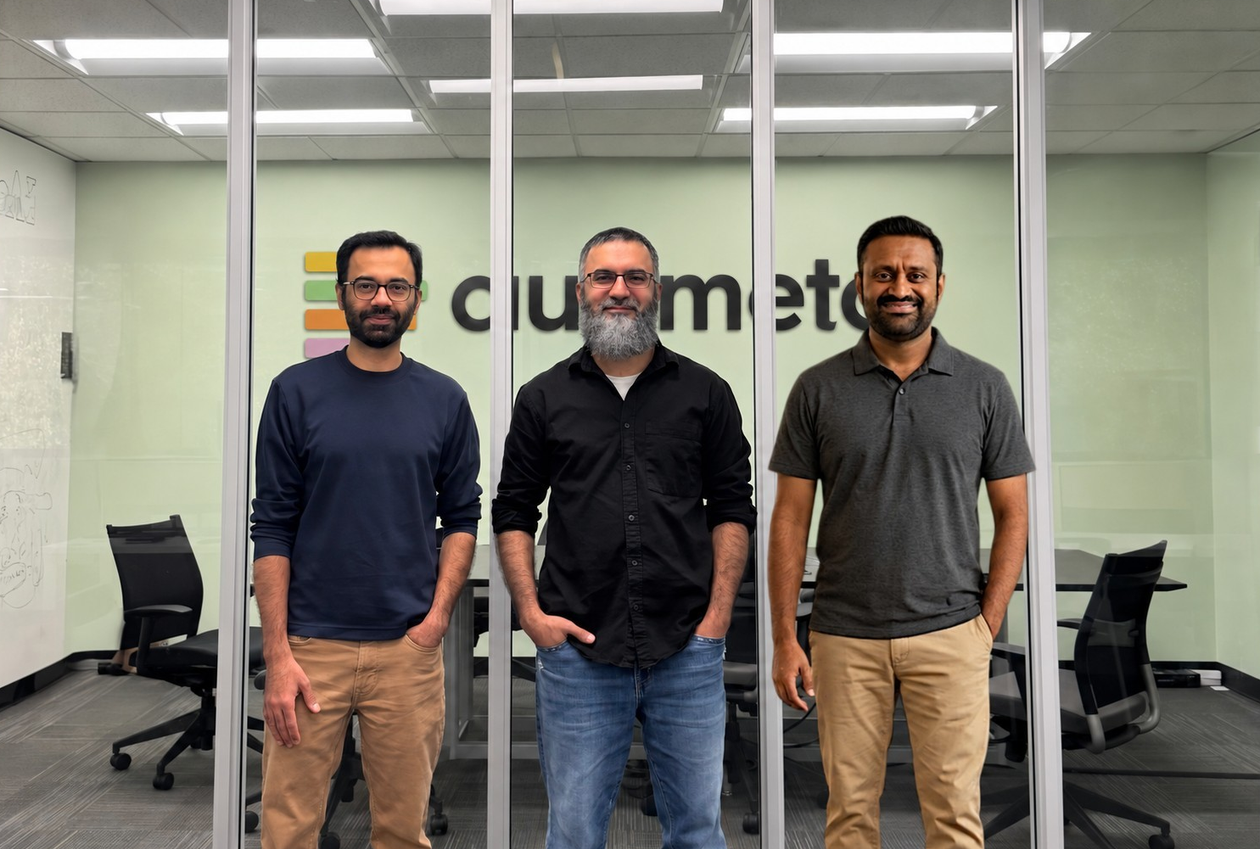
Founders: Jamali, who previously led engineering for Opendoor’s home operations, co-founded Augmeta in 2025 with Nitin Bhaskaran, who led product teams at Home Depot and Opendoor, and Arslan Jamali, a former Amazon Business senior product manager who worked in finance at AWS and Prime Video. (Salman and Arslan are brothers.)
Augmeta has seven people on its team, including the three founders, and is hiring for additional roles.
Funding: The seed round was led by Depth Ventures, a San Francisco firm founded last year by Paul Jun, a former Index Ventures partner and CFO of AI accounting startup Pilot, and Jeff Arnold, an early OpenAI employee who is now a director at the OpenAI Foundation. A former Opendoor colleague introduced them to the Augmeta founders.
NextWave NYC, part of Flybridge Capital, also participated, along with investments through the Index Ventures and Sequoia Capital scout programs and angel investors.
“Enterprises lose millions in revenue every day to friction and unintended changes in their customer funnels, from underperforming landing pages to slow checkout experiences,” Jun said in a statement.
He said Depth invested because of the founders’ technical expertise and their vision for how AI can help companies go from just tracking their numbers to constantly acting on them, with people still in charge.
Customers: Tractor Supply Company, the Tennessee-based farm-and-ranch retailer, is among the startup’s customers. Augmeta says its agents track more than 100 KPIs in the retailer’s e-commerce business and produce reports used in business decisions, and that the retailer renewed after its first year.
“It feels like we’re building a brain for the digital team that stays with a KPI end to end,” said Sada Kshirsagar, Tractor Supply’s vice president of product management and operations, in a statement. Kshirsagar said the system surfaces answers before anyone thinks to ask, and carries what it learns from each investigation into the next.
The startup has run pilots with other large companies and has more underway.
Augmeta sells annual enterprise contracts rather than charging per user or per month. Jamali said he eventually wants to move to pricing based on the value customers get, such as a percentage of what the system saves them.
Competition: Jamali said he doesn’t see the AI labs as a competitive threat, since each new model they release immediately helps Augmeta.
Analytics companies including Amplitude, Adobe and Quantum Metric have added AI agents of their own. Jamali said other companies are building what he called “triage agents,” which he sees as just one step of what Augmeta’s operators do.
“Their DNA is analytics,” he said. “Our DNA is operations.”
The bigger question may be whether companies try to build their own KPI agents with off-the-shelf AI. Augmeta addresses the issue with what Jamali calls “anti-selling,” which he summed up this way: “Don’t buy Augmeta. Let’s go build this in Claude.”
The company then walks prospects through everything they’d have to build, making the point that the hard part is keeping agents running reliably across hundreds of KPIs as a business changes.
What’s next: Much of the money will go toward speeding up sales and deployments at big companies, which tend to have long purchasing timelines and processes, Jamali said.
The startup also plans to reach more customers, cover more KPIs for each one, and give its agents more ability to act on what they find and learn from the results.
Jamali said AI has changed how they’re building the team: “I really do think we can do a lot more with under 10 people, compared to what I would have said, let’s just say, six months ago.”