
Day after day, we hear the unnerving statistics: Trillions of dollars accrued in cybercrime costs. Hundreds of billions of dollars lost annually to cybercriminals. Our personal information stolen or compromised. We know the need for cybersecurity has never been greater. We know the demand for cybersecurity jobs has never been stronger and will only continue to grow.
So, what does it take to get a job in cybersecurity?
We asked two experts in the field—Dr. Andre Alfred, Partner Director, Cloud Security Division of Microsoft, and Paul Bingham, Vice President and Dean of Western Governors University (WGU) College of IT–for their top tips on getting a cybersecurity job.
Which cybersecurity job should I pursue?
Dean Paul Bingham: It’s always exciting when someone tells me they’re looking for a career in cybersecurity and trying to find their first job. One of the great things about cybersecurity is the variety of roles. It’s not an overstatement when I say that there is something for almost everyone in cybersecurity! The first piece of advice I usually offer is to keep an open mind about what role they’re aiming for. As they gain experience, security professionals often discover roles that they never knew about or that they find more enjoyable than they imagined. A lot of security professionals started as help desk technicians or analysts in a SOC or NOC. I host a live webinar series where we interview cybersecurity professionals, learn about their jobs, and listen to their career advice. You can access past episodes at WGU Cybersecurity Series. New and seasoned cybersecurity professionals alike also find cyberseek.org valuable as they chart their paths to their dream job.
How did you get your start in cybersecurity?
Dr. Andre Alfred: To Paul’s point, I started my career on a helpdesk for one of the first internet service providers in my hometown in Louisiana. From there, I had different roles specializing in Networking, Linux Server Administration, and eventually Security. I kept pursuing my education, earning my bachelor’s degree in IT Management from WGU Washington, then my master’s from MIT, and eventually my doctorate in engineering from George Washington University. I learned through my experience that using my technical background to protect people is a very rewarding aspect of my career. The mindset that protecting people and vital assets is the goal of the cybersecurity profession motivates me every day to continuously learn more.
What are cybersecurity leaders looking for?
Dr. Andre Alfred: Successful cybersecurity professionals possess an understanding of how many technologies work and interact with each other. It’s important to demonstrate your continuous curiosity to learn and research how things work in your resume and interview process. The technological landscape changes so much that you will have to continuously integrate new knowledge with your own to find and prevent threats. Bad actors look for the weakest points in an environment, which could be configurations in servers, networking equipment, or flaws in software. Exposure to as many of those areas as possible is important.
How can I get the right experience?
Dean Paul Bingham: One of the biggest challenges aspiring cyber professionals have is demonstrating experience prior to their first formal cybersecurity job. WGU students have virtual network environments integrated into their learning. These virtual labs simulate real-world scenarios and provide students valuable experience that they can put on their resumes and demonstrate in job interviews. WGU students can also join the Student Cyber Club where they can join other club members in cyber competitions. I recommend free resources such as tryhackme.com and hackthebox.com where anyone can gain real-world experience in a simulated environment.
How can I make my application stand out?
Dr. Andre Alfred: Showcasing practical experience through use of social media or sharing code repositories with sample projects is a great way to enhance your profile. Demonstrating practical experience of various security concepts, tools, and how they operate is great.
Which matters more: certificates or a degree?
Dean Paul Bingham: There’s a lively debate around whether certifications or degrees are more valuable. At WGU, we say, “Why choose when you can have both!” We integrate over 10 industry certifications into both of our cybersecurity bachelor’s degree programs: Cybersecurity and Information Assurance Degree and Network Engineering & Security Degree. This means that students earn these certifications while they are pursuing their degree. Where do I land on the certs vs degree question? I like to sum it up as, ‘Certs help you get jobs, and degrees help you get a career.’
Is a cybersecurity career right for me?
Dr. Andre Alfred: If you are asking that question, my suggestion is to tell yourself, YES! We are lucky to live in a time where skills acquisition is possible to get a great education, practical experience, and certificates to jump into such a rewarding career. We need all the help we can get
Dean Paul Bingham: WGU students and alumni have access to a wealth of free resources from WGU’s Career and Professional Development team. Two of the most valuable resources are the resume review and mock interviews. More information about these and other services is available at Career Services.
Ready to learn more? Check out WGU’s Comprehensive Guide to a Degree in Cybersecurity.
Or visit wgu.edu
 Paul Bingham is vice president/dean of Western Governors University (WGU) College of IT Cybersecurity Degree. He joined WGU in 2019 after 24 years as an FBI agent, conducting and managing domestic and international investigations. He is an accomplished instructor and featured presenter in topics including cybersecurity and incident response. Paul holds cyber certifications including the CISSP, GCIH, GSEC, GPEN and a Master of Accountancy and Bachelor of Science in accounting from Brigham Young University.
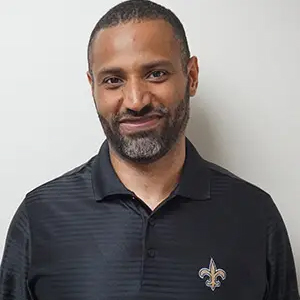 Dr. Andre Alfred is Partner Director, Cloud Security Division of Microsoft, a board member at The Current LA, and an Advisory Board Member for WGU Washington. He is a leader in hyperscale cloud operations and cybersecurity and a believer in philanthropy and public service.
