
What happens when technology eliminates language barriers?
That’s one of the implicit questions on the agenda in Seattle this week as translation technology experts from around the world gather for the annual conference of the Translation Automation User Society, or TAUS.
“Translation has become almost a commodity, a utility that everybody is using,” said Jaap van der Meer, director and founder of the group, opening the event this morning in an Edgewater Hotel conference room. “That’s all thanks to machine translation, to that translate button.”
Disruptive innovation is coming from not just from traditional translation fields but also from outside the industry, he said — pointing in particular to Google’s offering of automated translation as “wakeup call” that opened the eyes of translation experts to the opportunities among the broader world, not just in business-to-business applications.
He predicted that the next five years will bring more change in the industry than the last 20 did, through the convergence of services and technologies, and new ways of applying machine translation advances.
One central question: How much can these translation services rely on persistent network connectivity?
“Betting against technological advancement is usually a bad bet,” said keynote speaker Chris Pratley of Microsoft Office Labs, saying he expects connectivity to only become more and more persistent.
The two-day agenda includes panel discussions and technology demos. People attending the conference include representatives of large tech companies including Adobe, eBay, Cisco, Dell and others.
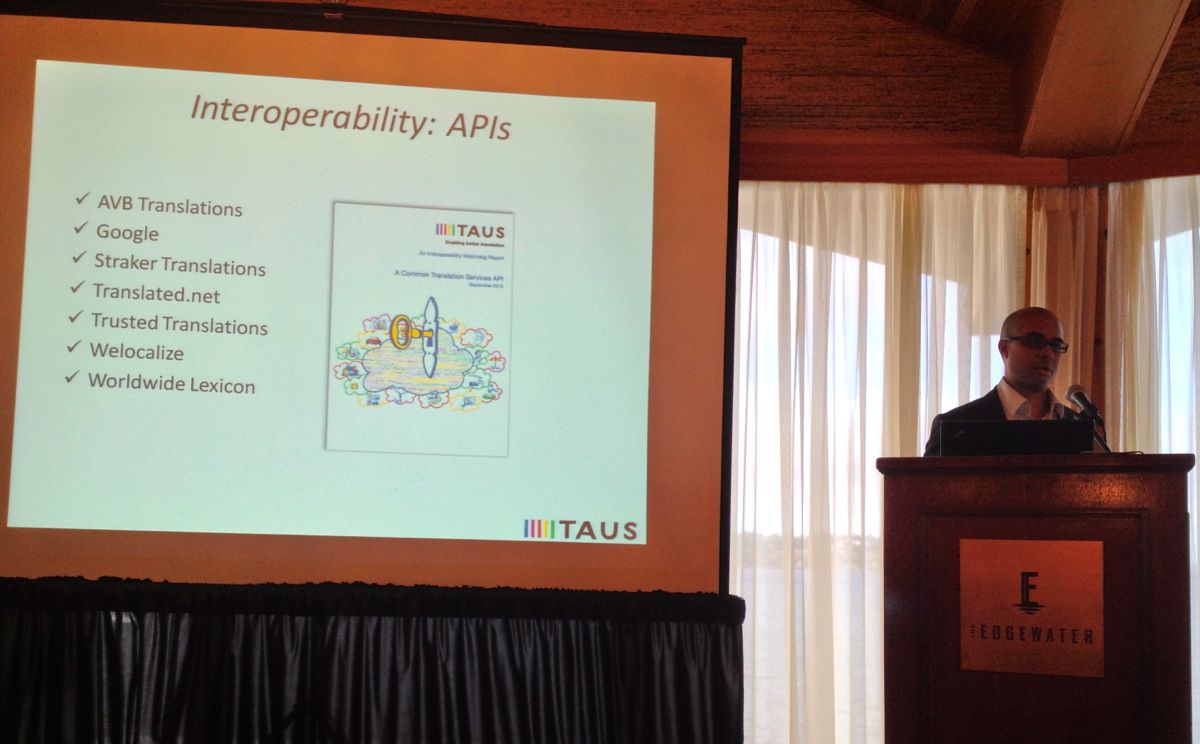
TAUS representatives also outlined their efforts to push the industry forward through interoperability among different systems, and shared methods of evaluating the quality of translations.


